

Skopelos has shot to international stardom in recent years thanks to its role in the hit musical Mamma Mia! While planning my trip, I must have stumbled across a small library of blog posts on the subject. It seems every budding “Björn and Benny” blogger has had their say. From Meryl Streep belting out ballads to Pierce Brosnan’s somewhat brave attempt at singing, the island’s ABBA-fuelled fame shows no sign of fading.
I spent four nights on Skopelos in late September, and was eager to discover what else the island had to offer. Over the past few years, I’ve hopped around a fair few Greek islands, and honestly, I’ve fallen head over heels for the country.
Now my partying days are definitely behind me, and I’m not drawn to the overpriced spots where visitors strike poses by infinity pools or gaze moodily out to sea for Instagram. What I really enjoy is a taste of the real Greece, the kind of place that still feels authentic. Word on the grapevine is that Skopelos might just be that island.
Let’s see if it lives up to the hype.
When To Visit
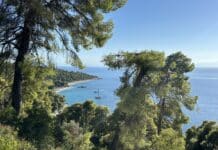
I visited Skopelos in the autumn and all of the photos you see are from this trip in late September. I found it warm enough for swimming, yet the summer crowds have faded, giving you entire beaches to yourself. The bars and taverns are relaxed, the light has a golden softness, and the local harvest brings olive groves and fields of plum trees to life. It is the perfect time for long meals, sampling honey and cheeses, or hiking trails shaded by pines with magnificent sea views.
The summer season is naturally hotter and busier while the spring brings wildflowers and peaceful walks. For me though, I was here to discover Skopelos in the autumn, when I am told, the island feels at its most generous and magical.
The Sporades Islands
On any trip I love a map, and nowhere more so than in Greece. With its countless islands, distinct regions, and a language that can be a little testing for this Englishman, I need to see it all in print before it truly sinks in.
Skopelos is one of the Sporades islands, alongside Skiathos and Alonissos.
Skiathos is the most widely known, thanks to direct flights from the UK and a lively mix of beaches, hotels, and nightlife. It has golden sands, pine fringed coves, and a relaxed yet cosmopolitan feel, which keeps it popular with many visitors.
Alonissos is quieter, known for its rugged coastline, and a pace of life that reminds you what it truly means to get away. Between Skopelos and Alonissos, the marine park is home to seals, dolphins, and a rich variety of fish.
Then there is Skopelos. Greener, hillier, and far less crowded. With its quiet villages, fragrant pine forests, and endless coastline, this is the island where the real magic of the Sporades comes to life.

How to get to Skopelos
For most travellers, the easiest way to reach Skopelos is via Skiathos. Between May and September there are direct flights from the UK with airlines including EasyJet, Jet2 Holidays, TUI, and others.
From Skiathos, regular ferries connect to Skopelos in around forty minutes.
My Journey via Athens and Mantoudi
Travelling later in the season there were no direct flights to Skiathos so I flew to Athens and then took the bus to Mantoudi on Evia, departing from the Liosion KTEL bus station, Athens at midday and arriving in Mantoudi at 1440.
As we boarded the bus, I clocked an older lady saying goodbye to her attractive daughter. They crossed each other’s chests several times with holy water in a charming ritual. I am guessing this was a standard farewell unless of course they knew something about the journey ahead that I did not.
Leaving Athens, the motorway was uneventful until we crossed the bridge at Chalcis into Evia. Narrow roads then wound through olive groves, farmland, and rocky slopes as we climbed Mount Dirfi via countless hairpin bends to 1,743 metres. I loved it but this is not a journey for the faint-hearted. Thankfully to many on the bus, the land soon flattened and we reached Mantoudi port. I helped that dear lady off the bus, and she thanked me with a kiss on the hand. She was such a character whom I learned, via a fellow passengers pigeon English, that she was 92 and visiting Skopelos for a family wedding. My mind immediately wandered to “that” wedding from “that” movie…. was this a sequel?
Mantoudi port was modest: a portable cabin toilet, a Seajets ticket office, and a small drinks stand selling pastries, wraps, and coffee. The crowd was a mix of thrill seekers, holidaymakers, families, and even a couple with a small ginger tom cat who looked ready to attack anyone foolish enough to touch her carry cot.
We whiled away an hour under a metal roof that offered shade. Surrounded by the quiet bustle of this off the beaten track port, I felt like my adventure had truly begun.
The ferry from Mantoudi to the tiny port village of Agnondas on Skopelos with Seajets took two hours and ten minutes with a stop en route at Skiathos. It was comfortable, with a small café and an open deck with seating for fresh sea air and sunbathing.

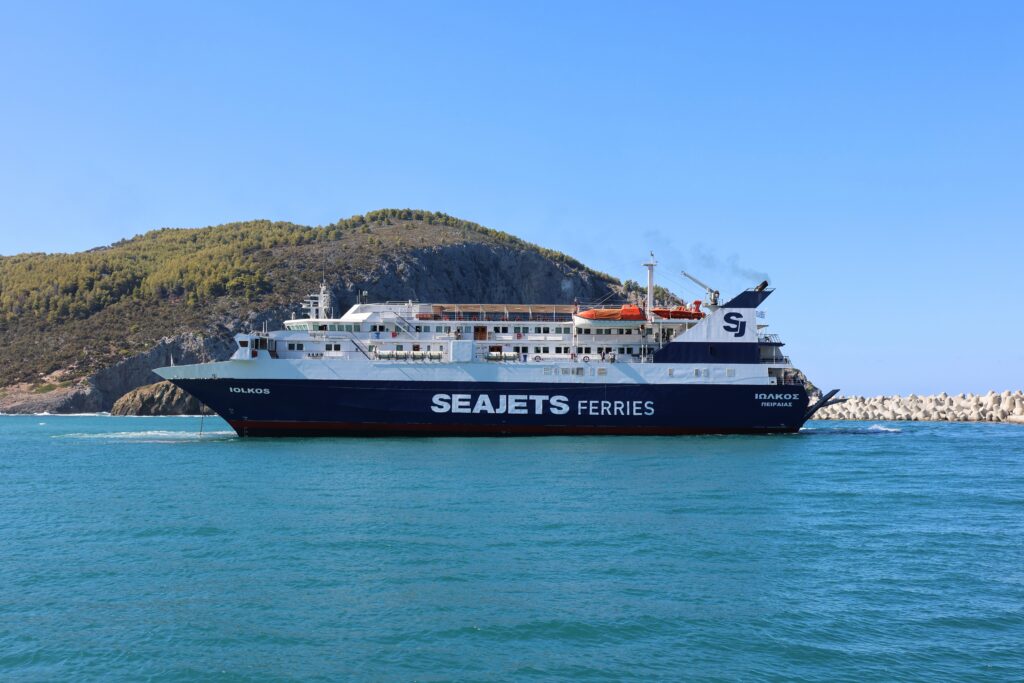
Skopelos Town

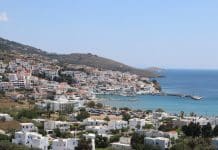
I was finally on Skopelos. I was staying on the edge of Skopelos Town at the beautiful Minnŏ Boutique Hotel & Spa with fabulous views and just a 10-minute walk around the bay to the charming town. After a peaceful night’s sleep it was time to explore.
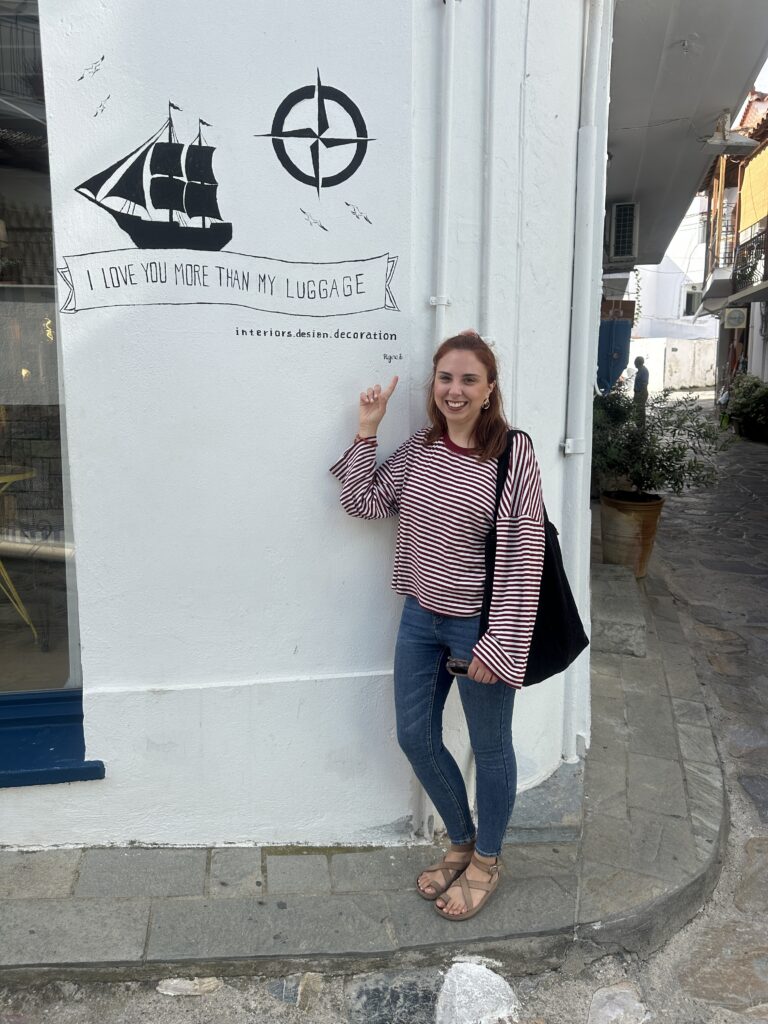
A great way to discover the history of Skopelos Town is to take a walking tour. I did so with the lovely Rigina, a local guide who has partnered with the excellent Skopelos Tours, a local travel agency in the heart of the town. Her fresh-faced and bubbly enthusiasm for showcasing the town is infectious. This two-hour tour offered an insight into the island’s history, architecture, and ongoing efforts to uncover more about its past.
It is believed that Skopelos Town comes from the Greek word meaning “rock” or “obstacle”, therefore hinting at its defensive past. It was therefore no surprise to start our tour at the Venetian Castle. Built in the fifth century BC on the site of ancient Peparethus (the former name for Skopelos Town) the castle once enveloped the town but over the centuries it has naturally receded.

To access the Castle I wandered to the far end of the port and climbed the steps past the Virgin Mary Church, one of a supposed 365 churches on the island. From here you can enjoy the most iconic island view out across the Aegean Sea. It just so happened one of the fabulous Star Clippers Tall Ships was docked making an already beautiful view that much more special.
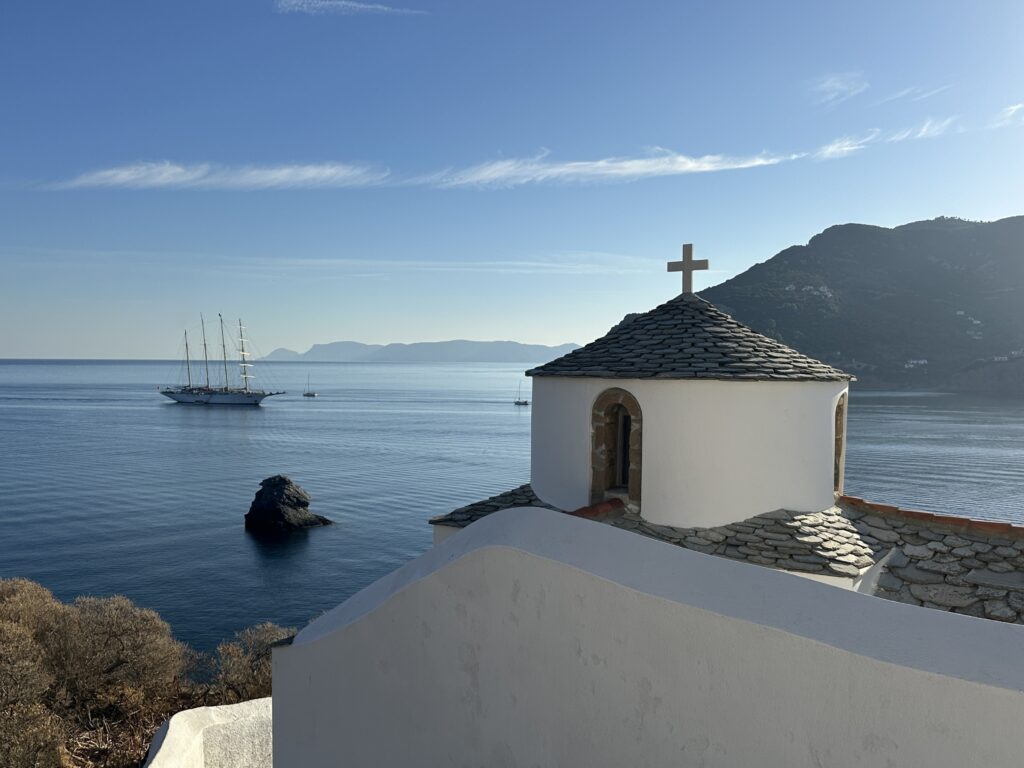
Just out to sea there is the Chadoula Rock. This small rock formation has a local myth that tells of a woman, who awaiting her husband’s return from war, misread the ship’s sail and believed that her husband had died in battle.
She could not bear the thought of living without him and killed herself. Later it was discovered that her husband had not died and returned alive. The rock is said to depict the woman lying in grief.


Our tour took us from the castle along countless pretty cobbled streets with gorgeous pastel houses. It seemed that every house had its own style and for a budding photographer like me it was heaven.
Regina took great delight in pointing out various unusual facts. There were clever architectural quirks like three-storey houses with small bathrooms built out on to the balconies. Some streets ended with the walls slightly angled so horse drawn carts could more easily turn around the corners whilst every crossroads had a religious cross carved into the stone wall which is said to ward off bad spirits.
It was so easy to get lost in these colourful streets. Regina pointed out that none of the houses have numbers. A nightmare for the local postman I say. However in Skopelos Town everyone seems to know everyone so, through word of mouth it’s unlikely your birthday card will get lost in transit.
The shops are fabulous. The smell of freshly baked bread at the bakers, delicious local meats at the butchers, classy fashion boutiques, innovative art studios and creative craft shops. Add to this plenty of little quirky cafes, bars and so many restaurants offering fresh local cuisine Skopelos does not disappoint.


Early mornings the fishermen dock at the port where the locals including the Skopelos pussycat community wait in anticipation for the catch of the day!
In the evening the main promenade is alive with kiosks selling everything from candy floss to jewellery. At the water’s edge excursions are sold for boat trips the next day, while restaurants compete to entice you to dine.
Skopelos Town has a special vibe that lets you savour its streets, squares, and hidden corners.

Stafylos & The Islands Beaches
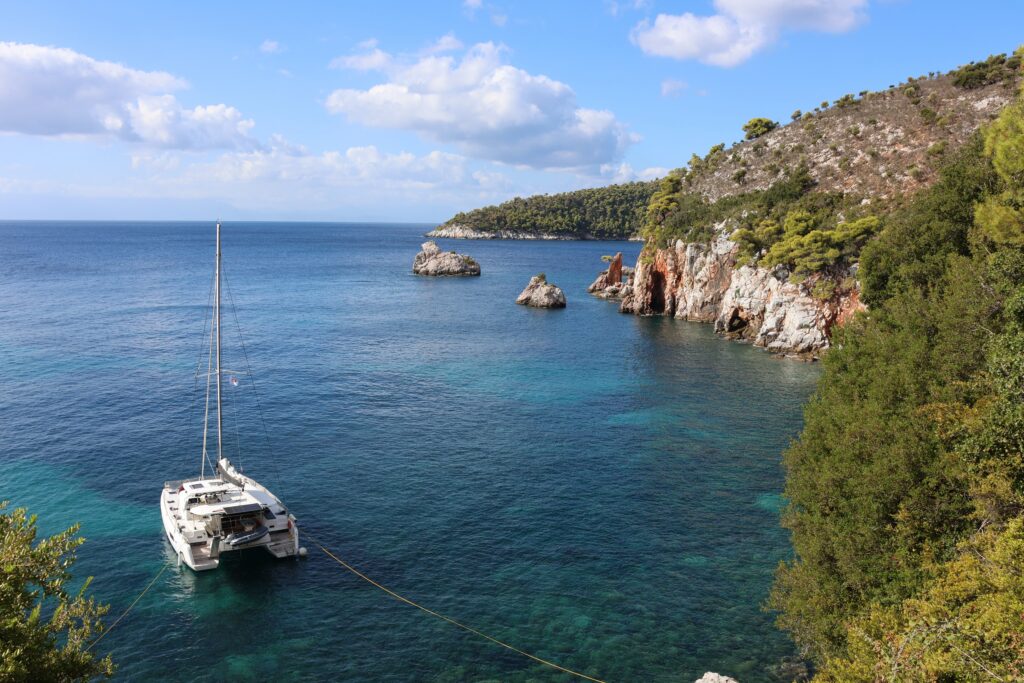
Just a short hop—around four kilometres—from Skopelos Town lies Stafylos.
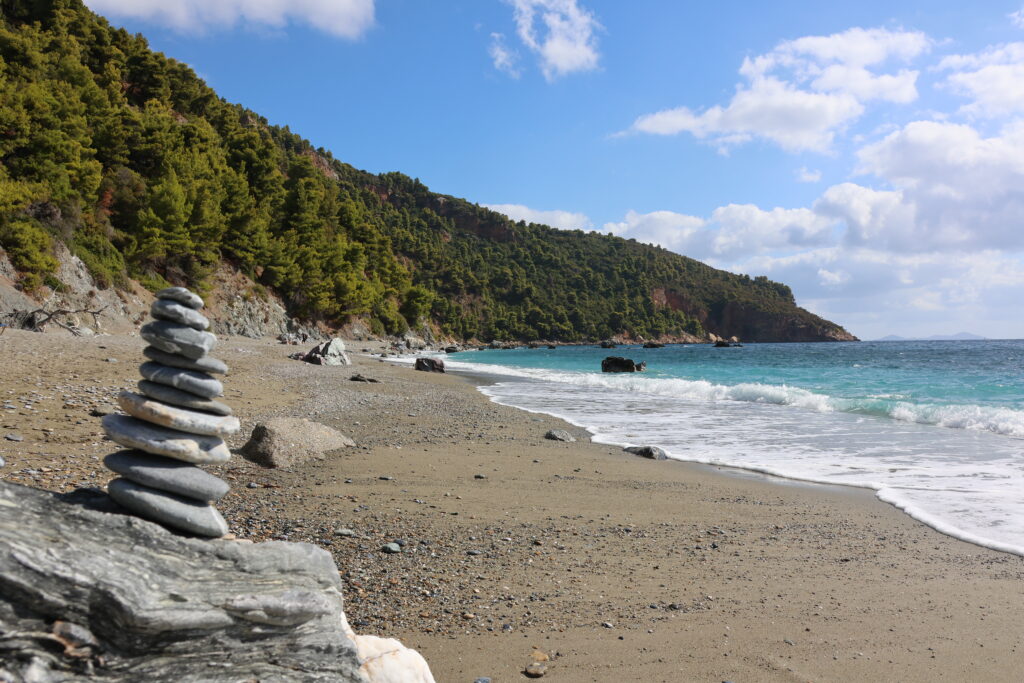
Arriving into Stafylos you will initially see that it takes the form of a rocky peninsula either side of which are two beaches.
Parking is limited so I would suggest you get there early and park as close as you can to the end of the road where you can go no further. From here it’s just a few steps down to the beach and all while breathing in that aromatic Mediterranean scent of pine trees in the air.
Between the headland lie two beaches, Stafylos and the quieter Velanio. With so many more to explore, I’ve summarised the island’s best in a separate article, The Best Beaches on Skopelos
However Stafylos is more than just a sun-lounger stop. In 1936, archaeologist Nikolaos Platon uncovered a Mycenaean tomb on the rocky peninsula that divides the two beaches. Among the treasures was a sword with a gold-plated hilt, which is now displayed in the Athens Archaeological Museum. Traces of Mycenaean walls still linger at the edge of the beach, subtle reminders that this was once a site of real significance long before towels and parasols ever arrived.
Archaeologists from four universities are today using modern technology, including drones and sonic equipment, to explore the area, particularly around Stafylos, which is believed to have been the site of a former settlement.

Agnontas
From Stafylos I travelled along the coast passing Cape Amarantos, a rocky headland rising from the Aegean and one of the most photographed spots due in the main to its breathtaking beauty.
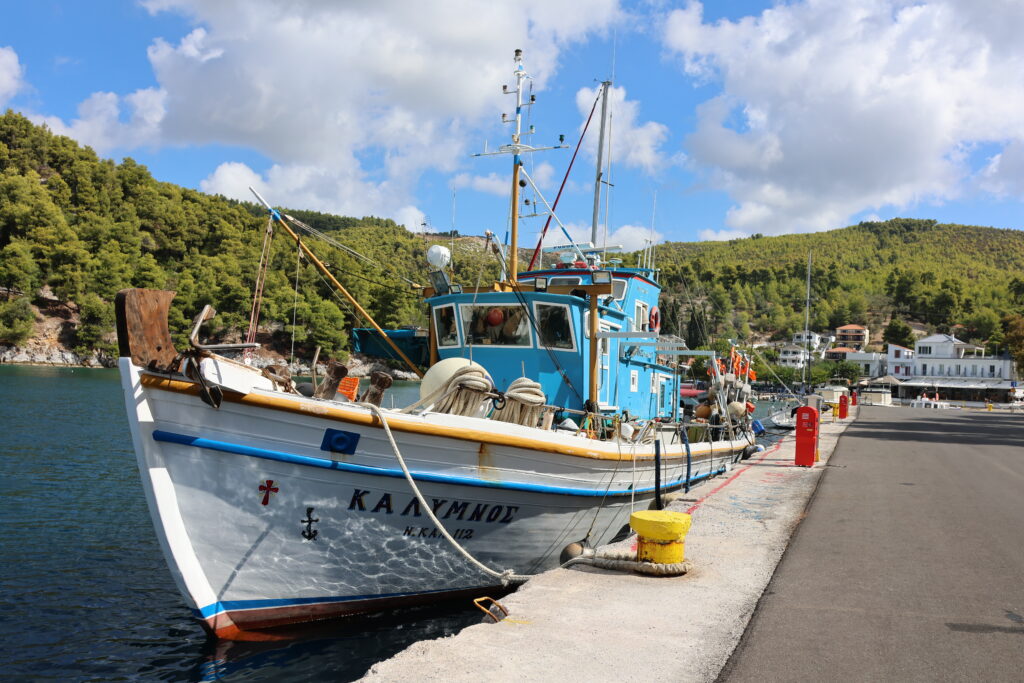
On the south-eastern coast of Skopelos, Agnontas is the small port where my ferry had docked the previous day. Named after an Olympic champion from the early games, this tranquil bay has a wooden pier and a few rustic, typically Greek bars and seaside restaurants, such as the Mouria Taverna where the irresistible aroma of grilled seafood fills the air.
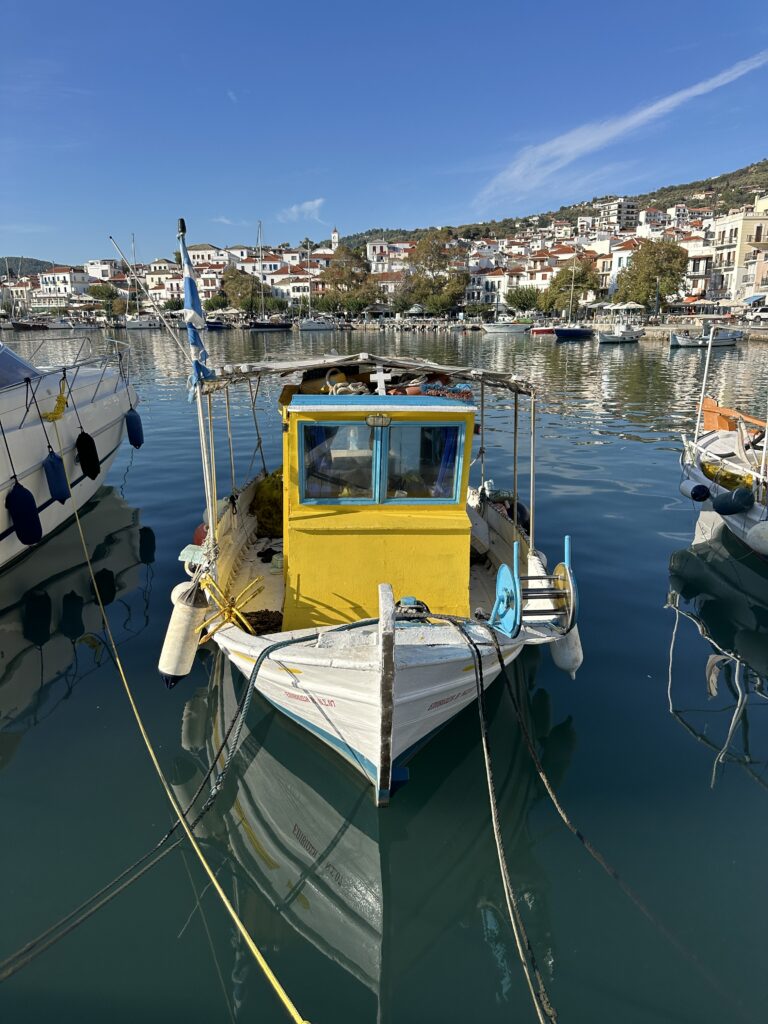
I took a wander along the perimeter of the bay where a couple of times each day the ferries pull in bringing hundreds of excited tourists to the island. There are some anchors on display from ships from the 19th century but generally this is a sleepy port home to pretty small fishing boats bobbing in the sun or glittering expensive yachts moored out at sea.
Agnontas has a unique charm which I really liked and I could easily see myself spending a relaxed day here sunbathing, eating good food and drinking fine wine.


Alkias
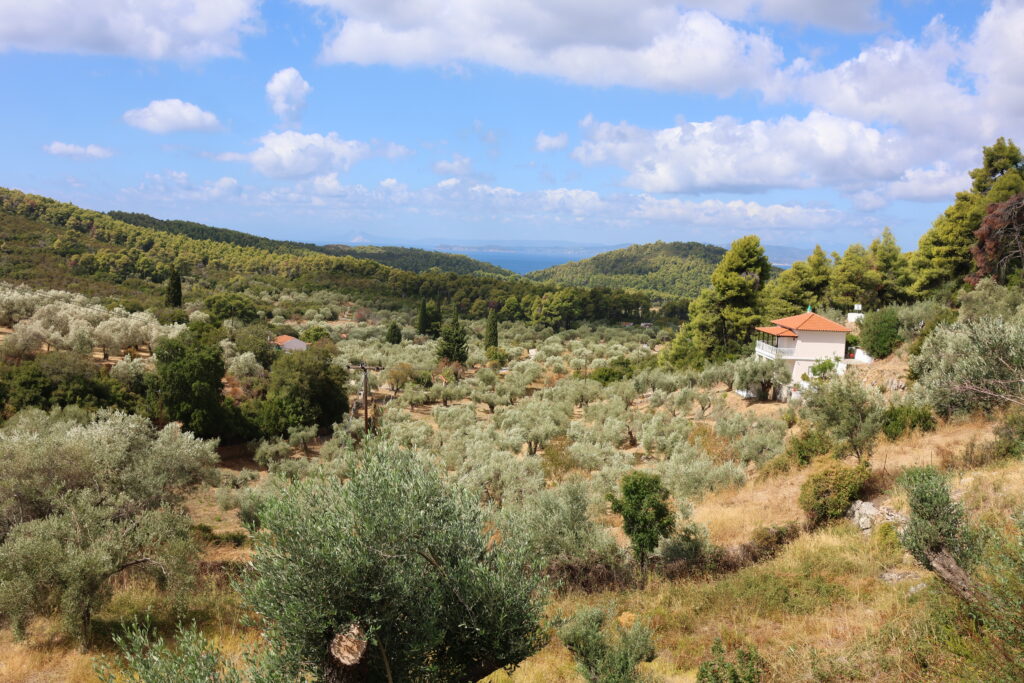
Perched high enough to offer stunning views over Skopelos’ rolling hills and the Aegean beyond, the tiny village of Alkias is worth a stop not only for the magical views of the countryside.
As you pass, you’ll spot a little shack selling local treats. I could not help but pull over and discover produce including golden olive oil, sun-ripened prunes, and sweet plums
Whilst there is not much to Alkias it’s a great place to take in the views and sample a taste of island flavours.
Ditropo
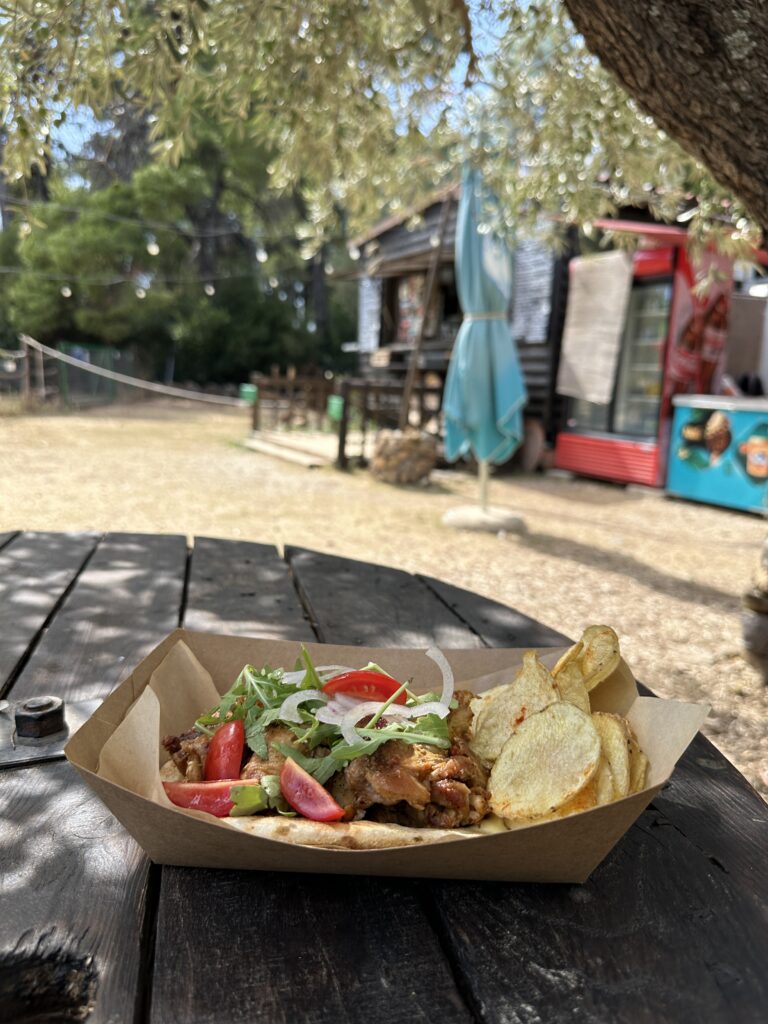
Ditropo is another very small village but it is home to “the Skopelos Experience” which is a delight for food lovers and families alike.
It’s famous for its street-food experience. It’s a small park where there is a wooden hut selling tasty gyros, pulled pork burgers and Falafel wraps. You order and find a spot to relax under the shade of an ancient olive tree while awaiting your number to be called. The small park offers kids the chance to run and play in gardens shared with geese and chickens.
Honey remains a thriving industry on the island, with numerous hives dotting the hills. Most hotels and shops will offer the chance to buy a jar including here at the food hut, starting at around seven euros for a standard size, roughly half the price of similar honey in the UK.
Ditropo is the kind of place that combines rustic charm, family fun, and local flavour, giving visitors a genuine sense of life on the island beyond the beaches.


Panormos
Travelling on from Ditropo I then hit the coast once again and the popular bay and village of Panormos.
The standout feature here is the glorious beach which when viewed from above is quite spectacular. Aside from swimming and sunbathing some more active souls were kayaking which can be hired via the aptly named “Kayaking Skopelos”.
Bars and restaurants line the bay with the Kraken Beach Bar seemingly the place to be seen with many enjoying a lazy lunch or late afternoon cocktail.
At the far end of the bay was the Linarakia Restaurant that serves up the most incredible seafood and is the ideal setting for either lunch or dinner.


Andrina
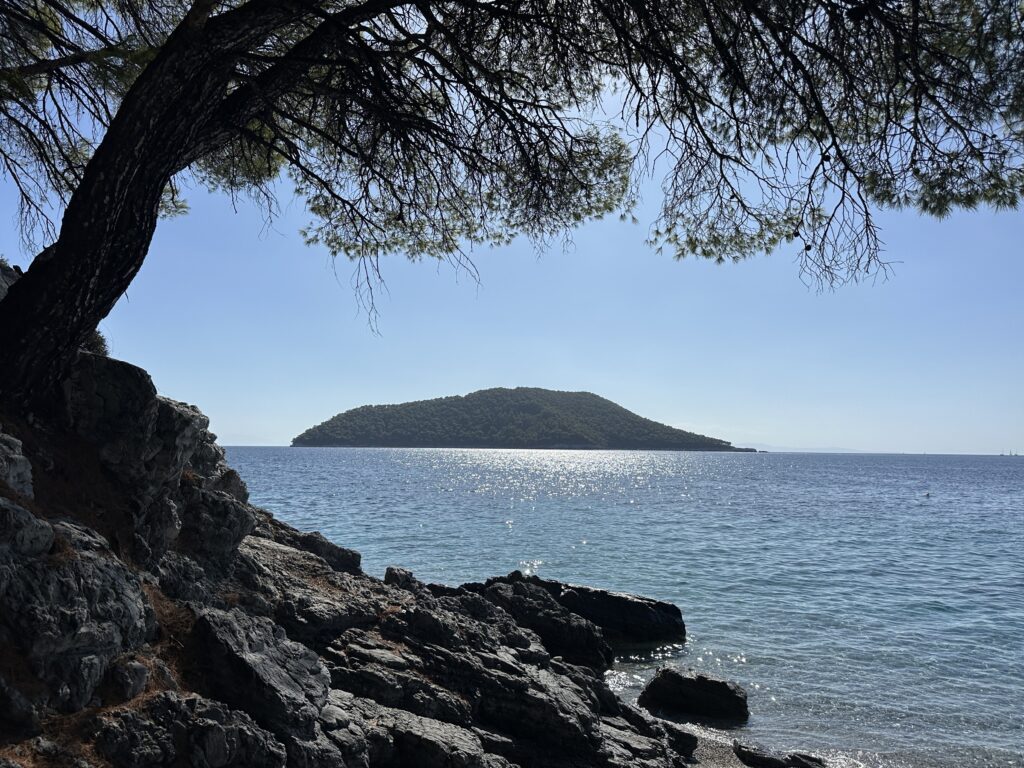
From the village of Panormos, the views across to Andrina and beyond to the surrounding islands are simply dreamy. It’s the kind of spot that makes you pause mid-drive to drink in the Aegean.
The main place of interest here is actually the 5* Adrina Resort & Spa hotel that dominates the hillside offering spectacular views of Panormos and the islands of the Aegean.
Andrina was for me a perfect stop to take a few photos and take a moment of quiet reflection.

Glossa
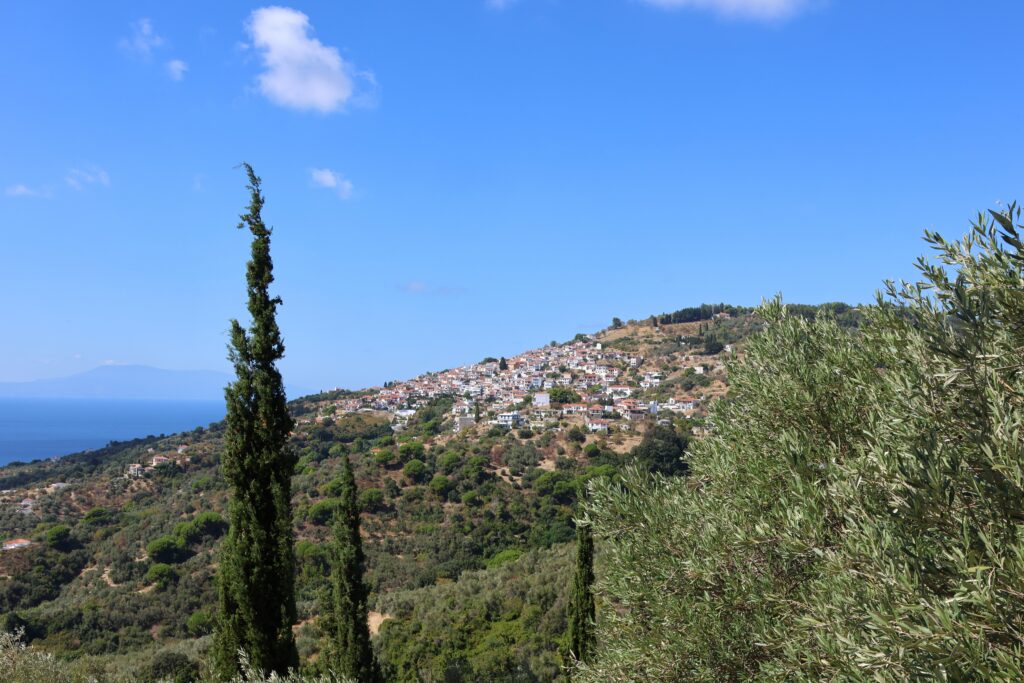
Approaching Glossa you know you are in for a treat as this beautiful whitewashed town clings to the edge of a hillside overlooking the Aegean. The village is the second largest town on the island and has a myth attached to its name: Glossa is actually Greek for the word tongue and they say that because it is built on the steep slopes you will at some stage have your tongue hanging out like an exhausted dog. They were not wrong.
I parked in a car park just a short walk from the entrance to the town alongside an unusually beautiful petrol station. It was decked out in flowers and shrubbery and really elevates the rather mundane experience of filling your car up with fuel. I loved it.


Glossa’s colourful streets and architecture from Venetian and Byzantine are a joy to wander. If you follow the steps passing gardens with the vibrant splash of flowers spilling from window boxes, you come to the main church and a small square with a couple of cosy restaurants and bars. For those interested in the history there is also a Folklore museum plus a small number of shops, bars and restaurants.
From Glossa, the views across the northern coast of Skopelos and down to the port of Loutraki below are spectacular, offering a perfect spot to pause and soak in the island scenery.


Loutraki
I stumbled upon Loutraki while heading out of Glossa town. The road winds down to the coast where in the heart of the town stands a statue honouring Olympian rower Nikos Siathitis, who was a bronze medallist at the 2004 Athens Olympics.
Close by, you’ll find Roman baths and an attractive church. Loutraki is also a small port for ferries coming and going.
In the main Loutraki is just a simple little seaside village but one that is so worth a visit.


Gourouni Lighthouse
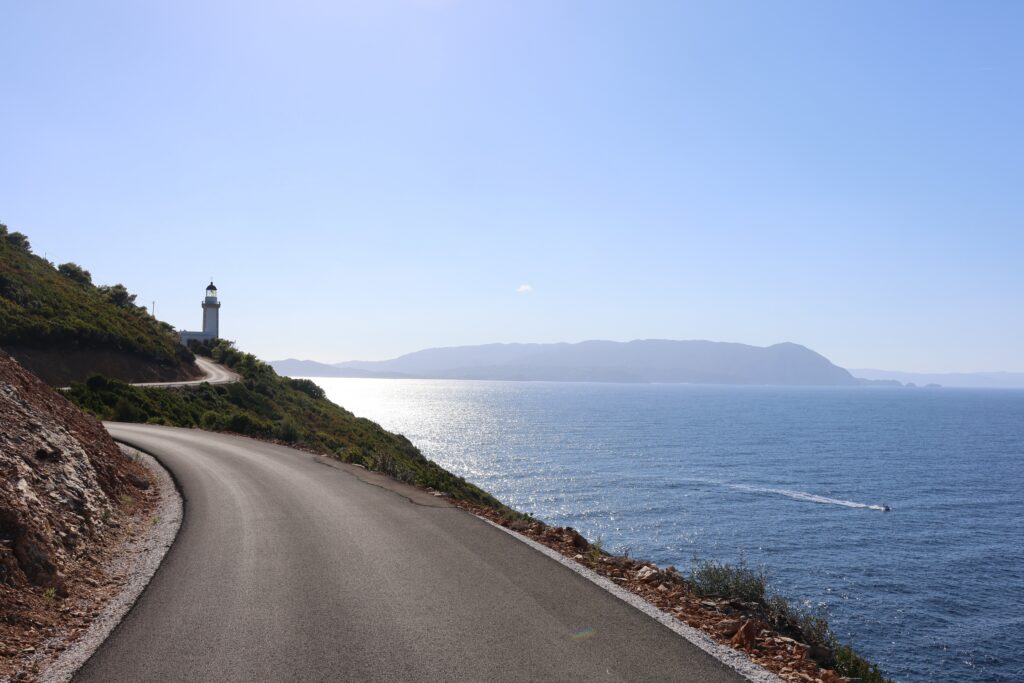
The journey from Glossa northwest to the Gourouni Lighthouse takes you off the main route, initially into forest and then back along the coast and past the popular Perivouliou beach. The journey does include a fair few hairpin bends and sharp drops. This is not a drive for the fainthearted.
Upon arrival, the lighthouse was in operation but the area is restricted: a sign marks it as a military site with no access.
Aside from a lone cyclist snapping selfies, there was little else to keep me company here which in a way was perfect. It’s a dramatic and isolated spot, perfect for those looking for yet more iconic images of this special island.


Agios Ioannis Chapel
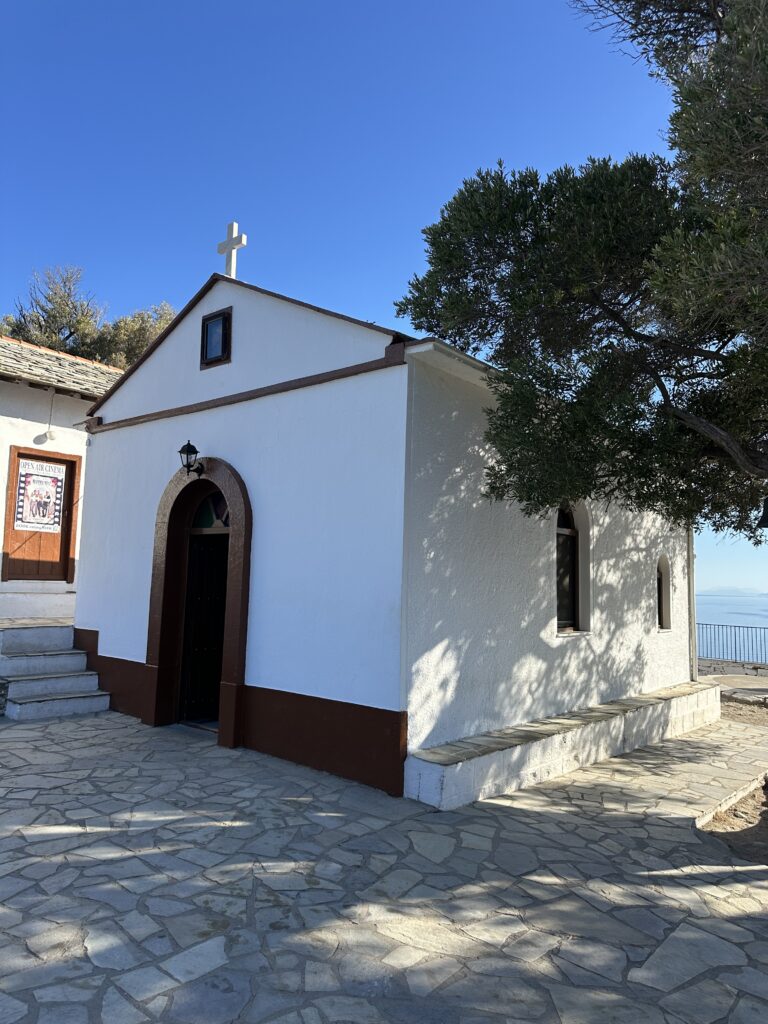
For all my efforts to uncover the real Skopelos, there are some places you simply cannot ignore, and the Agios Ioannis Chapel, made famous by Mamma Mia!, is one of them.
From Glossa the chapel is 9 km away along at times a somewhat hair-raising road. The last stretch is particularly narrow, with single-lane sections where you find yourself gripping the steering wheel a little tighter especially if a coach comes the other way. Parking is limited, so arriving early is essential. I got there at 9 am, and there were already around 20 visitors.
The first thing you will realise is just how beautiful your surroundings are. The chapel from a distance is stunning. To access the chapel you need to climb roughly 200 steps. They are uneven and in some places really tight with only the width for one person however there are railings to hold on to if you need a rest.
Eventually you will arrive through an arch into courtyard of the tiny, whitewashed chapel. There is a small area around the chapel where a bell hangs from a tree plus there are 360 degree views from all corners.
Inside the chapel, ABBA plays over loudspeakers, making the experience surreal yet enjoyable.
I stayed about half an hour because by 10am coach parties some of whom were dressed in flamboyant 1970s attire were arriving and those steps were getting congested. A visit here is unmissable, though arriving later might give a very different experience.


Pyrgos & The Interior
The mountainous interior around Pyrgos reveals a quieter, more contemplative side of Skopelos, where pine forests blanket gentle slopes, there are fields of plum trees, and fascinating monasteries.
Hiking is a favourite activity, with trails winding through forests and hills rewarding walkers with scenic views at every turn. The island is gradually developing this network of trails, although infrastructure remains limited. Many paths are in need of maintenance, and government support is minimal. One Brit making a real difference is Heather from Skopelos Trails, who is actively promoting hiking on the island and helping visitors explore its natural beauty safely and responsibly.
Cycling is also popular, thanks to quiet roads and scenic routes that suit both leisurely riders and more serious cyclists.
While Skopelos has limited land wildlife, it is home to a small herd of deer. These originated from three deer kept some years ago by a resident. The deer multiplied and were initially bred for meat however the rumour is that after the owner passed away, the fence collapsed, freeing the deer, which have since increased in population in the wild.

Food and Drink
Skopelos is a hidden gastronomy gem, with a multitude of high quality restaurants serving fresh local produce in spectacular dishes. Traditional dishes include pork or goat with plums, as well as grouper, octopus, and a variety of fish and shellfish. Local cheeses and pasta dishes are popular too.
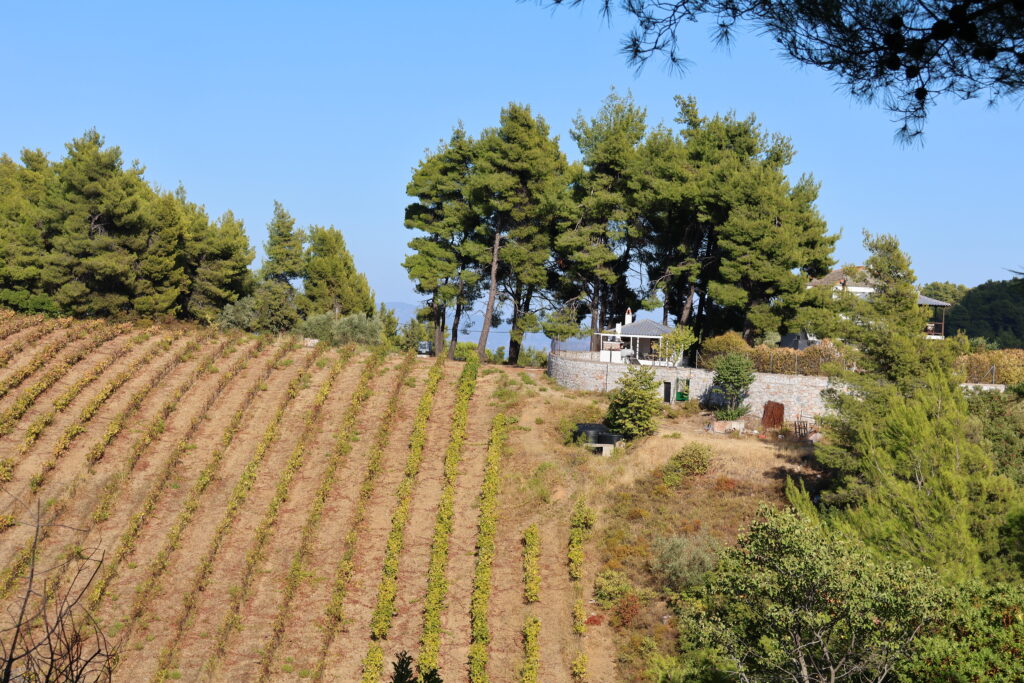
Wine was once an important industry on Skopelos, but it declined decades ago following the spread of a devastating virus. Today, wines are mostly imported, though there are plans to revive local viticulture.
When the vineyards disappeared, plums were introduced, starting Skopelos’ modern plum-growing tradition. Pomegranates are another popular crop with trees scattered across the island and are used to make healthy, vitamin-rich juices. Of course, no visit to Greece is complete without tasting the olives. Fields of olive trees are found across Skopelos, and many local restaurants proudly serve dishes prepared with fresh, high quality olive oil.
For anyone eager to experience traditional local flavours in high quality restaurants, Skopelos should be on the wish list. Sampling the island’s cuisine was undoubtedly one of the highlights of my stay.
Skopelos Restaurants & Bars
As I was staying in Skopelos Town I got to experience some wonderful dining options, each with its own character and flavour.
Ta Kymata
Founded as far back as 1896 the Ty Kymata restaurant is very popular as it is located at the end of the promenade close to the church and Venetian Castle. The restaurant serves Mediterranean dishes with fresh local ingredients.
I sampled the cheese triangles with local honey and a delicious fresh Greek Salad. The combination of delicious food, and attentive service, makes it a favourite for both first-time visitors and returning travellers.

Kiratso’s Kitchen
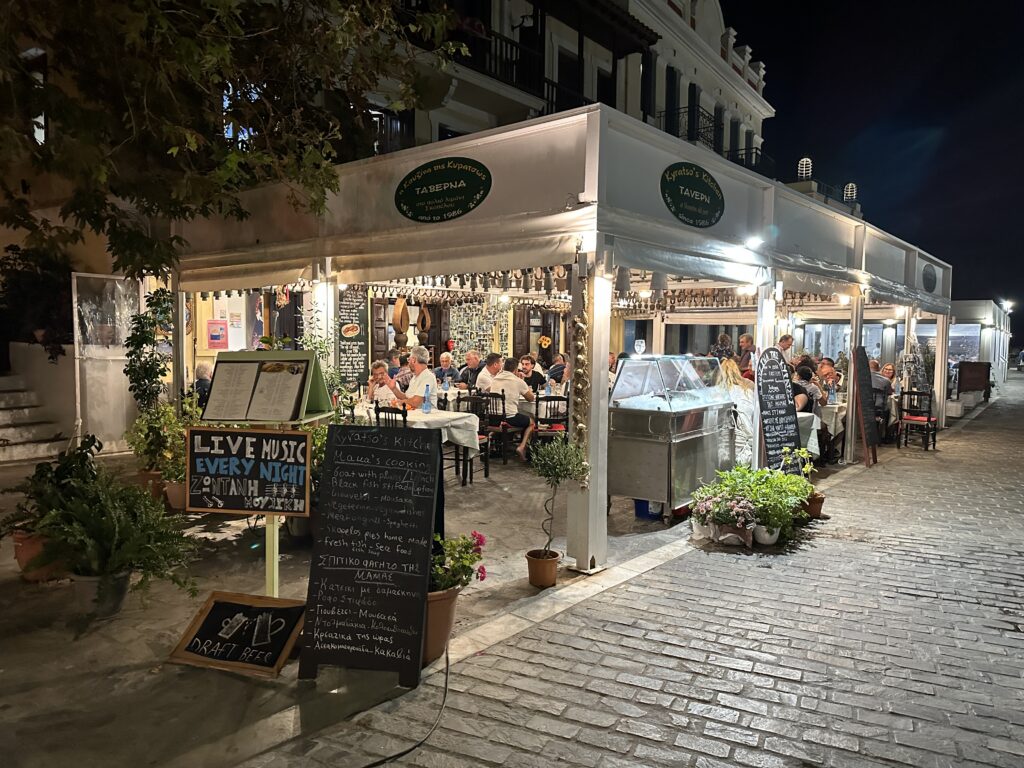
Once again located at the far end of the promenade Kiratso’s Kitchen a family run restaurant has been run by the Kosmas family since 1986. The restaurant is a firm favourite with tables packed every evening. The cuisine served is almost entirely local to the island and so incredibly fresh.
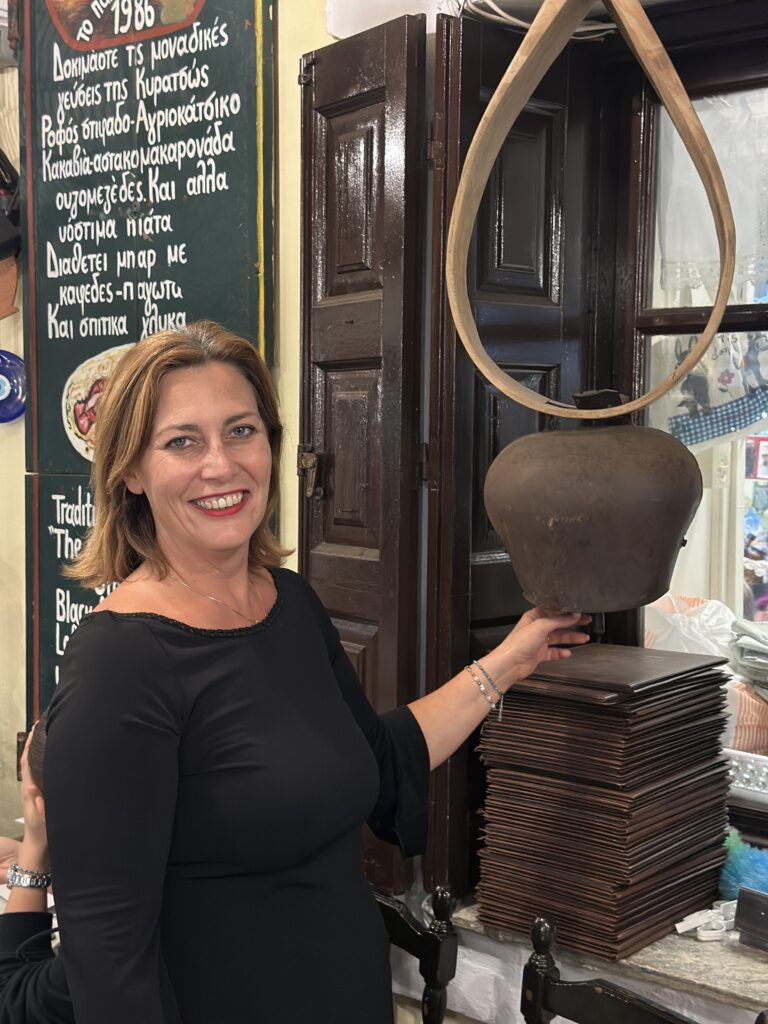
There were traditional Greek dishes plus family specialities like Goat with Plum or Grouper fish again with those local plums. There was a young musician playing the Bouzouki all adding to the authentic feel. Above you are a collection of farmyard animal bells which are all hung in size order and occasionally rung in unison by the wonderful staff. This restaurant has in times gone by, been visited by Jamie Oliver who, like me, was very complimentary – this is a restaurant not to be missed.

Stou Dimitraki
Located on the edge of the bay the Stou Dmitraki restaurant is known for its fresh seafood and classic Greek dishes. I chose the clam risotto which was delicious.
The atmosphere is warm and welcoming and the staff pleasant and efficient. This is one of those restaurants that is frequented by locals and at times there are queues to get in. That surely tells you all you need to know.


The Best Bars in Skopelos Town
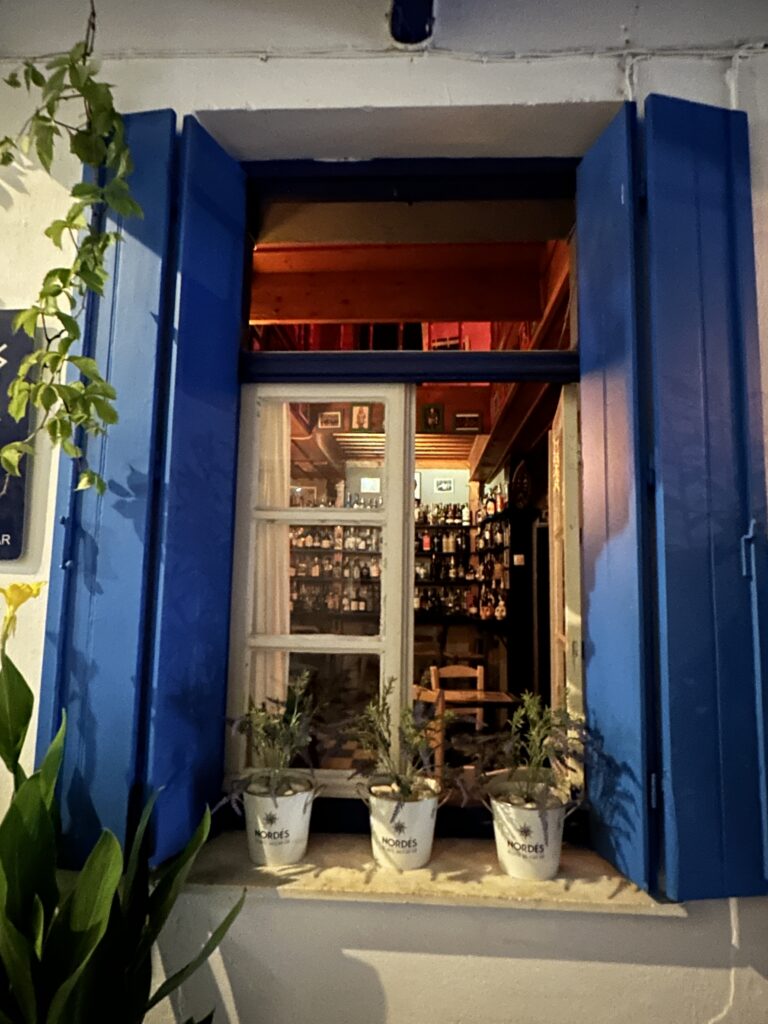
The Blue Bar was one of my favourites. There is no sea view or elegant soft furnishings – this is just a simple bar with no airs or graces in the very heart of the town. Just off one of the main shopping street you climb a couple of dozen cobbled steps leading up to a tiny courtyard where you find a few chairs and uneven tables. Step inside, adjust your eyes and this dark moody bar, oozes personality, intrigue and history.
The music played is a mix of classics and cool and often so loud you don’t actually want to sit inside. Instead you use one of those rickety tables or, as I did, sit on a cushion handily placed on the steps where you can people watch to your hearts content.
The Vrachos Cocktail Bar is popular not only for the cocktails and it’s central location but also for the impressive views from the terrace which extend across both the harbour and to the far reaches of Skopelos Town and the Aegean.

Travelling around Skopelos
Getting around Skopelos is straightforward, with several options depending on how independent you want to be.
Car hire is widely available and offers the greatest flexibility, particularly if you plan to explore quieter beaches or head into the hills. Daily prices vary throughout the season and are largely driven by demand, with higher rates during the summer months.
Taxis are easy to find in Skopelos Town and at key transport hubs. A list of standard taxi prices is often displayed in local travel agencies, and it is worth checking these in advance to avoid surprises. As an example from Skopelos Town to Loutraki which is almost the furthest distance you can travel was 50 euros one way. A short hop to Stafylos was 15 euros.
The island bus service operates across Skopelos and is a reliable and affordable way to travel between the main towns and popular beaches. Scooters and quad bikes can be hired from numerous rental points around the island and are a popular choice. While they are popular especially in the summer months, it is important to follow all safety guidance carefully.

Crafts and Souvenirs
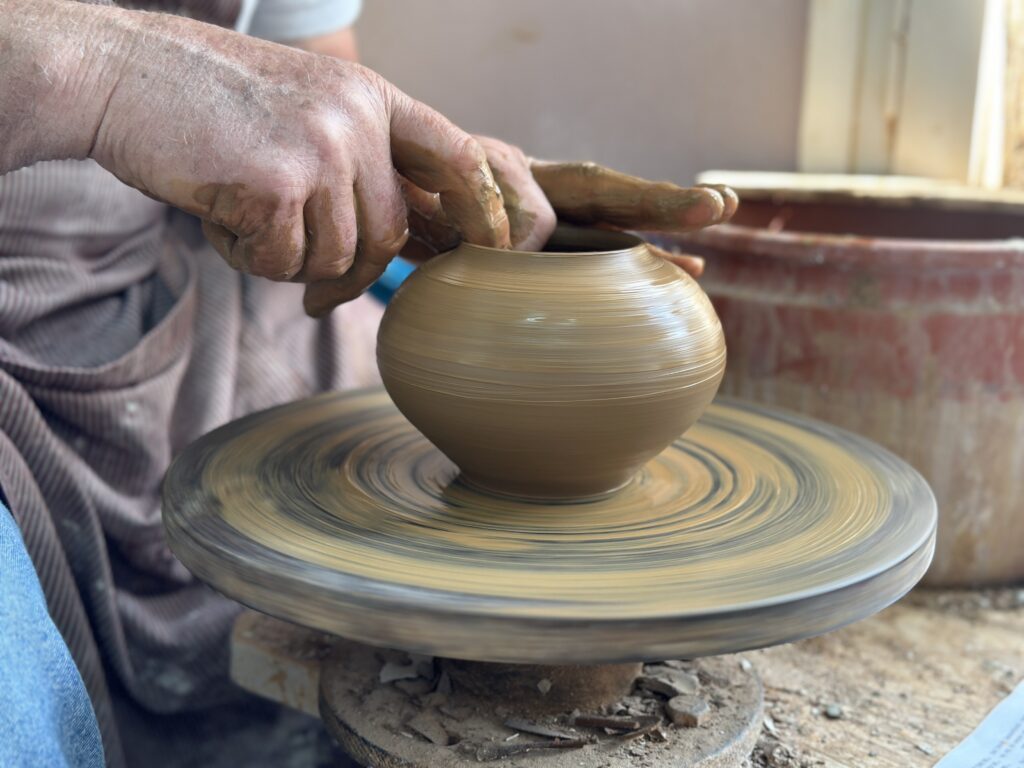
Skopelos has a range of artisanal products perfect for souvenirs. Ceramics are particularly notable, with the Rodios Pottery shop in the heart of town offering a wide choice of quality handmade pieces.
Fourth-generation potters produce traditional black pottery on a 120-year-old wheel, sold locally from €25 upwards. A family recipe keeps the signature black finish a closely guarded secret.


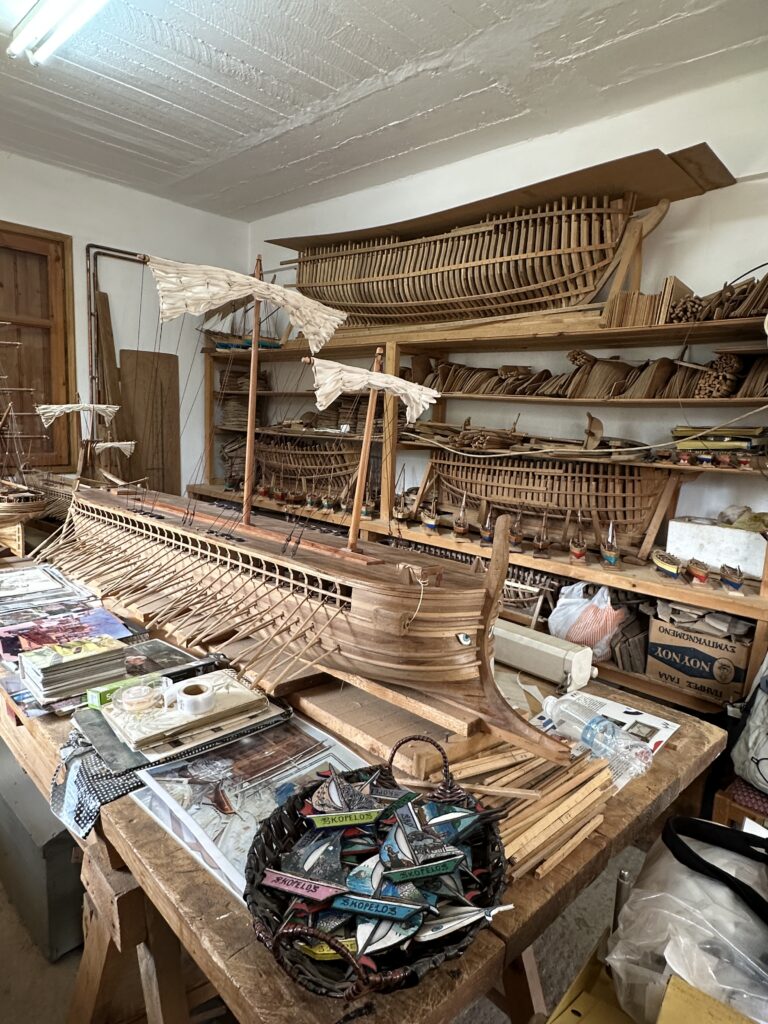
For those who appreciate craftsmanship then a visit to the Bountalas workshop is a must. The knowledge and skills from seven generations of shipbuilding is now being used to create intricate micro replicas of famous vessels including the HMS Victory and Cutty Sark. Some models took three years to build, crafted in walnut with original tools.
High-profile admirers include George Bush and Helmut Schmidt. In 2007 Pierce Brosnan visited and stated that he had no money to buy one but would return one day. The family are still waiting Mr Brosnan.
Handcrafted textiles are widely available, with small items starting at around ten euros, making them accessible and charming gifts. Jewellery, including bracelets, rings, and necklaces, are also popular, with many shops offering distinctive local designs.


Where To Stay
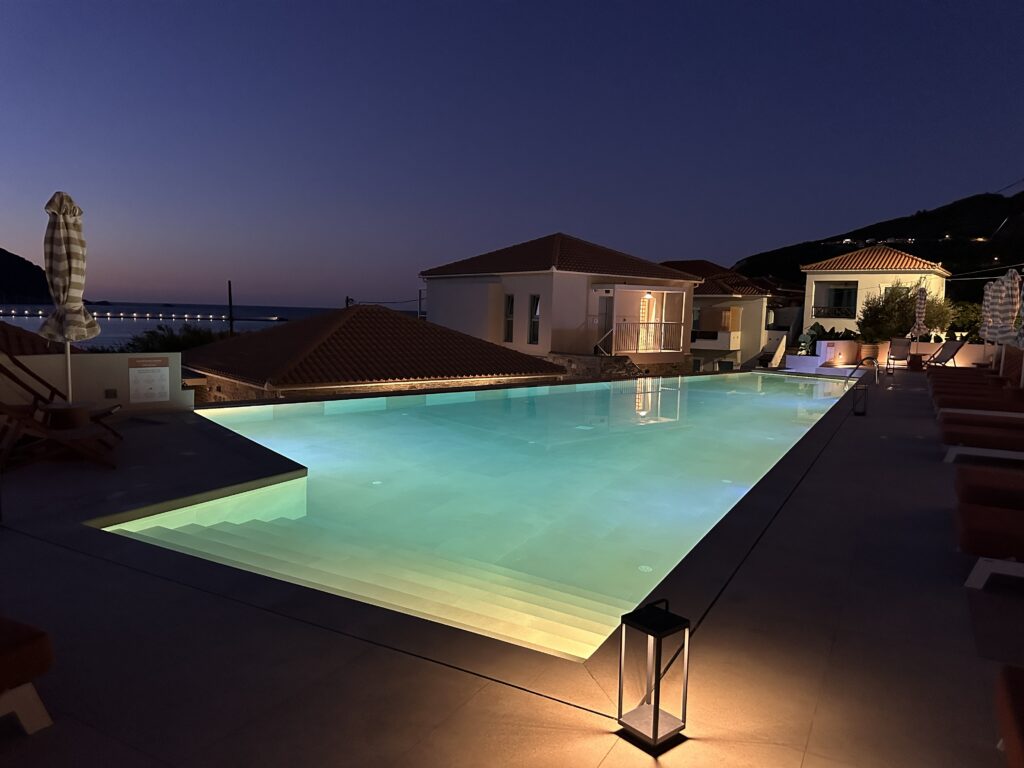
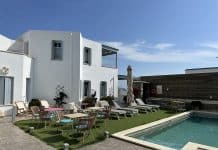
For anyone visiting Skopelos Town, a week or two at the Minnŏ Boutique Hotel & Spa comes highly recommended. Just minutes from the centre of town, it combines comfort, style, and convenience, making it an ideal base for exploring the island or simple relaxation.
You can read my full review of my stay at this lovely hotel, where I share details on the rooms, service, and the wonderful atmosphere that makes it stand out as one of the best hotels to stay on Skopelos.
Final Thoughts
Skopelos is not an island that shouts for attention. It does not need to. It rewards those who slow down, look beyond the obvious, and embrace its quieter rhythms.
Yes, the Mamma Mia sites are fun, but they are only a small part of what makes this island special. From forested hills and empty beaches to village life, warm hospitality, and a deep sense of authenticity, Skopelos feels like Greece as it once was, and in many ways, still is.
For travellers seeking beauty without pretence and culture without crowds, Skopelos is an island well worth discovering.
Oh and just for the record – I loved the film.
Contact
For more information on the island of Skopelos visit www.skopelos.gr/en



Such a lovely read. I really appreciate how you shared the real charm of Skopelos beyond the famous soundtrack. Your descriptions of the island’s peaceful beauty and local spots make it feel so inviting. Thanks for the authentic and inspiring guide!