
✈ Start Here – Canada Guide
- Introduction to Canada
- Key Information for Canada
- Best Cities & Places to Visit in Canada
- Getting Around Canada
- Best Things to Do in Canada
- Best Time to Visit Canada
- Suggested Canada Itinerary
- Where to Stay in Canada
- Canada – Through My Lens
- Frequently Asked Questions About Canada
- Final Thoughts
📍 Map of Canada
🧭 Introduction to Canada
Canada is one of those countries that I don’t think I could ever tire of exploring. It is enormous, wonderfully varied and blessed with some of the most spectacular landscapes and wildlife anywhere in the world.
My own relationship with Canada stretches back to the early 1990s when I first arrived in Vancouver during a stopover en route to Hawaii. I remember immediately liking the city and its combination of mountains, ocean and outdoor lifestyle. A later visit took me to Toronto at the end of an American road trip, but for years I still had an ambition to experience Canada properly by road.
I finally managed a small part of that dream in 2018 when I celebrated my 50th birthday with another road trip. Starting in New York, I headed north through New England and followed the Old Canada Road towards the border before continuing into Québec, visiting Montréal, Québec City and the magnificent landscapes of Jacques-Cartier National Park.
Even after those trips, I feel as though I’ve barely scratched the surface.
Canada stretches from the Atlantic to the Pacific and north into the Arctic, with ten provinces and three territories encompassing enormous mountain ranges, forests, lakes, prairies, wild coastlines and some wonderfully cosmopolitan cities. For me, however, it is the combination of wilderness, wildlife and the freedom of the open road that makes Canada particularly appealing.
There is still a great deal of the country I want to see, and I suspect there always will be.
🔑 Key Information for Canada
Continent: North America
Capital: Ottawa
Currency: Canadian Dollar (CAD)
Languages: English and French
Time Zones: Canada spans six primary time zones
Entry Requirements: Check current UK Government advice before travelling
Health: Check current travel health advice before departure
Tourist Information: Destination Canada
Best Time to Visit: Depends on the region and type of trip
Flight Time from the UK: Approximately 7–10 hours depending on destination
Canada is officially bilingual at federal level, with English and French its two official languages. French is particularly dominant in Québec, while New Brunswick is Canada’s only officially bilingual province.
Distances are one of the most important things to appreciate when planning a Canadian holiday. Canada is the second-largest country in the world, so trying to experience Vancouver, the Rockies, Toronto, Québec and the Atlantic provinces during one short holiday usually means spending far too much time travelling.
My advice would be to choose a region and explore it properly. Canada isn’t going anywhere, and it gives you a very good excuse to return.
🌆 Best Cities & Places to Visit in Canada
The difficult part of planning a trip to Canada isn’t finding somewhere interesting to visit, but deciding which part of this enormous country to concentrate on.
I’ve experienced only a fraction of it myself, but these are some of the places that either left a lasting impression on me or remain firmly on my list for future travels.
Vancouver, British Columbia
Vancouver was where I first set foot on Canadian soil back in the early 1990s, and I immediately liked it.
Few major cities enjoy such an extraordinary natural setting. Mountains rise behind the skyline, the Pacific sits on the doorstep and enormous green spaces make it surprisingly easy to escape the urban environment.
Stanley Park is one of the city’s great attractions, with walking and cycling routes following the seawall and providing wonderful views across the water. Granville Island is another favourite for its food market, independent shops and waterfront setting, while the different neighbourhoods give Vancouver a relaxed and multicultural character.
It is also the natural gateway for travelling north towards Whistler or east into the Canadian Rockies, which makes it a perfect starting point for a western Canada road trip.
Whistler, British Columbia
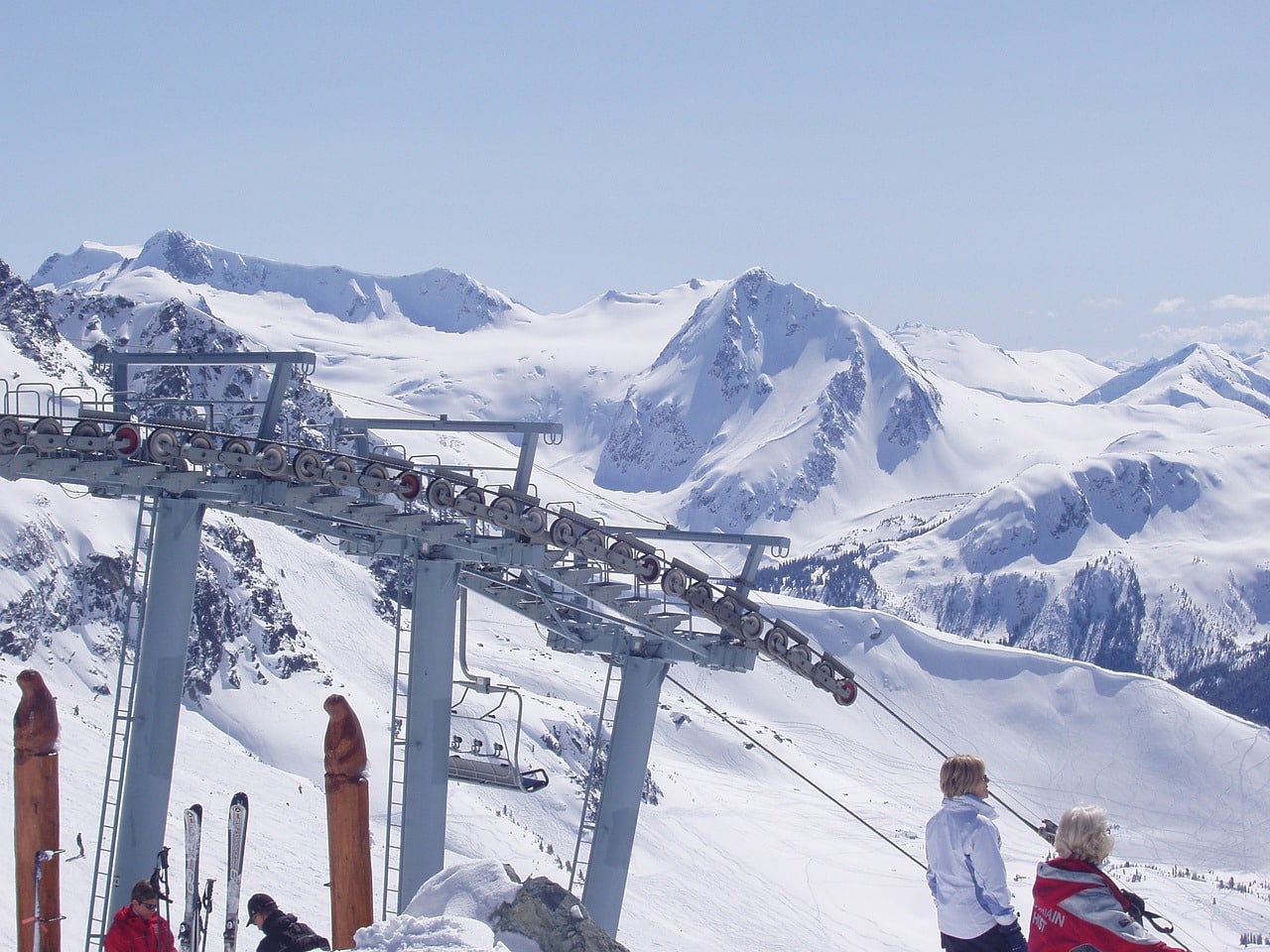
Whistler is internationally famous for skiing and snowboarding, but it has become a genuine year-round mountain destination.
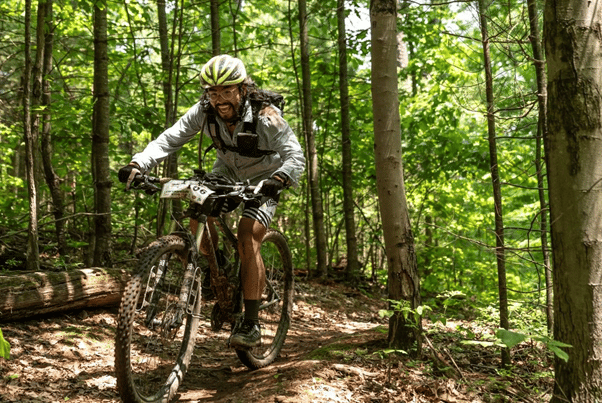
Winter inevitably brings snow sports, while summer opens up hiking, mountain biking and opportunities simply to enjoy the spectacular landscapes surrounding Whistler and Blackcomb mountains.
Its proximity to Vancouver makes the journey part of the attraction. The Sea-to-Sky Highway between the two provides a wonderful introduction to British Columbia, with mountains, forests and water accompanying much of the route.
Banff & Lake Louise, Alberta
If there is one Canadian journey still sitting particularly high on my wish list, it is travelling through the Rockies around Banff National Park.
Banff was Canada’s first national park and remains one of its most famous, with mountains, forests, wildlife and those almost impossibly coloured glacial lakes that have become synonymous with the Canadian Rockies.
Lake Louise is perhaps the best known, but the wider national park deserves far more than a quick photographic stop. Hiking, wildlife watching and simply travelling through the landscape are all part of the experience.
This is Canada on the grandest scale.
The Icefields Parkway, Alberta
Running between Lake Louise and Jasper, the Icefields Parkway is one of the great road journeys of the world.
The route passes mountains, glaciers, waterfalls, lakes and enormous wilderness landscapes, with numerous places to stop along the way. This isn’t a road to rush simply because the map tells you the journey can be completed in a certain number of hours.
For me, the attraction would be having the freedom to stop whenever the scenery or wildlife demanded it, which in this part of Canada could be rather frequently.
Calgary, Alberta
Calgary provides a useful gateway to the Rockies but deserves some time of its own.
The city is famously associated with the Calgary Stampede, when rodeo, music and western culture take over for ten days each summer. Outside the festival, Calgary combines modern city life with easy access to some of Alberta’s extraordinary landscapes.
For anyone planning a Rockies road trip, flying into Calgary and travelling west towards Banff makes a great deal of sense.
Toronto, Ontario
I visited Toronto during the 1990s at the end of a road trip through the United States and remember being struck by its friendly, cosmopolitan atmosphere.
The CN Tower inevitably dominates the skyline and remains one of the city’s most recognisable landmarks, but Toronto is far more interesting at street level. Its neighbourhoods reflect communities from around the world, while food, culture, sport and the waterfront all contribute to a city that deserves several days rather than simply being used as the gateway to Niagara Falls.
I’d very happily return and discover how much it has changed since my first visit.
Niagara Falls, Ontario
There are certain sights that you’ve seen so many times in photographs that you wonder whether the reality can possibly live up to the expectation.
Niagara Falls is one of them.
The Canadian side provides spectacular views of Horseshoe Falls, and getting close to the water gives you a much better appreciation of the sheer volume and power involved.
The surrounding commercial development isn’t necessarily everybody’s idea of natural beauty, but the falls themselves remain extraordinary and are easily combined with Toronto and the wider Niagara region.
Ottawa, Ontario
Canada’s capital is sometimes overshadowed by Toronto, Montréal and Vancouver, but Ottawa offers a rather different city experience.
The Parliament buildings, museums and national institutions provide plenty of history and culture, while the Rideau Canal and extensive green spaces make the city particularly attractive to explore on foot or by bicycle.
Its position between Toronto and Montréal also makes Ottawa relatively easy to incorporate into a longer eastern Canada itinerary.
Montréal, Québec
Montréal was one of the highlights of my 2018 road trip.
There is an unmistakably European influence, particularly around Old Montréal, where historic buildings and cobbled streets provide a wonderful contrast with the modern city beyond.
I loved simply wandering, stopping for food and enjoying the atmosphere. Montréal is also one of those cities where French and North American influences come together in a way that feels completely natural.
Food is a major part of the experience, and you really shouldn’t leave without trying a proper Montréal bagel or discovering why locals have such strong opinions about poutine.
Québec City, Québec
If Montréal has a European flavour, Québec City takes that feeling considerably further.
The historic fortified centre is one of the most attractive cities I’ve visited in North America, with cobbled streets, stone buildings and the unmistakable outline of the Château Frontenac overlooking the St Lawrence River.
I particularly enjoyed exploring the old city without any great plan, finding small restaurants and shops tucked away amongst the streets. I even discovered what may still be the best Christmas shop I’ve ever encountered.
Québec City is somewhere I would happily return to, particularly as part of a longer road trip through the province.
Jacques-Cartier National Park, Québec
Around 50 kilometres north of Québec City, Jacques-Cartier National Park was one of the real surprises of my 2018 trip.
The landscape is dominated by a spectacular glacial valley, forests, rivers and mountains, providing a complete change of scenery within easy reach of the city.
This was the Canada I’d been dreaming about when I imagined hiring a vehicle and heading into the wilderness. Walking amongst those enormous landscapes gave me a taste of the road trip I still want to complete on a much larger scale.
Churchill, Manitoba
Churchill remains firmly on my wildlife wish list.
Situated on Hudson Bay in northern Manitoba, this remote community has become particularly associated with polar bears, which gather around the area during the autumn as they wait for sea ice to form.
Beluga whales visit the Churchill River during summer, while the northern location also provides opportunities to experience the aurora.
For somebody who loves wildlife and photography, it is difficult to imagine a Canadian destination with much more appeal.
Cape Breton Island, Nova Scotia
On Canada’s Atlantic coast, Cape Breton Island offers another completely different landscape.
The famous Cabot Trail loops through spectacular coastal and highland scenery, including Cape Breton Highlands National Park, and has become one of Canada’s classic road trips.
This is an area I’d particularly like to explore slowly, combining hiking and coastal scenery with the communities and culture of Nova Scotia.
Newfoundland & Labrador
If I wanted to disappear into somewhere wild and remote, Newfoundland and Labrador would be difficult to resist.
Colourful waterfront communities, rugged Atlantic scenery, whales, seabirds and enormous wilderness landscapes make this one of Canada’s most distinctive regions.
Gros Morne National Park is particularly high on my list, while Newfoundland’s iceberg season must provide some extraordinary photographic opportunities.
Canada’s North
Then there is the Canada that few visitors ever experience: Yukon, the Northwest Territories and Nunavut.
These enormous northern territories offer wilderness on a scale that is difficult to comprehend, with mountains, tundra, Arctic wildlife and some of the world’s great opportunities for seeing the northern lights.
Travelling here requires considerably more planning than a city break in Toronto or Vancouver, but for anyone attracted to remote landscapes and wildlife, Canada’s north represents the ultimate adventure.
🚗 Getting Around Canada
The first rule of travelling around Canada is to respect the distances. What appears to be a manageable gap between two points on a map can translate into many hours on the road, particularly once you leave the major cities.
For me, driving remains the most appealing way to experience Canada. A car or motorhome gives you the freedom to stop when the scenery catches your attention, take detours into national parks and experience the smaller towns and landscapes between the headline destinations.
That freedom was exactly what I enjoyed during my 2018 journey into Québec.
By Car
Canada is made for road trips, but it is important not to over-plan. Long driving days might allow you to cover more kilometres, but they rather defeat the point of travelling through some of the world’s most spectacular scenery.
Road conditions and driving requirements vary enormously depending on region and season, particularly during winter and in more remote areas. Check local conditions before setting out and make sure you understand the rules for the province or territory you’re visiting.
By Motorhome or RV
Touring Canada by RV remains one of my travel ambitions.
The combination of national parks, campgrounds and enormous landscapes makes a motorhome an appealing option, particularly in western Canada and the Atlantic provinces.
It also gives you the freedom to spend longer somewhere when you fall in love with it, which I suspect would happen rather often.
By Train
Passenger rail in Canada is operated primarily by VIA Rail, connecting many communities across the country.
Long-distance trains provide a very different way to appreciate Canada’s scale, although journeys can take considerable time. The famous route between Toronto and Vancouver crosses thousands of kilometres of forests, prairies and mountains.
For something more luxurious, Rocky Mountaineer operates scenic rail journeys through western Canada, focusing on the landscapes of British Columbia and Alberta.
By Air
Canada’s enormous size means domestic flights are sometimes the only practical option, particularly if you are combining regions thousands of kilometres apart.
Air Canada and WestJet operate extensive domestic networks alongside several regional airlines.
If your holiday is focused on one region, however, I’d avoid flying unnecessarily. Some of Canada’s greatest experiences happen during the journey between places.
Ferries
Ferries are an important part of travel in several parts of Canada, particularly around British Columbia and Atlantic Canada.
BC Ferries connects Vancouver Island and numerous coastal communities with the mainland, while services in eastern Canada provide access to destinations including Newfoundland.
As with so much Canadian travel, even getting from A to B can become part of the experience.
✔ Best Things to Do in Canada
Canada isn’t really a country where I would produce a checklist of twenty attractions and suggest ticking them off one by one. The distances are too great and the landscapes too important.
Instead, these are the experiences I think capture what makes the country special.
Take a Canadian Road Trip
Few countries make me want to hire a vehicle and simply drive quite as much as Canada.
The Icefields Parkway, Sea-to-Sky Highway, Cabot Trail and routes through Québec and the Atlantic provinces are just some of the possibilities.
Leave space in the itinerary for unexpected stops. A viewpoint, roadside lake or wildlife sighting may end up being more memorable than the attraction you were originally driving towards.
Experience the Canadian Rockies
Whether you’re hiking, driving, skiing or simply admiring the view, the Rockies are one of Canada’s defining landscapes.
Banff and Jasper provide obvious bases, but the journey between them is every bit as important as the destinations themselves.
Go Wildlife Watching
Canada is one of the world’s great wildlife destinations.
Depending on where you travel, you might encounter black bears, grizzly bears, moose, elk, whales, seals, bald eagles and even polar bears.
Responsible wildlife watching is essential. Keep a safe distance, never feed wild animals and follow the advice of park authorities and experienced local guides.
Explore a Canadian National Park
Canada’s national parks protect some extraordinary landscapes, from mountains and glaciers to forests, coastlines and Arctic wilderness.
Banff, Jasper, Yoho, Gros Morne and Cape Breton Highlands are amongst the best known, but there are protected landscapes across the country that deserve exploration.
See Niagara Falls
However familiar the images may be, standing beside Niagara and feeling the spray and noise of the falls is still one of Canada’s great experiences.
If possible, stay long enough to explore beyond the immediate falls and discover more of the Niagara region.
Discover Québec’s French Heritage
Montréal and Québec City provide a side of Canada that feels noticeably different from the country’s English-speaking cities.
The language, food, architecture and culture make Québec particularly rewarding, and I’d strongly recommend travelling beyond the two major cities if you have time.
See the Northern Lights
Canada’s northern regions provide some wonderful opportunities for viewing the aurora borealis.
The Yukon and Northwest Territories are particularly well known, although the lights can also appear considerably further south when conditions are favourable.
Experience Canada in Winter
Winter isn’t something Canadians simply endure. In many parts of the country it becomes another reason to get outside.
Skiing and snowboarding are obvious attractions, but there are also opportunities for snowshoeing, dog sledding, ice skating and numerous winter festivals.
You need the right clothing and a willingness to embrace some serious cold, but experiencing Canada beneath snow must be spectacular.
Get Out on the Water
With the Pacific, Atlantic and Arctic oceans alongside an extraordinary number of lakes and rivers, water is never far from the Canadian experience.
Kayaking, canoeing, whale watching and boat trips provide completely different perspectives on the landscape, while simply sitting beside a Canadian lake with nothing much planned sounds pretty appealing to me.
🌞 Best Time to Visit Canada
There isn’t one perfect time to visit Canada because the country is simply too large and climatically varied.
The best month depends on where you’re going and what you want to experience.
Spring: March to May
Spring can be an interesting shoulder season, although conditions vary enormously across the country.
Cities begin to emerge from winter, while later spring brings increasingly pleasant conditions for exploring. Mountain regions may still have significant snow and some seasonal roads and hiking trails can remain inaccessible.
Summer: June to August
Summer is the classic season for road trips, hiking, national parks and exploring Canada’s lakes and coastlines.
Days are long and most visitor facilities are operating, but this is also the busiest period in popular destinations such as Banff and Jasper.
Advance planning is particularly worthwhile if you’re travelling through the Rockies during peak summer.
Autumn: September to November
Autumn would be one of my favourite times to return to eastern Canada.
The changing colours across Québec, Ontario and the Atlantic provinces can be spectacular, while September often combines pleasant weather with fewer visitors than the height of summer.
Wildlife experiences also change with the season, including the famous polar bear viewing period around Churchill later in autumn.
Winter: December to February
Winter completely transforms Canada.
For skiing and snow sports, destinations such as Whistler and the Rockies come into their own, while cities including Québec embrace the cold with winter events and activities.
Temperatures can become extremely low, however, particularly away from the milder Pacific coast, so preparation is essential.
So, When Would I Visit?
For a classic road trip through western Canada, I’d choose June or September, when the days are long enough to make the most of the scenery while avoiding some of the busiest weeks of midsummer.
For Québec and eastern Canada, late September into early October would particularly appeal to me for the autumn colours.
Wildlife trips are different again, and I’d always plan those around the species I wanted to see rather than simply choosing the warmest weather.
📅 Suggested Canada Itinerary
Trying to produce one itinerary covering the whole of Canada would be rather pointless. Instead, if I were planning my dream first-time road trip, I’d concentrate on western Canada and give myself around two weeks.
Days 1–2: Vancouver
Begin with two days in Vancouver, exploring Stanley Park, Granville Island and the waterfront while recovering from the flight.
Days 3–4: Whistler
Pick up a car and travel the Sea-to-Sky Highway towards Whistler, allowing plenty of time for stops along the way.
Spend a full day enjoying the mountain scenery before continuing east.
Days 5–6: Journey Towards the Rockies
Don’t try to rush from Whistler to Banff in a single exhausting drive. Break the journey and enjoy the changing landscapes of British Columbia.
Days 7–9: Banff & Lake Louise
Allow at least three days around Banff and Lake Louise.
Explore the national park, take some walks and leave enough time to enjoy the scenery rather than constantly moving to the next viewpoint.
Day 10: Icefields Parkway
Drive north towards Jasper along the Icefields Parkway.
This should be treated as a full day’s experience rather than simply a transfer. Stop frequently and allow the landscape to dictate the pace.
Days 11–12: Jasper
Spend two days exploring Jasper National Park, looking for wildlife and enjoying some of the quieter landscapes around the town.
Days 13–14: Return or Continue
Depending on your flights, continue towards Edmonton or begin the journey back towards Calgary.
If you have longer, add extra nights rather than more destinations. Canada rewards slowing down.
🏨 Where to Stay in Canada
Accommodation in Canada ranges from major international hotels and city boutiques to mountain lodges, cabins, campsites and remote wilderness properties.
In cities such as Vancouver, Toronto and Montréal, I’d choose somewhere central enough to explore largely on foot or public transport. Paying slightly more for the right location can save considerable time travelling in and out of the centre.
In the national parks, location becomes even more important. Staying around Banff, Lake Louise or Jasper puts the landscape on your doorstep, although accommodation can be expensive and books quickly during peak periods.
For a road trip, I’d mix things up. A comfortable city hotel, a couple of nights in a mountain lodge and perhaps a cabin beside a lake would provide a much more memorable Canadian experience than staying in the same type of hotel every night.
And one day I still intend to hire that RV.
📷 Canada – Through My Lens
Canada is made for photography.
My photographs from Vancouver and my 2018 journey through Québec capture only a tiny part of the country, but they also remind me why I’ve always wanted to return.
Cities such as Montréal and Québec provide wonderful street and architectural photography, while outside the urban areas the scale changes completely. Forests, mountains, lakes and wildlife become the subjects, and sometimes the challenge is simply conveying how enormous the landscape feels.
Wildlife photography is another major attraction for me. Photographing bears, moose, whales and perhaps one day polar bears in their natural environment would be a dream, although getting the photograph should never come before respecting the animal.
Canada is one of those countries where I’d want the camera beside me virtually all the time because you never quite know what might appear around the next corner.
❓ Frequently Asked Questions About Canada
Is Canada good for a road trip?
Absolutely. Canada is one of the world’s great road-trip destinations, with spectacular routes through the Rockies, British Columbia, Québec and the Atlantic provinces. The key is not trying to cover too much ground in one trip.
How long do I need in Canada?
For one region, I’d recommend at least 10–14 days. Two weeks works well for a Rockies road trip or a journey through Québec and Ontario, but attempting to see both eastern and western Canada in that time would involve a lot of travelling.
Do I need a car in Canada?
Not necessarily in the major cities, but a car gives you much greater freedom if you want to explore national parks, smaller communities and rural areas.
Is Canada expensive?
Canada can be an expensive destination, particularly for accommodation in popular areas and during peak periods. Booking ahead, travelling outside the busiest weeks and concentrating on one region can help manage costs.
What wildlife can I see in Canada?
Depending on the region, wildlife can include black and grizzly bears, polar bears, moose, elk, caribou, whales, seals, bald eagles and many other species.
Is Canada safe for wildlife watching?
Yes, provided you behave responsibly. Wild animals need space, particularly bears and moose. Never approach or feed wildlife and always follow local park guidance.
Is French essential in Québec?
You don’t need to speak fluent French to travel in Québec, particularly in the main visitor areas, but learning a few basic phrases is both useful and appreciated. French is the province’s official language and an important part of its identity.
Which part of Canada should I visit first?
That depends on what interests you. For mountains and a classic road trip, I’d choose Vancouver and the Canadian Rockies. For cities, history and culture, Montréal and Québec City make a wonderful combination. Wildlife enthusiasts might eventually find themselves looking considerably further north.
❤️ Final Thoughts
Canada has been part of my travels for more than three decades, yet I still feel I’ve seen remarkably little of it.
My first visit to Vancouver gave me an immediate affection for the country, Toronto introduced me to another very different Canadian city and my 2018 road trip through Québec finally allowed me to experience some of the open roads and wild landscapes I’d been imagining for years.
What Canada continues to represent for me is freedom. It is the thought of hiring a vehicle, loading the camera equipment into the back and setting off towards mountains, forests and lakes without knowing exactly what I’ll discover along the way.
There are still enormous gaps in my Canadian map. I’ve yet to drive the Icefields Parkway, photograph a polar bear in Churchill, explore Newfoundland, follow the Cabot Trail or properly experience the wilderness of the north. Far from bothering me, that unfinished list is precisely what makes Canada so exciting.
I’ve been several times already, and I’m certainly not finished with it yet.