Having spent an unforgettable time exploring New Zealand’s South Island in my Maui motorhome, I was beginning to wonder whether the North Island could possibly live up to everything I had already experienced. The South had delivered towering mountains, spectacular glaciers, beautiful coastlines, charming little towns and some extraordinary wildlife encounters, all of which had made it one of the most memorable road trips I had undertaken. However, with another entire island still waiting to be explored, I was looking forward to discovering a different side of this remarkable country.
My New Zealand South Island Road Trip had taken me from Christchurch through the beautiful landscapes of Otago, Queenstown, the West Coast and Kaikōura before eventually arriving in Picton, where I would board the Interislander ferry for the journey across Cook Strait to Wellington. It was a wonderful feeling to know that, rather than returning the motorhome and catching a flight, I could simply drive aboard the ferry with my accommodation and belongings and continue the adventure on the other side.
The North Island promised a rather different experience, with its volcanic landscapes, geothermal activity, Māori heritage and fascinating wildlife, while my planned route would take me from Wellington through the centre of the island, visiting Huka Falls, Rotorua and Waitomo before eventually reaching Auckland. As I had already discovered during my time in the South, however, some of the most memorable moments of a road trip are those that you never anticipate, and this next stage of my journey would certainly provide a few surprises of its own, including a rather unlikely friendship with a possum!
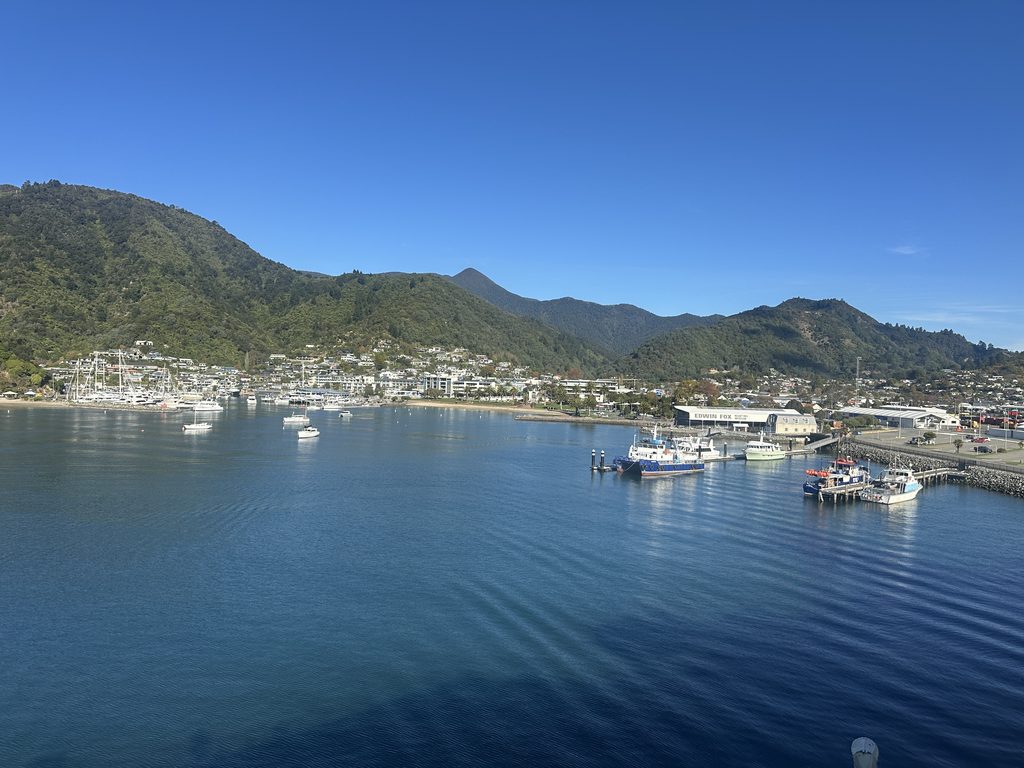
Picton and the Beautiful Journey Across Cook Strait
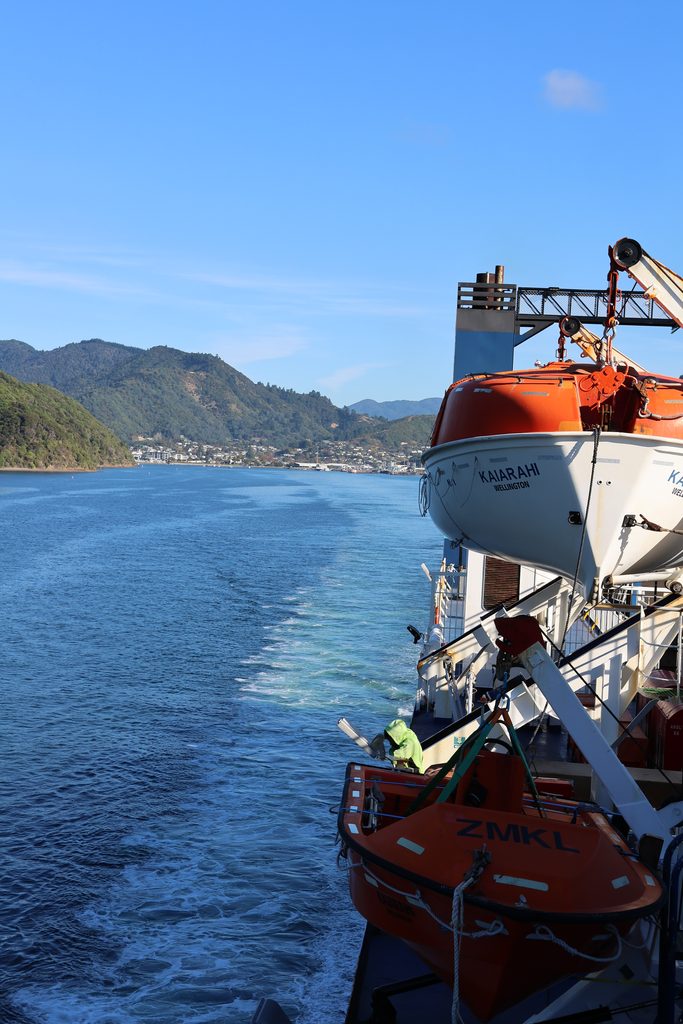
The journey between New Zealand’s two main islands is far more than a simple ferry crossing, particularly when travelling from Picton through the magnificent Marlborough Sounds. Having driven the motorhome aboard the Interislander ferry, I headed outside to enjoy the scenery as we slowly made our way through a beautiful collection of sheltered bays, forest-covered hills and narrow waterways before eventually reaching the open waters of Cook Strait.
It was a lovely way to leave the South Island behind, with the surrounding hills gradually disappearing into the distance as we continued towards Wellington. The Marlborough Sounds are particularly impressive from the water, where the steep, green hillsides descend almost directly into the sea, creating a landscape that seems to change with every turn of the ship. I spent much of the early part of the crossing enjoying the views and reflecting on the places I had visited, while also wondering what new experiences lay ahead.
There was something particularly satisfying about making the crossing with my motorhome, as it meant that the journey remained one continuous adventure rather than two separate holidays. After several hours at sea, Wellington eventually appeared on the horizon, and before long I was driving off the ferry and onto the roads of the North Island, ready to begin the next chapter.
Wellington – The Beginning of My North Island Adventure
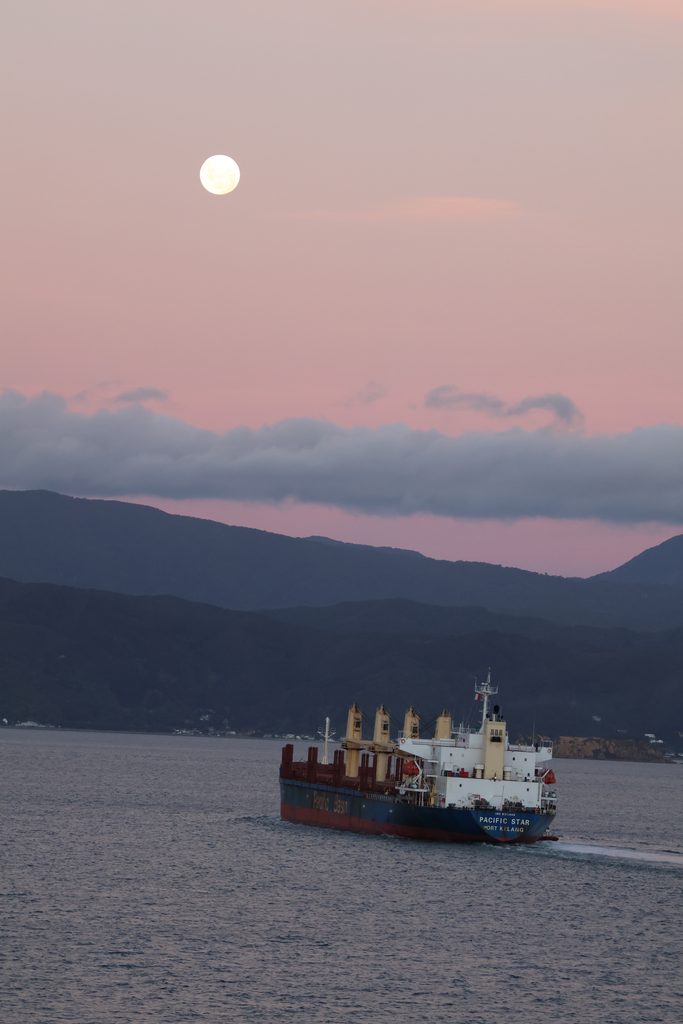
Wellington, New Zealand’s capital, occupies a spectacular position around a natural harbour, surrounded by steep green hills that provide a dramatic backdrop to the city. Although considerably smaller than Auckland, it has a lively atmosphere and an interesting combination of historic buildings, modern architecture, waterfront attractions and cultural institutions, making it a worthwhile destination for anyone travelling between the islands.
The city is particularly well known for its café culture, creative industries and the Museum of New Zealand Te Papa Tongarewa, which explores the country’s natural history, Māori heritage and national identity. Another popular attraction is the Wellington Cable Car, which climbs from the city centre towards the Botanic Garden and offers wonderful views across the harbour and surrounding hills.
Wellington also has a reputation for being one of the windiest cities in the world, largely because of its position beside Cook Strait, where the prevailing winds are channelled between the two islands. Having arrived by ferry, I could certainly appreciate how exposed this part of New Zealand can be, although the setting itself is undeniably attractive.
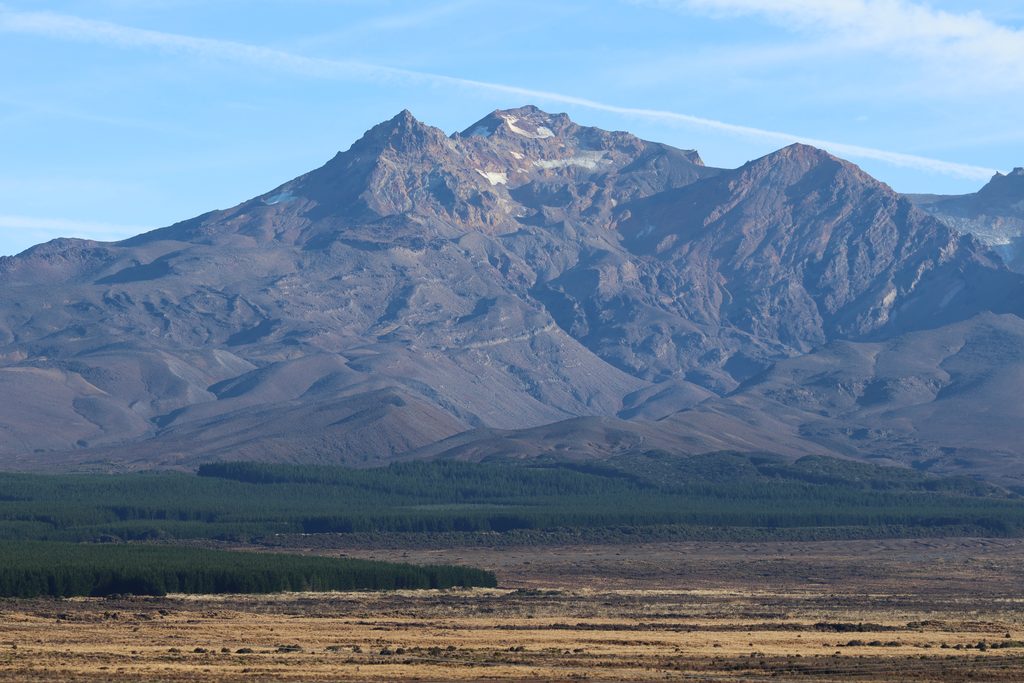
After spending some time in the capital, I continued my journey north, gradually leaving the urban surroundings behind as the road took me towards the volcanic landscapes of the central North Island. It was immediately apparent that this part of New Zealand had a very different character from the South, with rolling green countryside, agricultural landscapes and increasingly prominent volcanic features replacing the mountains and glaciers that had dominated much of my earlier journey.
Huka Falls – The Extraordinary Power of the Waikato River
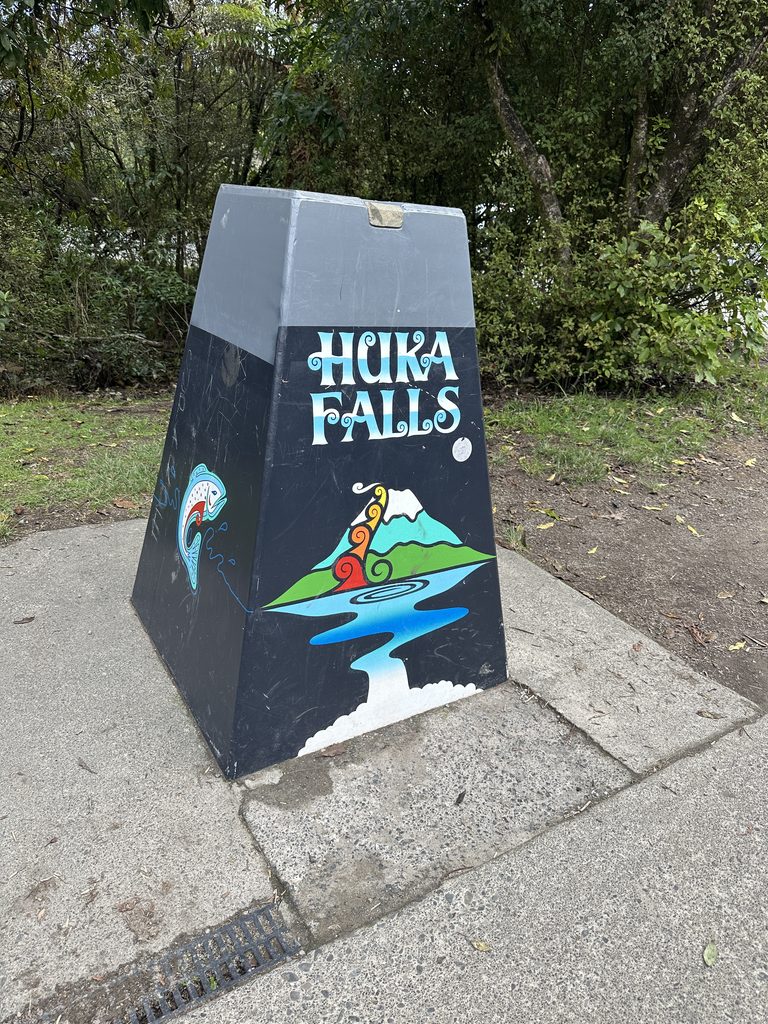
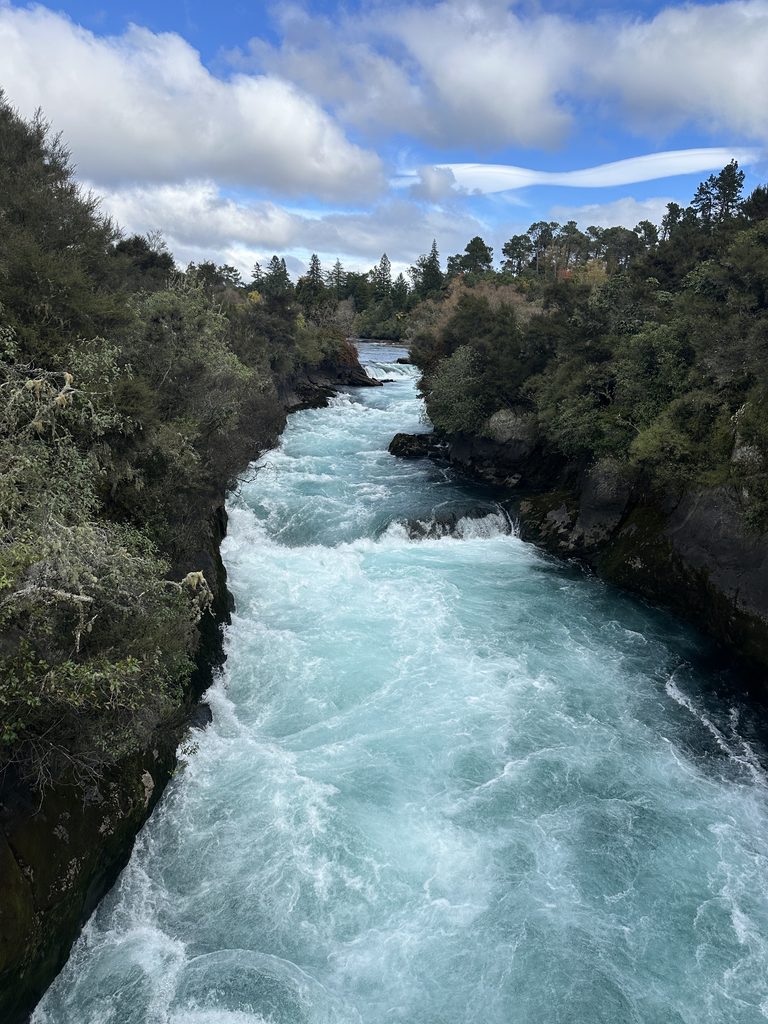
One of my most memorable stops on the journey north was Huka Falls, situated just outside Taupō, where the Waikato River produces one of New Zealand’s most spectacular natural displays. Having seen some impressive waterfalls during my travels, I was expecting something rather special, although nothing quite prepared me for the extraordinary force of the water as it surged through the narrow rocky gorge.
Unlike a traditional waterfall, where water tumbles over a great height, Huka Falls is created by the enormous volume of the Waikato River being forced through a channel approximately 15 metres wide before cascading into the pool below. The result is an astonishing torrent of brilliant turquoise water, accompanied by a constant roar that makes it almost impossible to appreciate the sheer power of the river until you are standing beside it.
The colour of the water was particularly striking, with the vivid blue and white currents swirling through the gorge and creating an almost unreal appearance. I spent quite some time watching the water from the viewing areas, fascinated by the speed at which it travelled and the incredible volume passing through such a confined space.
The falls are easily accessible, with walking paths and viewpoints allowing visitors to appreciate the spectacle from different angles, making this an ideal stop when travelling between Wellington, Taupō and Rotorua. It was another example of why I enjoyed exploring New Zealand by motorhome, as I could simply pull off the road, spend as long as I wanted enjoying the surroundings and continue my journey whenever I was ready.
Leaving Huka Falls behind, I headed towards Rotorua, where the landscape was about to become even more unusual and where the unmistakable smell of sulphur would soon provide a fairly reliable indication that I had arrived in one of New Zealand’s most fascinating geothermal regions.
Rotorua – Geothermal Landscapes and Finally Seeing a Kiwi
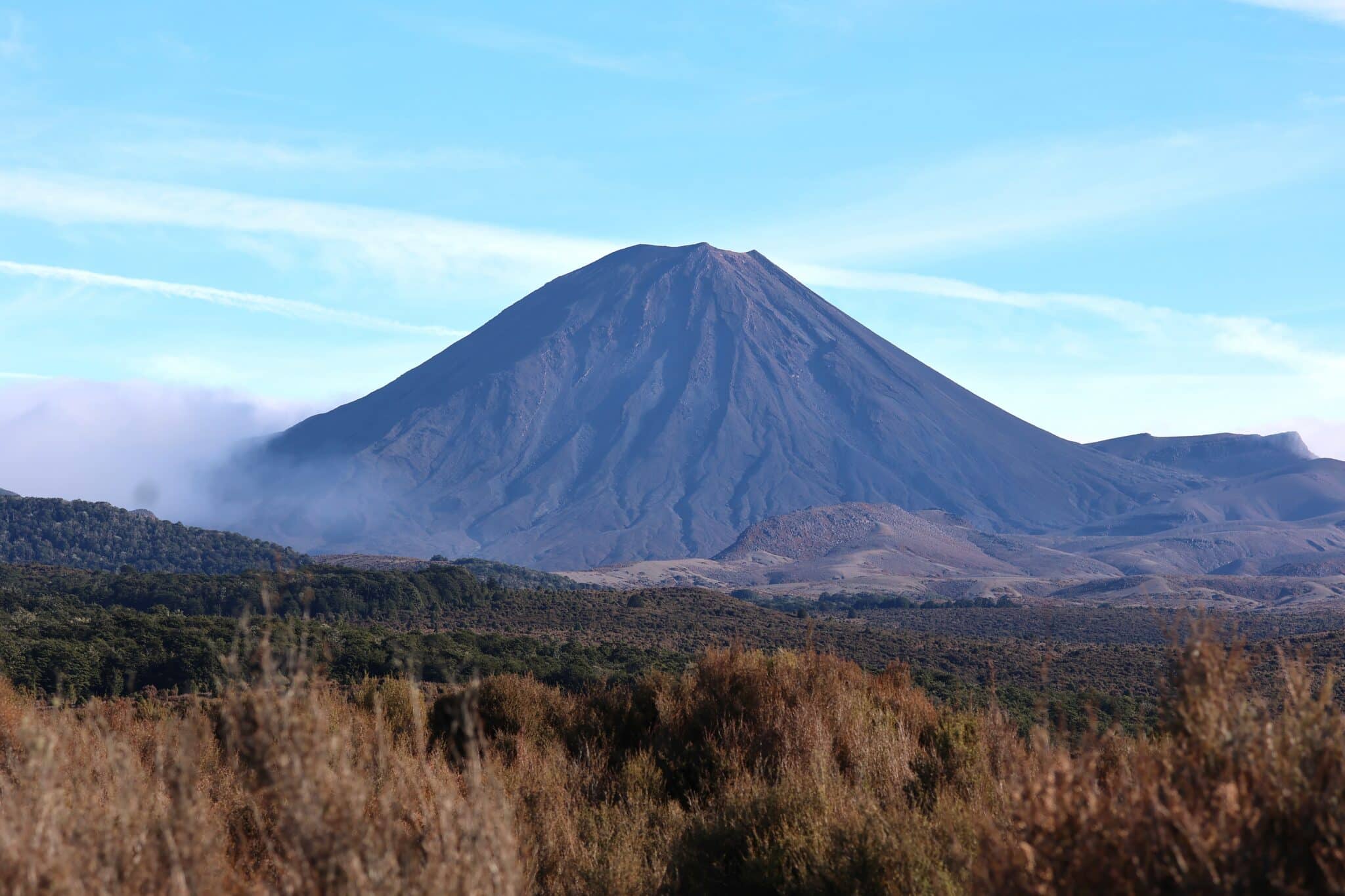
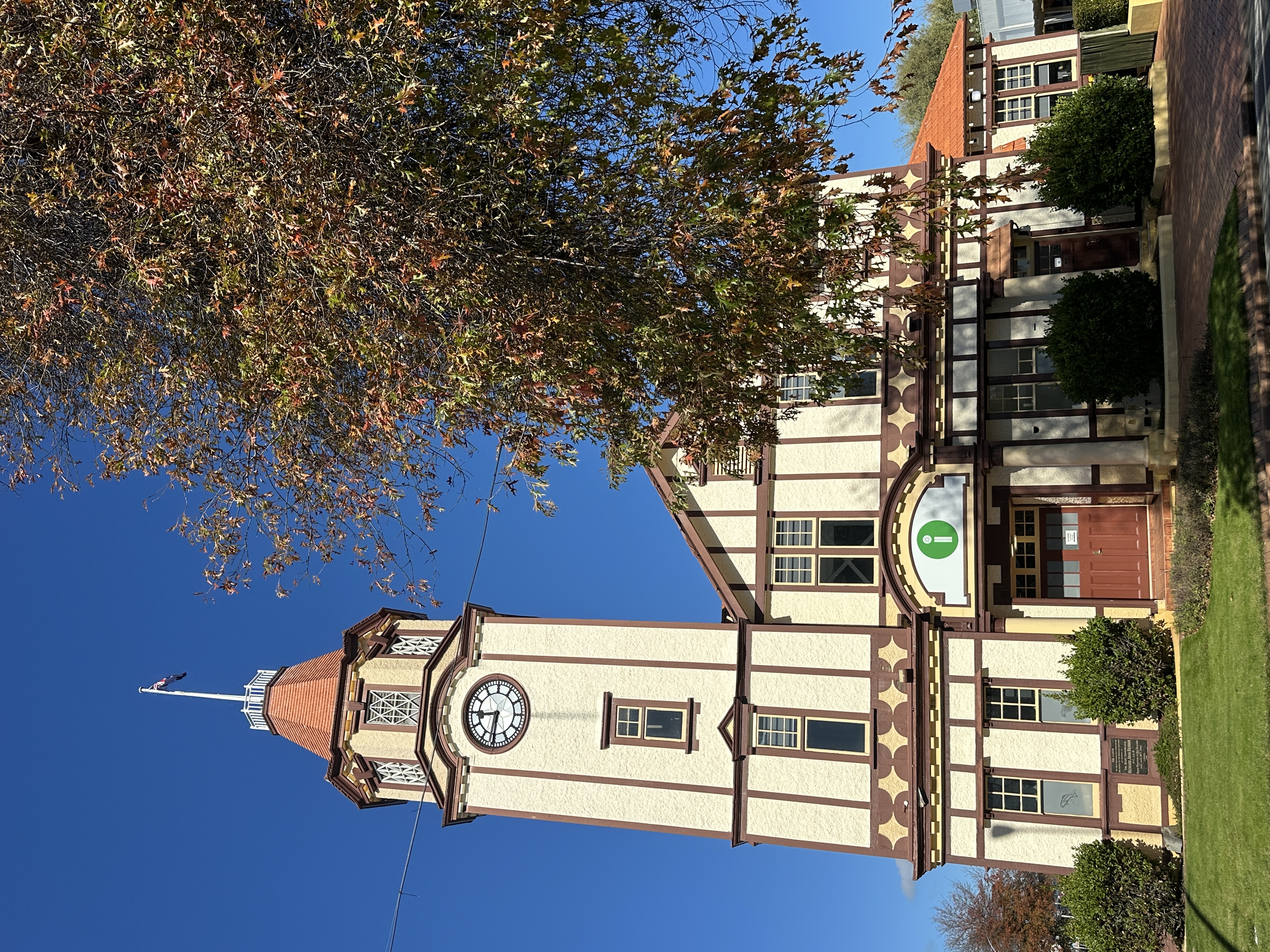
Rotorua is one of the North Island’s best-known destinations, famous for its geothermal activity, Māori culture and remarkable natural surroundings. Situated within the Taupō Volcanic Zone, the area is characterised by steaming vents, bubbling mud pools, hot springs and colourful mineral deposits, all created by the volcanic forces that continue to shape the landscape beneath the surface.
One of the first things you notice when arriving in Rotorua is the distinctive smell of sulphur, which drifts through parts of the town and provides a constant reminder of the geothermal activity taking place below ground. It is a fascinating environment, particularly when you consider that much of the surrounding landscape is the result of volcanic processes that have been active for thousands of years.
Rotorua is also an important centre of Māori culture, with opportunities to learn about traditional customs, food, music and the historical relationship between local communities and the geothermal landscape. For visitors interested in understanding more about New Zealand beyond its scenery, this part of the country offers a valuable insight into the culture and traditions of its indigenous people.
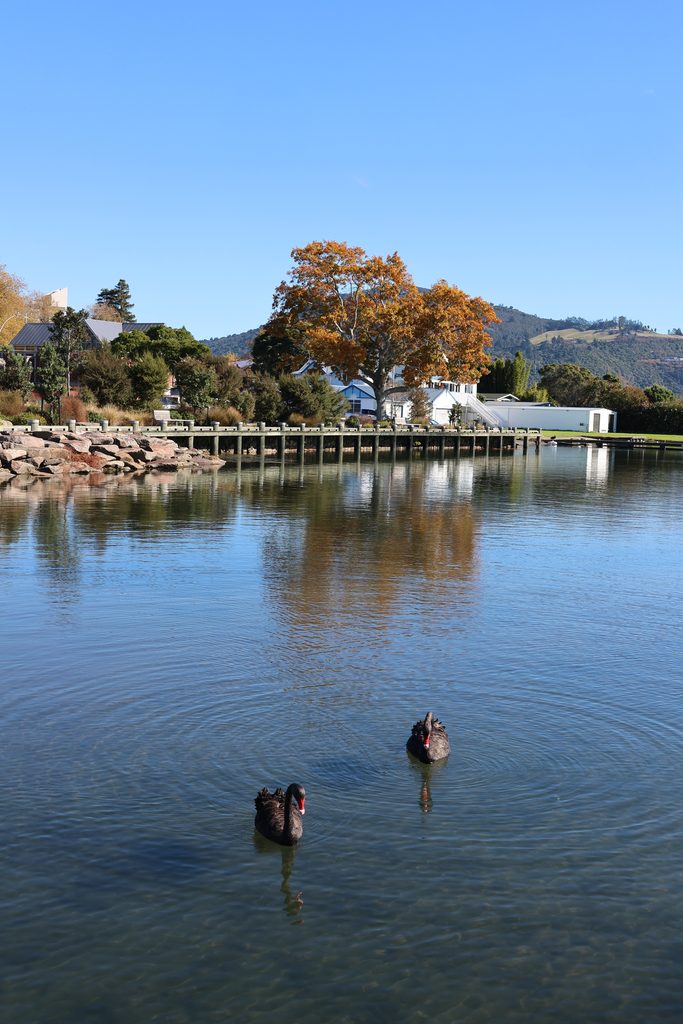
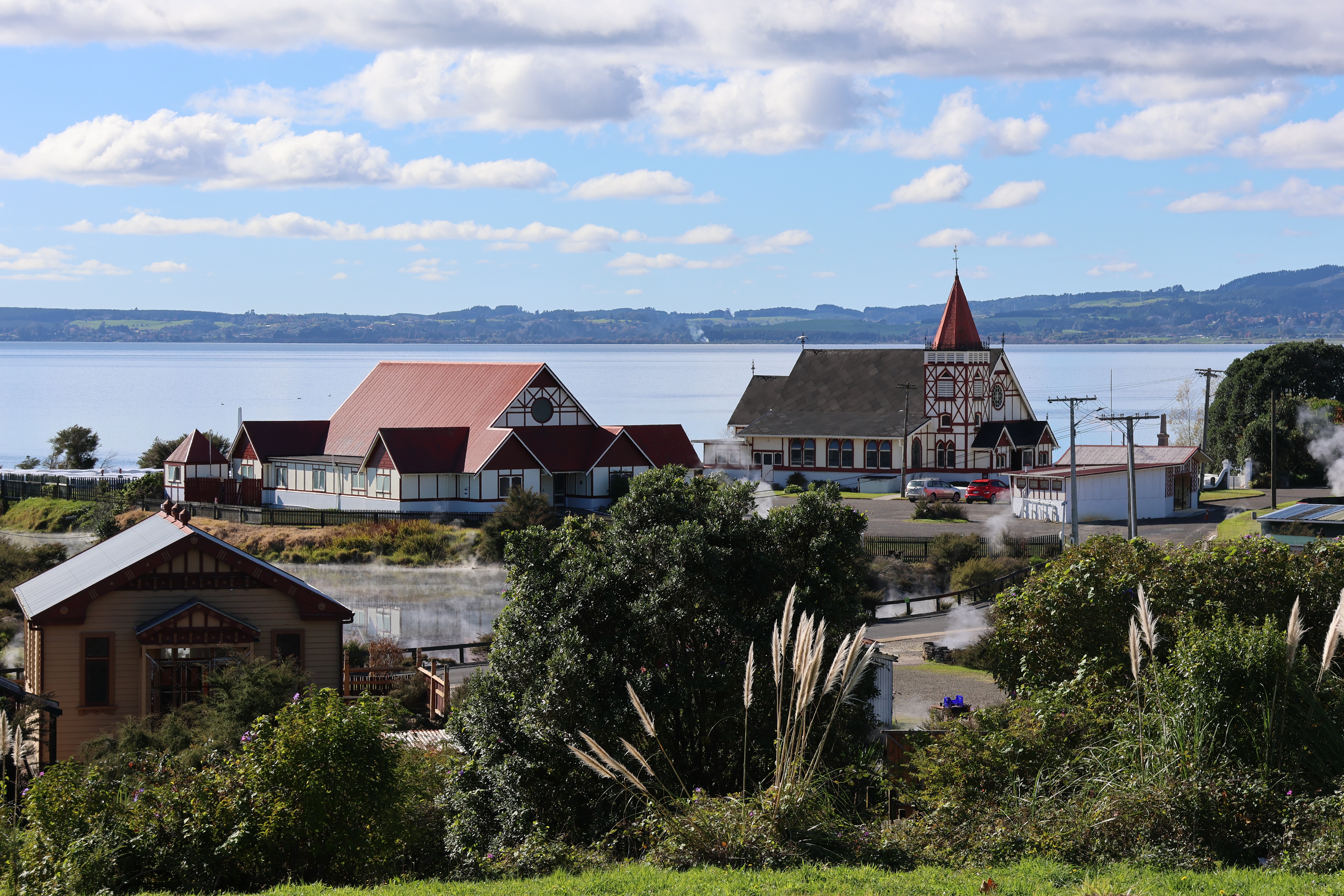
One particularly interesting place to visit is Ohinemutu, a historic Māori village on the shores of Lake Rotorua and home to the Ngāti Whakaue people. Geothermal steam rises between the houses and along the pathways, while the beautifully carved Tamatekapua meeting house and the historic St Faith’s Anglican Church reflect the village’s rich cultural heritage.
The church is known for its window depicting Jesus wearing a traditional Māori cloak, appearing to walk on the waters of Lake Rotorua. Ohinemutu remains a living community rather than simply a tourist attraction, so visitors should be respectful of private homes, sacred areas and local customs.
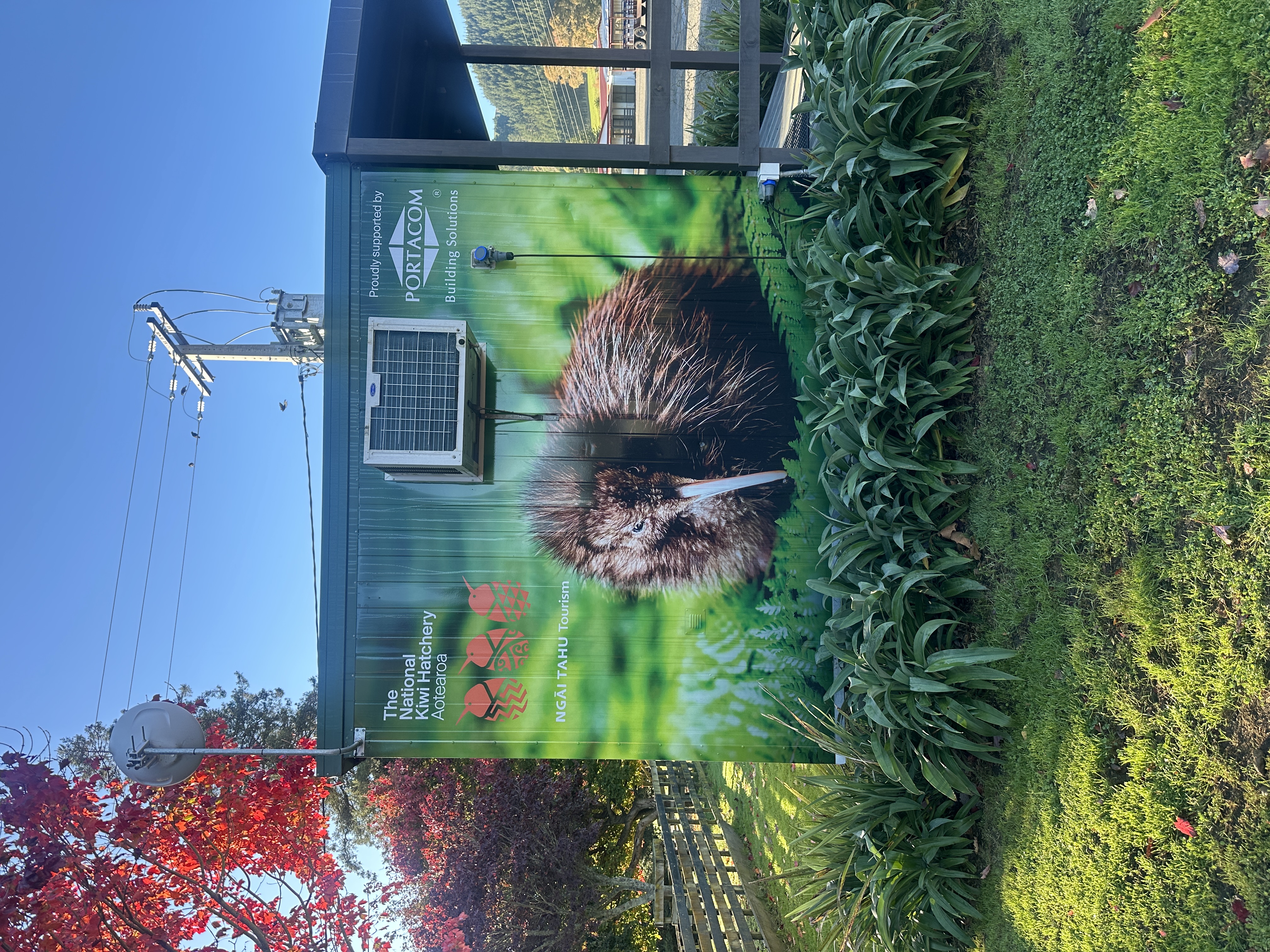
However, one of the experiences I had been particularly looking forward to was finally seeing a kiwi, New Zealand’s famous flightless bird, which had somehow managed to elude me throughout my travels on the South Island. Having already encountered penguins, albatrosses, whales and seals, it seemed only appropriate that I should eventually meet the creature that has become such an important national symbol.
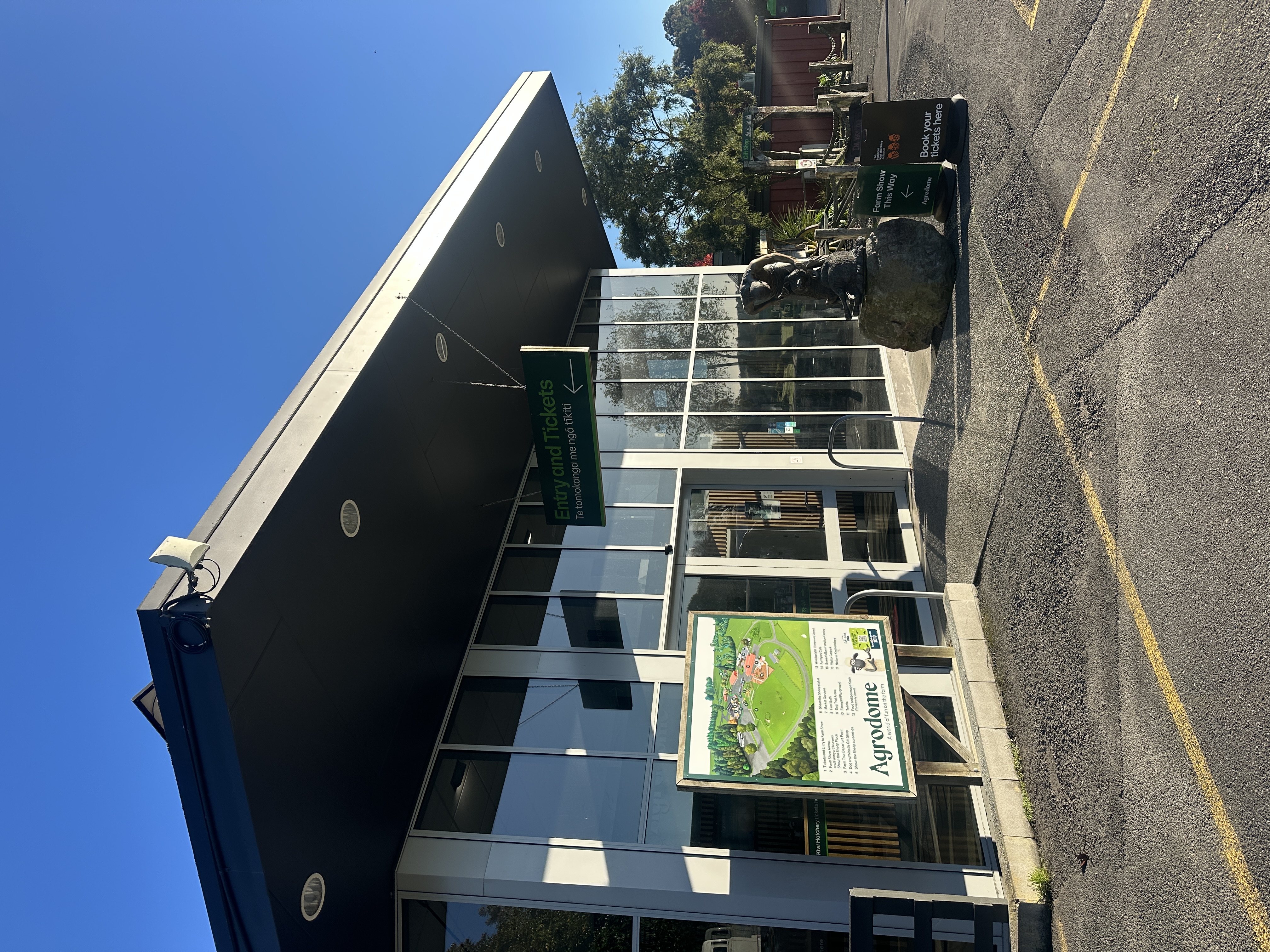
During my time around the Agrodome area, I visited a kiwi sanctuary, where I finally had the opportunity to see one of these wonderfully unusual birds at close quarters. Kiwi are quite unlike most other birds, with their rounded bodies, hair-like feathers, powerful legs and long bills, which they use to search for insects and other small creatures beneath the ground.
They are also largely nocturnal, which makes them particularly difficult to encounter in the wild, and their survival has become an important conservation priority following the introduction of predators that threaten native bird populations. Seeing one was a real highlight of my time in Rotorua, particularly after learning more about the challenges facing New Zealand’s unique wildlife.
It was rather ironic, therefore, that my next memorable wildlife encounter would involve an animal that New Zealanders regard with considerably less affection, although at the time I was completely unaware of its rather unfortunate reputation.
Waitomo – My Rather Ill-Advised Friendship With a Possum
One of the wonderful things about travelling independently is that unexpected encounters can become some of the most memorable parts of a journey, although I have to admit that my experience with a possum near Waitomo was probably not one of my more sensible decisions.
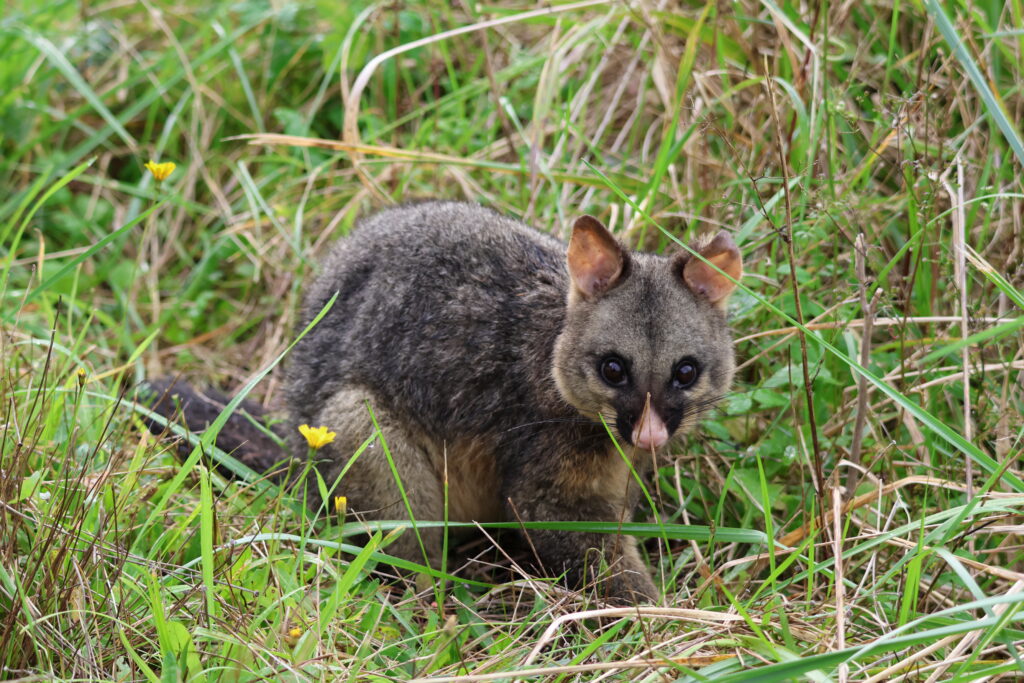
While travelling through the countryside, I spotted a possum and decided to stop for a closer look, having become increasingly enthusiastic about the wildlife I had encountered throughout New Zealand. The animal appeared relatively calm and approachable, and before long I found myself moving closer, apparently convinced that this rather appealing little creature might welcome a new friend from England.
At the time, I thought it was another charming roadside encounter, particularly as the possum seemed remarkably untroubled by my presence. What I hadn’t appreciated, however, was that wild possums are perfectly capable of biting or scratching when they feel threatened, making my attempts at friendship considerably less advisable than I had imagined.
There was also the small matter of the possum’s reputation in New Zealand, which I subsequently discovered was rather different from the affectionate impression I had formed during our brief meeting. Brushtail possums were introduced from Australia during the nineteenth century to establish a fur industry, but their populations subsequently expanded dramatically, causing extensive damage to native forests and threatening indigenous wildlife.
As a result, possums are considered one of New Zealand’s most serious introduced pests, and considerable effort is devoted to controlling their numbers in order to protect native ecosystems. While I had been busy trying to make friends with my new companion, much of the country was engaged in a rather different relationship with its extended family!
Fortunately, my possum showed no particular interest in attacking me, and after a few moments we went our separate ways without incident. I like to think that we shared a brief moment of mutual understanding, although it is equally possible that the possum simply concluded that this strange visitor wasn’t worth the trouble and wandered off to find something more interesting.
Whatever the explanation, it became one of those unexpected travel memories that still makes me smile, although I would certainly recommend that anyone encountering a possum in the wild maintains a more sensible distance than I did.
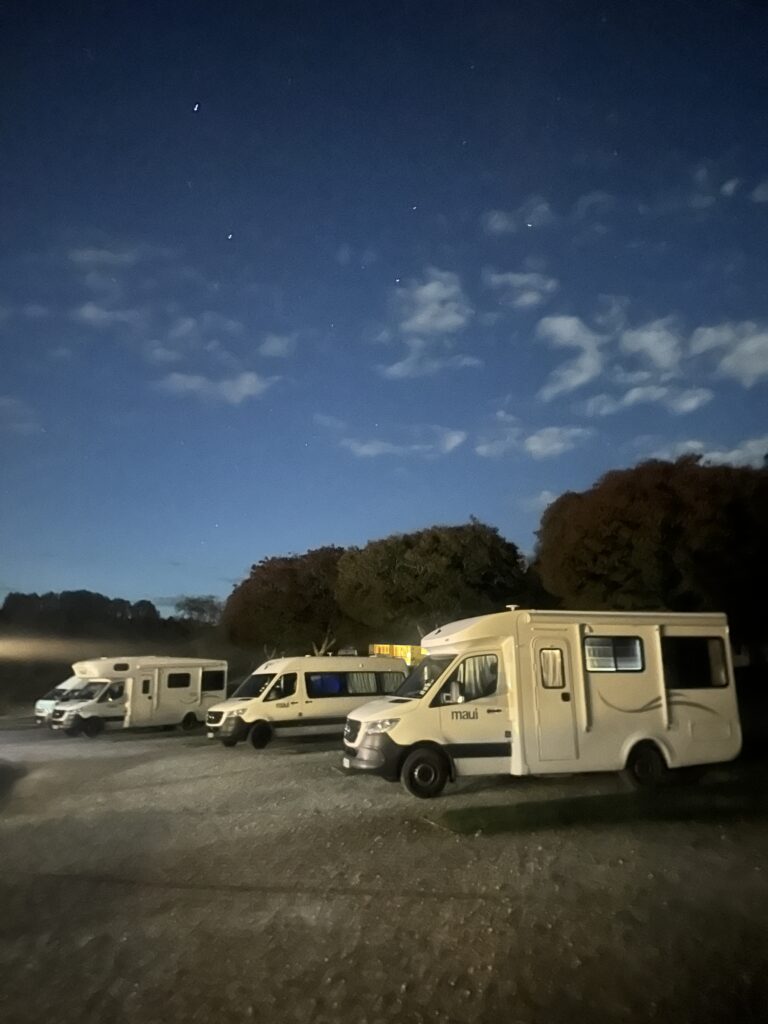
One of the great pleasures of exploring New Zealand in my Maui motorhome was the freedom to stop wherever something caught my eye, whether that was a roadside viewpoint, a little café or an independent shop in one of the many small towns and villages along the way.
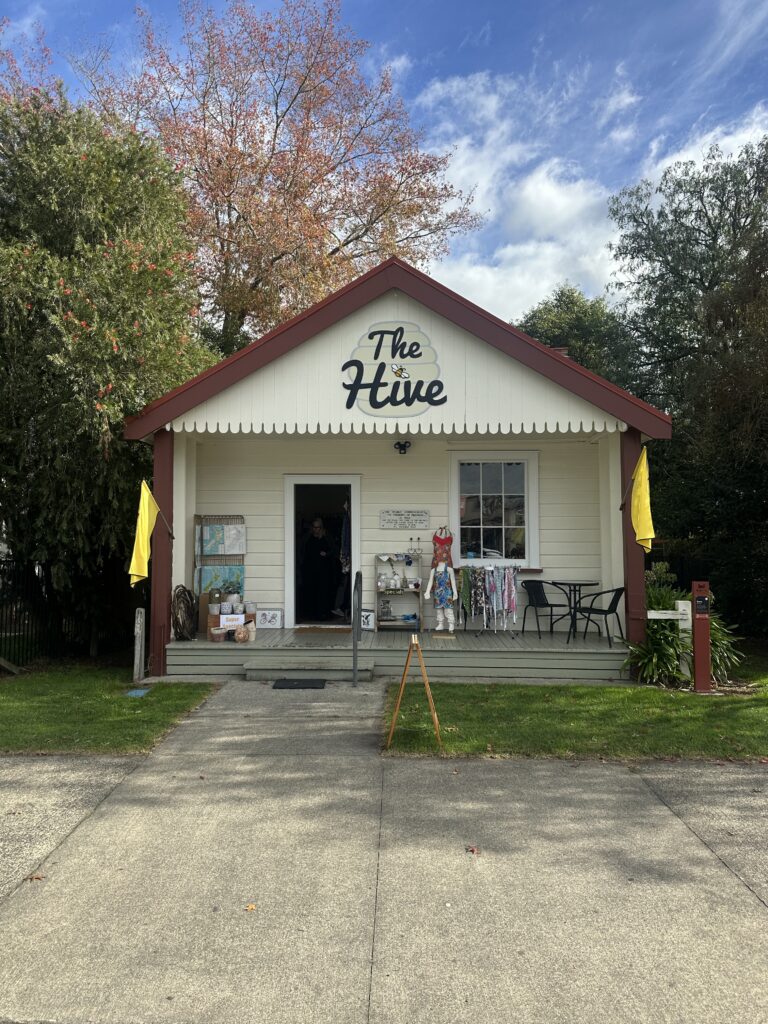
One such stop was in Pirongia, a small village in the Waikato region, where I came across The Hive, a delightful little shop housed in the former village library on Franklin Street. The shop champions New Zealand-made products and provides a space for local artists and craftspeople to showcase their work. It was here that I purchased some lovely Splash ceramics made by a local artist, a rather special souvenir of my North Island adventure.
As much as I enjoyed visiting New Zealand’s famous natural attractions, it was often these unplanned stops, conversations and encounters with local people that made travelling by motorhome such a rewarding experience.
Waitomo Glowworm Caves – An Extraordinary Underground Experience
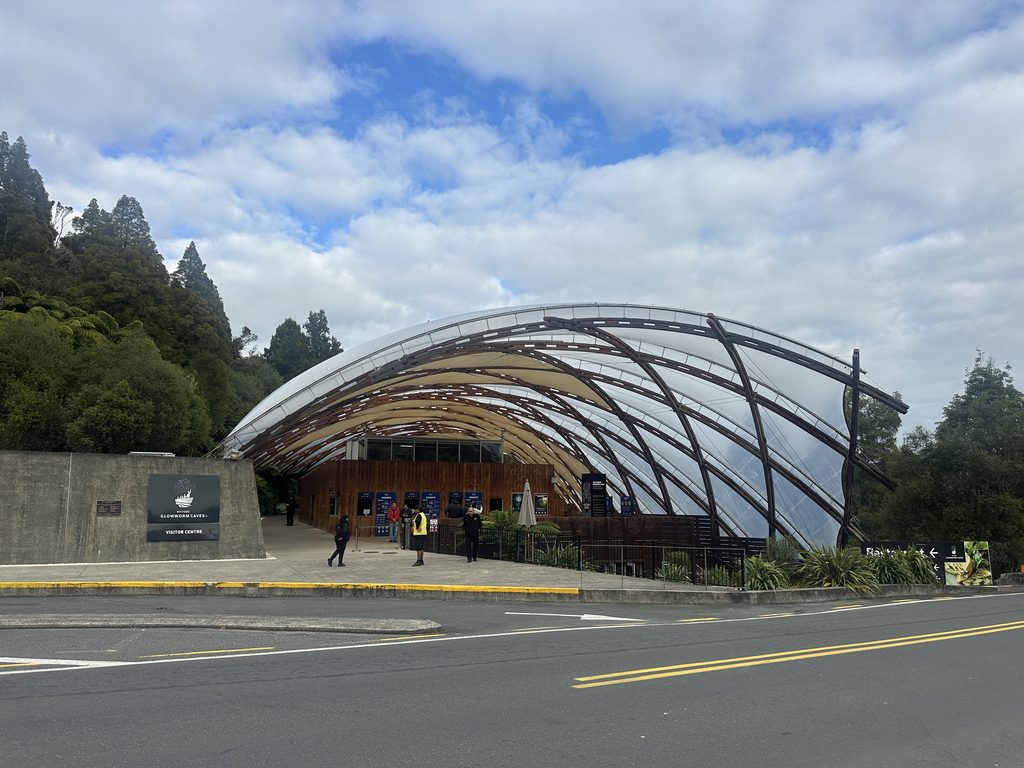
My real reason for visiting Waitomo was to explore its famous glowworm caves, one of New Zealand’s most remarkable natural attractions and an experience that had been high on my list of places to visit during the North Island portion of the journey.
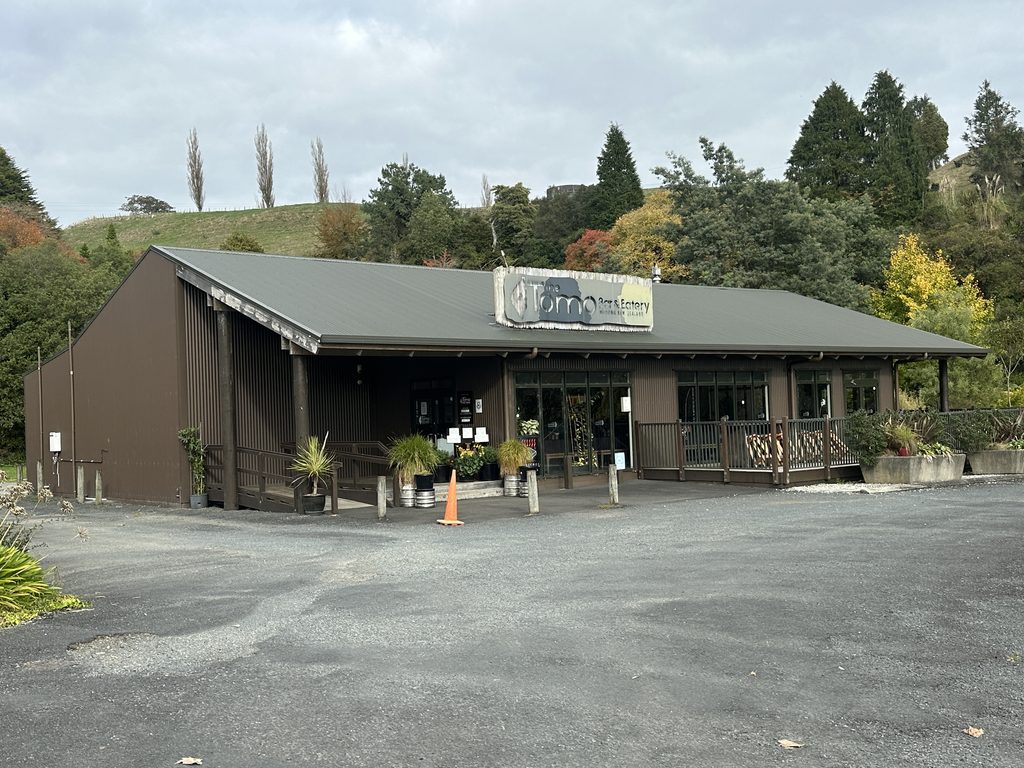
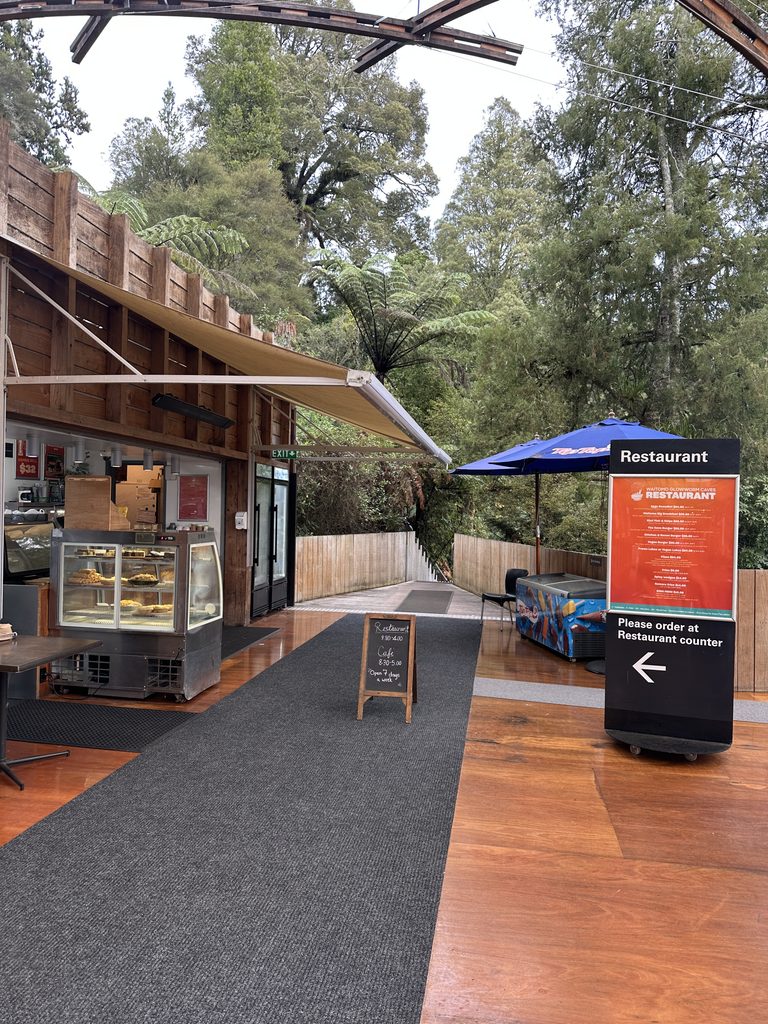
During my time in Waitomo, I stayed at the Waitomo TOP 10 Holiday Park, a conveniently located campsite in the heart of the village. Directly opposite was a fabulous bar and eatery called Tomo Bar & Eatery, which proved to be a lovely spot to unwind after a day exploring the area. If you do find yourself staying here, I can thoroughly recommend their seafood chowder, which was absolutely delicious.
The Waitomo region is renowned for its extensive limestone cave systems, which have developed over millions of years through the gradual movement of water beneath the surrounding countryside. Within these underground passages are impressive rock formations, subterranean rivers and enormous chambers, although the feature that attracts visitors from around the world is the extraordinary display of glowworms that illuminate sections of the caves.
The glowworms are actually the larvae of a species of fungus gnat known as Arachnocampa luminosa, which produces a delicate blue-green light to attract small insects. When thousands of these tiny creatures gather on the cave ceilings, the effect is quite magical, creating an illuminated landscape that resembles a night sky filled with stars.
As I entered the darker sections of the caves, the tiny points of light gradually became visible overhead, and it was difficult not to be captivated by the extraordinary scene unfolding above me. The atmosphere was particularly memorable because of the stillness and darkness, which created a wonderful contrast with the dramatic natural attractions I had experienced elsewhere on the island.
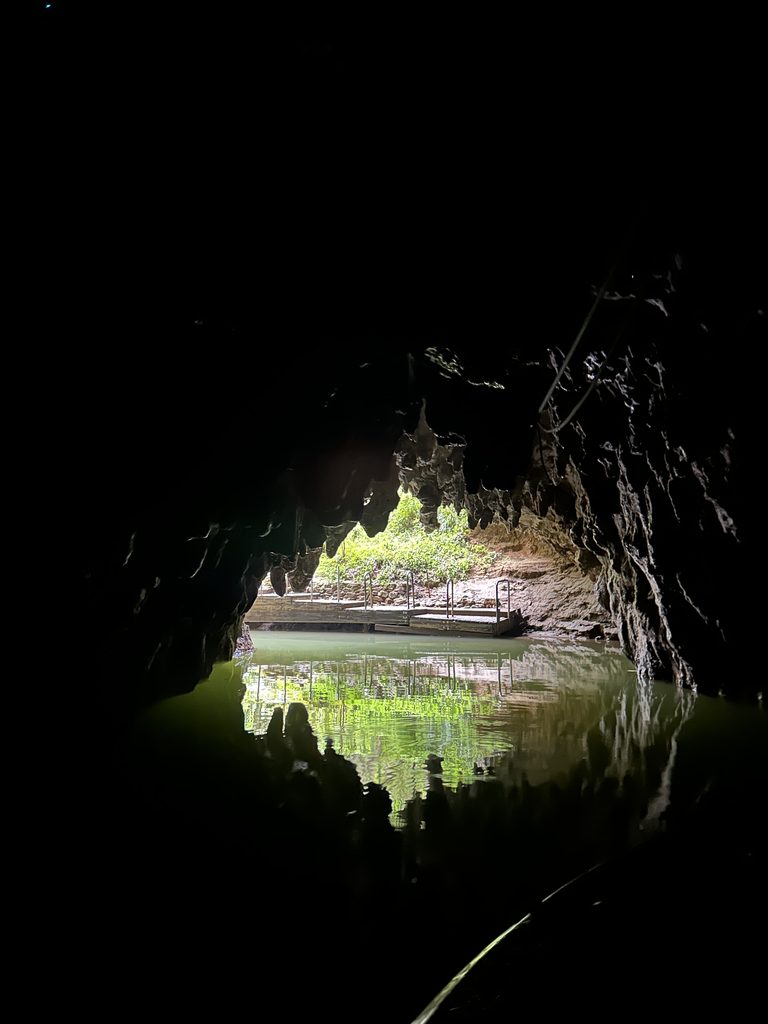
One of the highlights of the traditional Waitomo cave experience is the boat journey through the Glowworm Grotto, where visitors travel quietly along an underground waterway beneath thousands of shimmering lights. With very little sound to disturb the atmosphere, the experience has an almost otherworldly quality, and it is easy to forget that the extraordinary display overhead is being created by tiny insects rather than stars.
After the tremendous power of Huka Falls, the geothermal landscapes of Rotorua and my unexpected encounter with a possum, Waitomo provided another completely different experience and reinforced just how much variety there is to discover within a relatively short distance on New Zealand’s North Island.
Clarks Beach – A Peaceful Stop Before Auckland
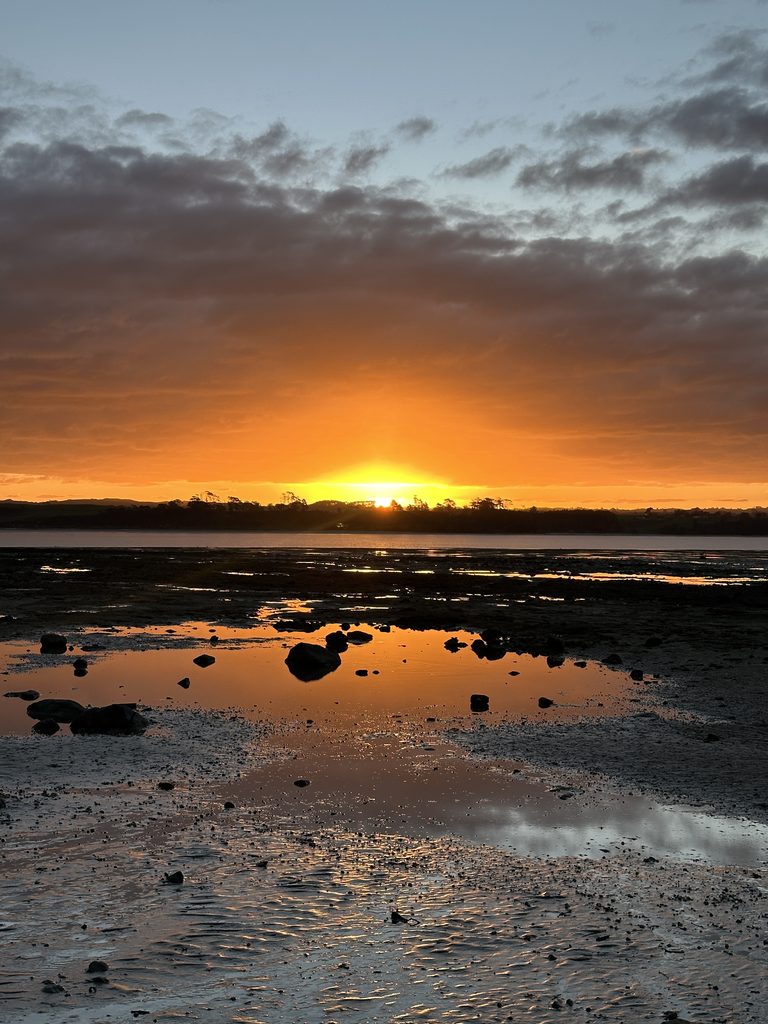
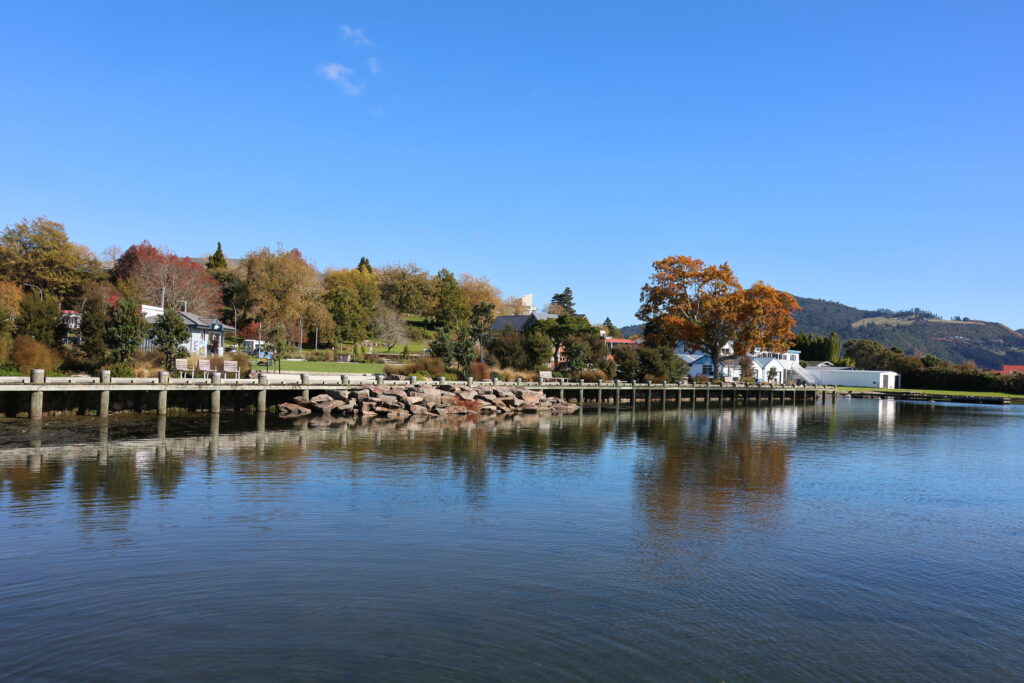
As I continued north towards Auckland, I spent some time around Clarks Beach, a quiet coastal settlement on the shores of the Manukau Harbour that offered a welcome opportunity to slow down after so many days of travelling and sightseeing.
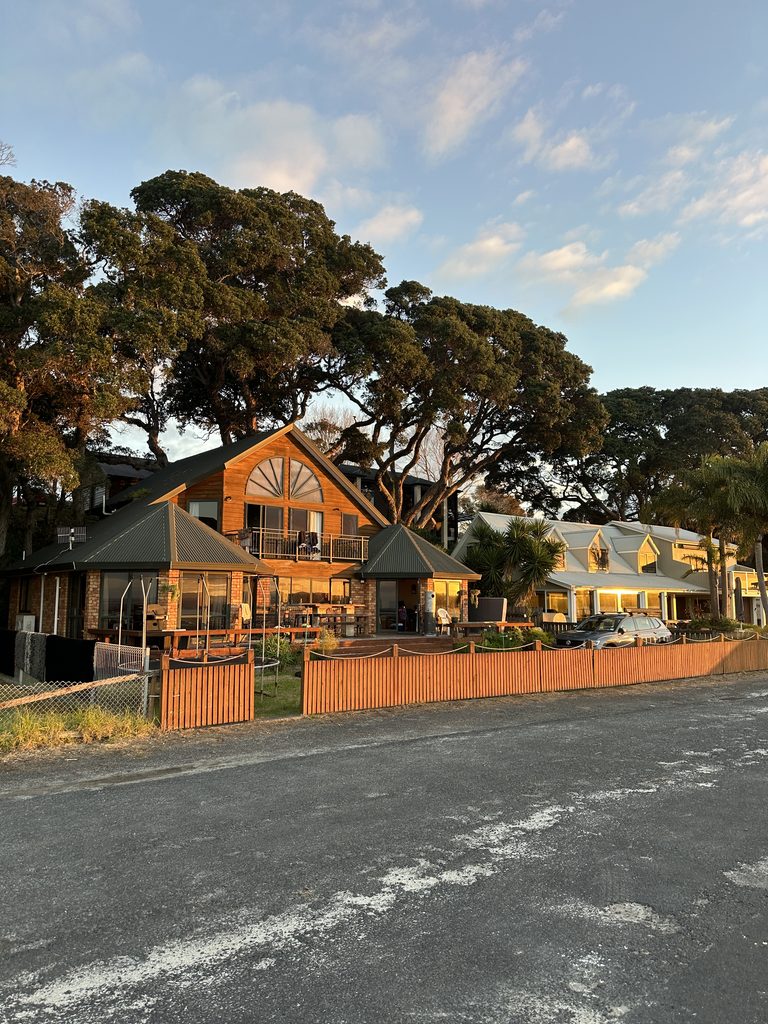
Unlike some of New Zealand’s better-known tourist destinations, Clarks Beach has a more relaxed and residential atmosphere, with peaceful waterfront views, open spaces and a landscape influenced by the changing tides of the harbour. It is the sort of place that might easily be overlooked when planning an itinerary around famous attractions, but I had come to appreciate that these quieter stops were often an important part of the overall experience.
By this stage of my journey, I had travelled a considerable distance and visited an extraordinary variety of places, so there was something particularly enjoyable about spending time somewhere without feeling the need to rush towards another landmark. Travelling by motorhome had given me the freedom to appreciate these moments, whether that meant enjoying the scenery, taking photographs or simply sitting quietly and reflecting on everything I had seen.
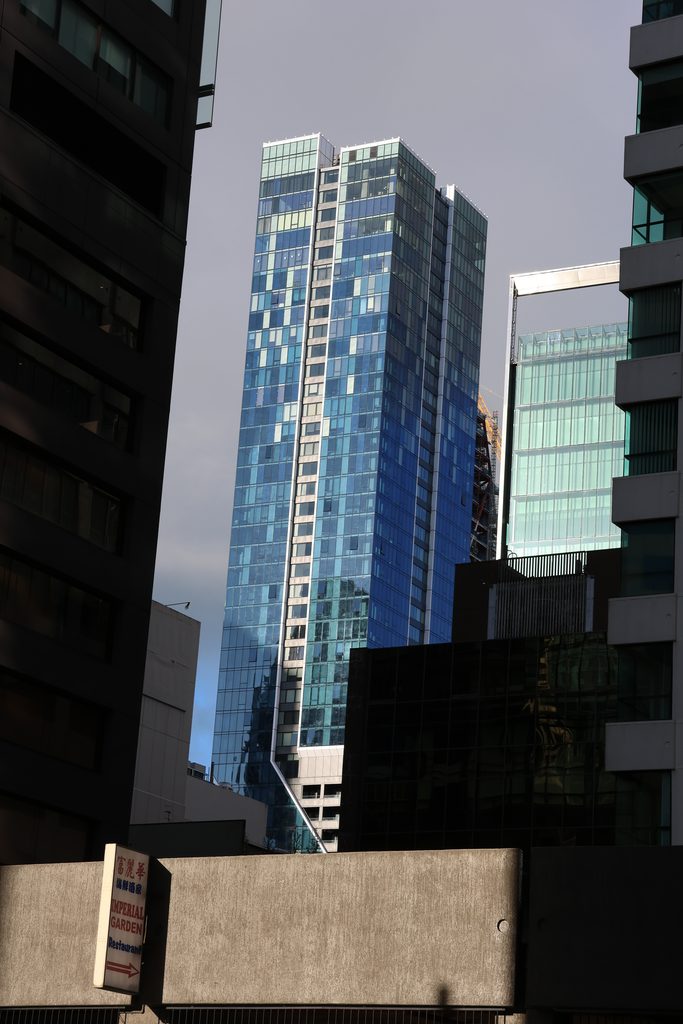
Clarks Beach also provided an interesting contrast to Auckland, which was now approaching and would mark the final major destination of my New Zealand adventure. Having spent so much time surrounded by spectacular natural landscapes and small communities, I was curious to see how the country’s largest city would compare, although my impressions would ultimately be rather more mixed than I had anticipated.
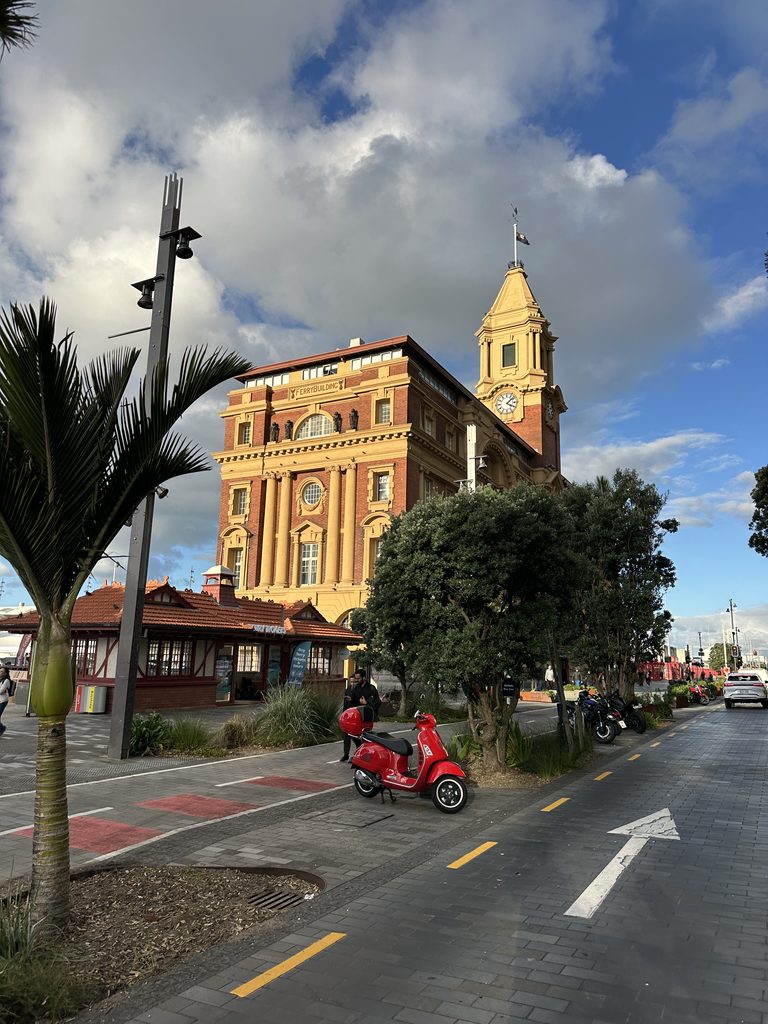
Auckland – An Honest Impression of New Zealand’s Largest City
Auckland is New Zealand’s largest city and an important commercial and cultural centre, occupying a remarkable position between the Waitematā and Manukau harbours. Known as the City of Sails because of its strong maritime traditions and enormous number of recreational boats, it is surrounded by volcanic hills, coastal scenery and a collection of islands that make the wider region particularly attractive.
After spending so much time travelling through the countryside, however, arriving in Auckland felt like quite a change of pace, and I have to admit that the city didn’t capture my imagination in quite the same way as many of the places I had visited during the preceding weeks.
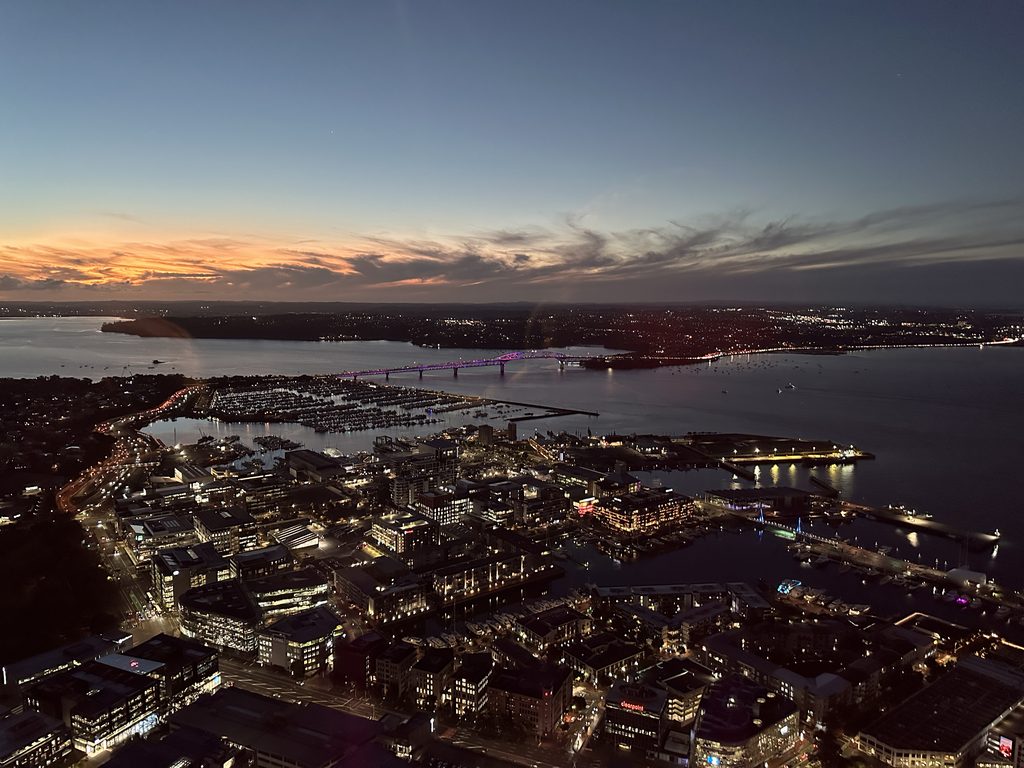
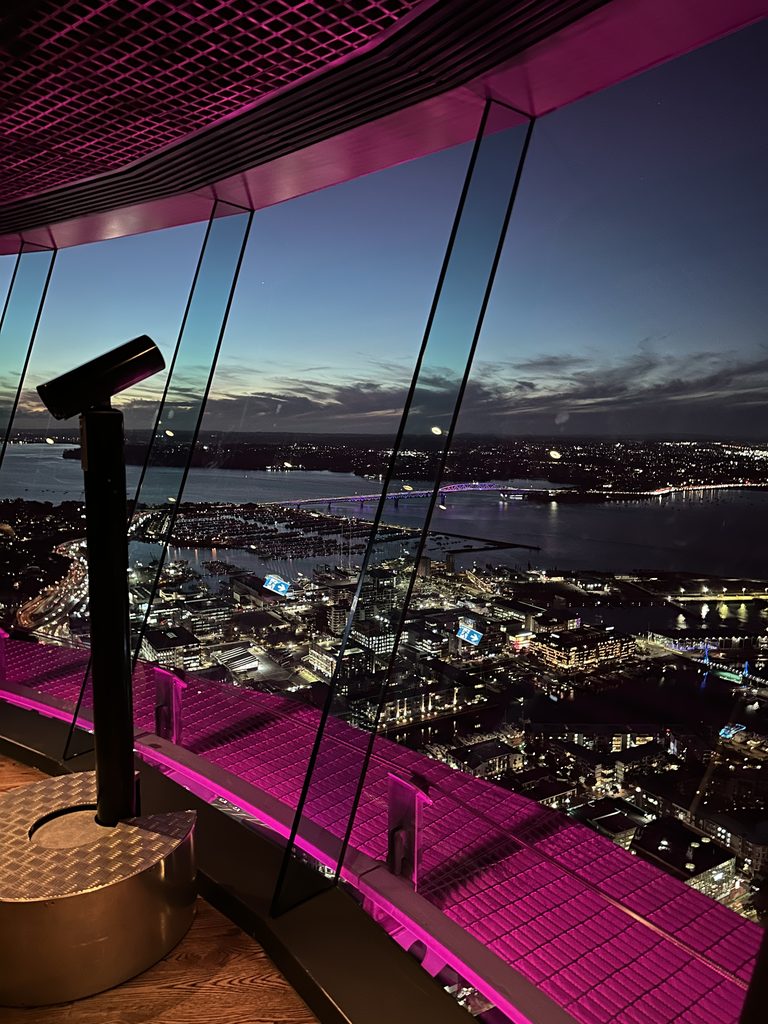
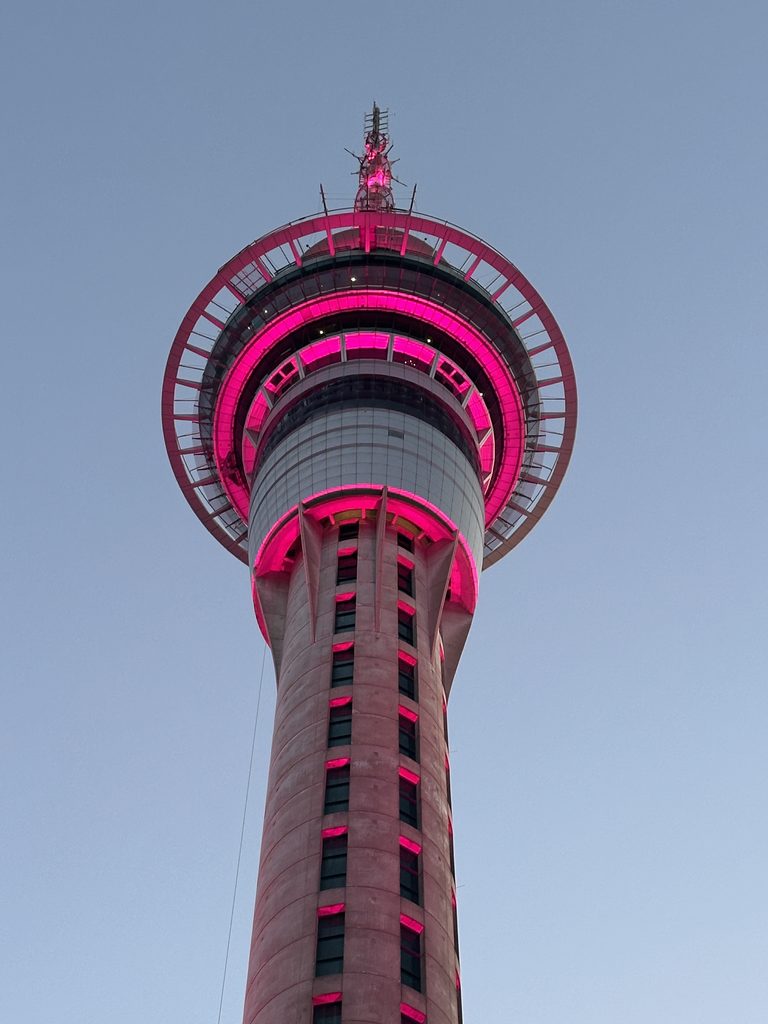
The highlight for me was undoubtedly the Sky Tower, which dominates the city skyline and rises to a height of 328 metres, making it one of Auckland’s most recognisable landmarks. The tower offers spectacular panoramic views across the city, its harbours and the surrounding landscape, while visitors looking for something a little more adventurous can experience the SkyWalk or SkyJump, neither of which particularly appealed to me after the excitement of several thousand kilometres on New Zealand’s roads!
Although I enjoyed seeing the Sky Tower and exploring parts of the city centre, I found myself less enthusiastic about Auckland as a whole, perhaps because I had become so accustomed to the extraordinary scenery, wildlife and smaller communities that had defined much of my journey.
I was also surprised by the visible signs of poverty and hardship that I encountered in parts of the city, something I hadn’t expected to be quite so noticeable. Of course, every major city has its social and economic challenges, and I appreciate that my impressions were formed during a relatively short visit rather than through any detailed understanding of Auckland and its communities.
There is undoubtedly much more to Auckland than I experienced, particularly for visitors interested in its restaurants, waterfront attractions, surrounding islands and diverse cultural influences, and I am sure that spending longer exploring different neighbourhoods would provide a broader perspective.
Nevertheless, travel is a very personal experience, and I have always believed that it is important to describe places as I found them rather than suggest that every destination was wonderful simply because I happened to visit. For me, Auckland was not the highlight of New Zealand, although it did provide an interesting conclusion to a journey that had taken me through some of the most memorable landscapes I have ever encountered.
Looking Back on My New Zealand North Island Road Trip
Reaching Auckland brought my journey around New Zealand towards its conclusion, and as I reflected on the places I had visited, I found myself appreciating just how different the North and South Islands had been. While the South Island had impressed me with its dramatic mountains, glaciers, beautiful coastlines and extraordinary wildlife, the North Island had offered a fascinating combination of volcanic landscapes, geothermal activity, powerful rivers, underground caves and a rather different collection of memorable encounters.
Huka Falls had been one of the most impressive natural spectacles of the journey, while Rotorua introduced me to the geothermal forces that continue to shape New Zealand’s landscape and finally gave me the opportunity to see a kiwi. Waitomo provided the magical experience of travelling beneath thousands of glowworms, together with the rather less conventional memory of attempting to make friends with a possum that, fortunately for me, seemed remarkably tolerant of my attention.
Looking back on the entire adventure, I think what made travelling around New Zealand so special was not simply the famous places I visited but the freedom to explore at my own pace, stopping whenever something caught my attention and discovering places that might otherwise have passed me by. Having the Maui motorhome meant that my accommodation travelled with me, allowing the journey itself to become an important part of the holiday rather than simply the means of getting from one destination to another.
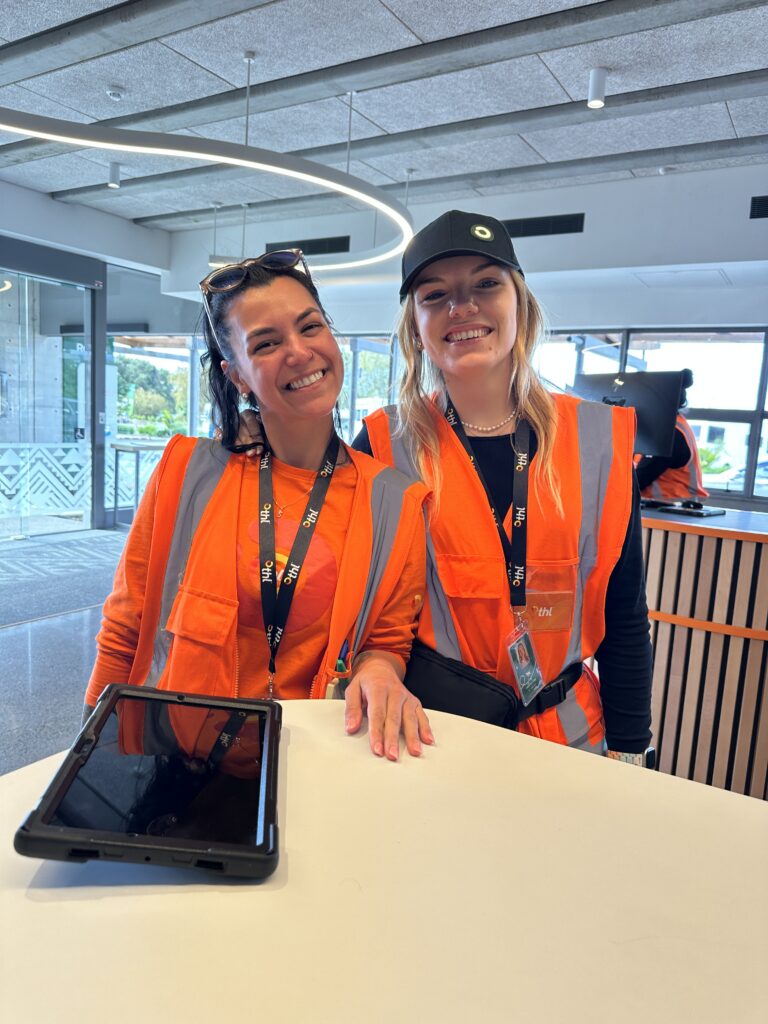
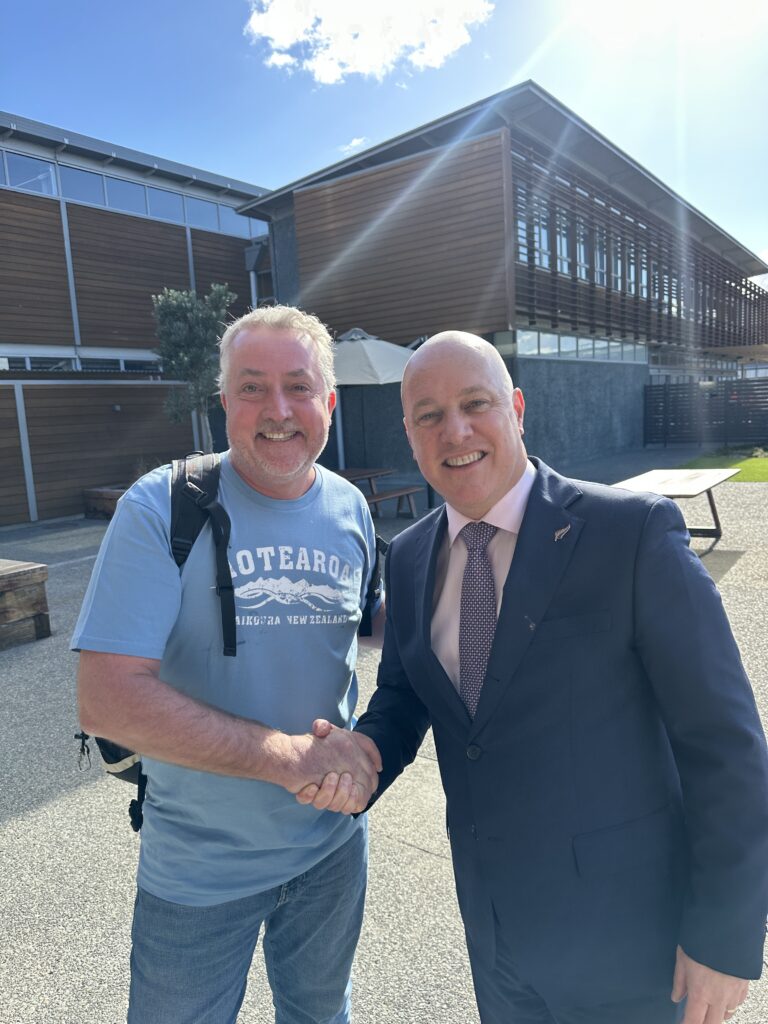
Even returning the motorhome to the Maui depot in Auckland provided an unexpected highlight. I had a great laugh with the girls at the depot and, quite by chance, ended up meeting the New Zealand Prime Minister, Christopher Luxon, who was there to officially open a new centre. It was a rather unexpected and memorable way to bring my motorhome adventure to a close and just another example of how some of the best travel memories are often those you could never have planned.
If I were planning the trip again, the one thing I would change would be to allow myself more time, because New Zealand is a country where distances can be deceptive and there always seems to be another interesting place waiting around the next corner. Although I managed to see an enormous amount during my travels, there were inevitably places I would have liked to explore in greater detail, and I would certainly be tempted to return and discover some of the areas that I missed.
What I wouldn’t change is the decision to travel by motorhome, which gave me the independence to experience both islands as one continuous adventure and provided countless opportunities for those unexpected moments that often become the stories you remember long after returning home.
New Zealand had given me spectacular scenery, fascinating wildlife, welcoming little towns and an extraordinary variety of experiences, but perhaps most importantly it had reminded me why I enjoy travelling independently and taking the time to discover what lies beyond the obvious tourist attractions.
And should I ever return to Waitomo, I will certainly keep an eye out for my old possum friend, although this time I think I might admire him from a slightly safer distance!
Planning Your Own New Zealand Adventure
If my journey has inspired you to explore this extraordinary country, you can find plenty more information on my New Zealand Travel Guide, where I bring together destination highlights, practical travel advice, suggested itineraries and inspiration for planning your own adventure across both islands.
You can also read about the first part of my journey in my New Zealand South Island Road Trip, where I share my experiences of travelling through some of the country’s most spectacular scenery, encountering its remarkable wildlife and discovering those unexpected little places that make a road trip so memorable.
Whether you choose to explore New Zealand by motorhome, hire car or a combination of transport, I would certainly encourage you to allow plenty of time for the journey, because as I discovered, some of the best experiences are often found in the places you never originally intended to visit.