Written by Mike Hansky
London has a reputation as an expensive city, and on a first visit it is easy to spend a fortune on tickets before lunch. Yet many of its best museums, parks and viewpoints cost nothing at all. The catch is that they are scattered across a huge city, and zigzagging between them on the Tube eats both your time and your budget.
The simple fix is to plan by area. Pick one cluster for the morning, walk between the sights, and only take the Tube or a bus when you move on to the next cluster. Below I have grouped the best free things to do in London into five walkable areas, each pairing famous sights with a lesser-known stop or two that many first-time visitors walk straight past.
I don’t live in London, so this guide is written from a visitor’s point of view: realistic, practical and built around walking.
Westminster and the South Bank
Parliament Square and Big Ben
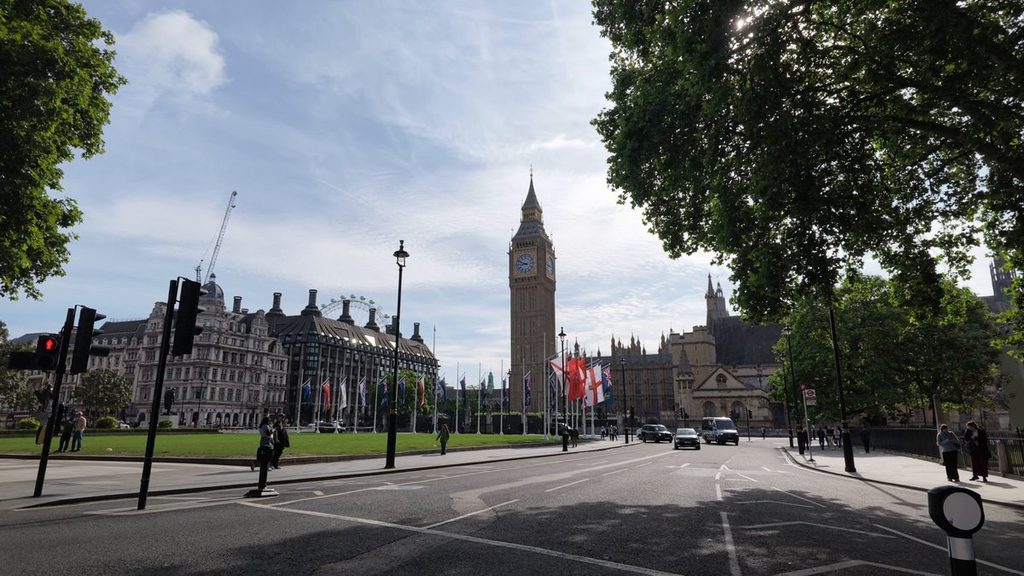
You don’t need a tour to admire the Houses of Parliament, Elizabeth Tower (home of the bell known as Big Ben) and Westminster Abbey. All three can be seen from the street around Parliament Square. Waiting for the green man at the crossing, I could hear the bongs drift over the traffic noise. The quarter bells chime every fifteen minutes and Big Ben strikes the hour, so you rarely wait long.
My tip is to stand on the Abbey side of the square for a wide, uncluttered view of Parliament. Going inside the Abbey or Parliament costs money, but the Gothic facades and the statues around the square are free.
Victoria Tower Gardens
Just south of Parliament, Victoria Tower Gardens is a small free riverside park that many visitors miss. It holds Rodin’s The Burghers of Calais and the Buxton Memorial, which commemorates the abolition of slavery.
Westminster Bridge and the South Bank Walk
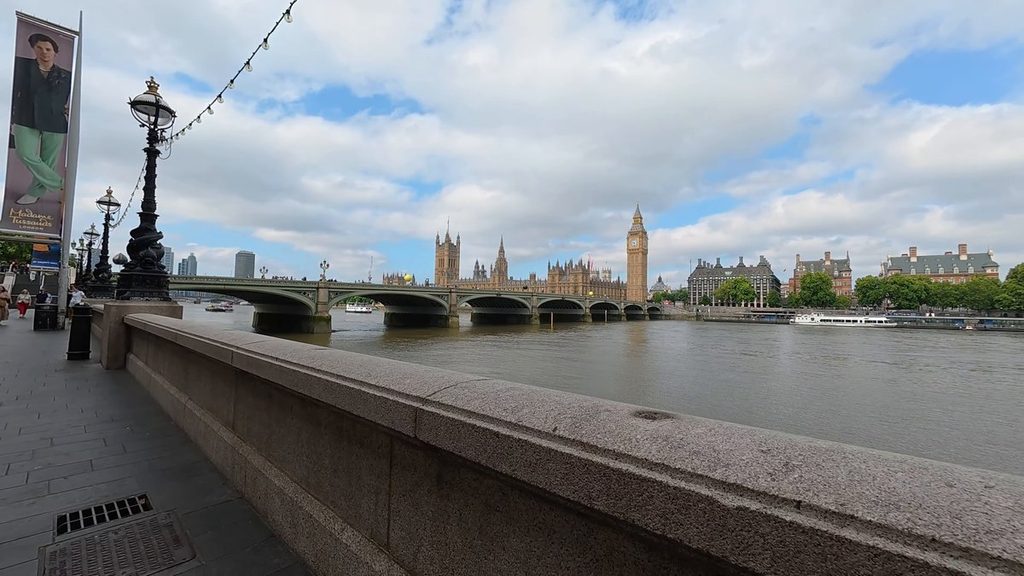
Cross Westminster Bridge and turn left along the river. The view back across the Thames from beside County Hall is the classic postcard shot of Parliament. Early on a weekday the embankment was almost empty, and I could lean on the cold granite wall for as long as I liked. The tide was out far enough that I could smell the river.
From here the South Bank runs east past the London Eye, the Southbank Centre and the National Theatre. The foyers of the Southbank Centre and the National Theatre are generally open to wander in, and under Waterloo Bridge the South Bank Book Market sells secondhand books and prints most days, depending on stall holders and the weather.
Tate Modern
Keep walking east and you reach Tate Modern, housed in the former Bankside Power Station. The collection, with works by Picasso, Matisse and Yayoi Kusama, is free with no booking needed; only temporary exhibitions charge. Start in the vast Turbine Hall, the former turbine room of the power station. From Tate Modern the Millennium Bridge leads you straight across to St Paul’s, which is a natural link to the City section below.
Bloomsbury and the British Museum
Bloomsbury, London’s literary and academic quarter of Georgian terraces and garden squares, makes a calm, compact morning.
The British Museum
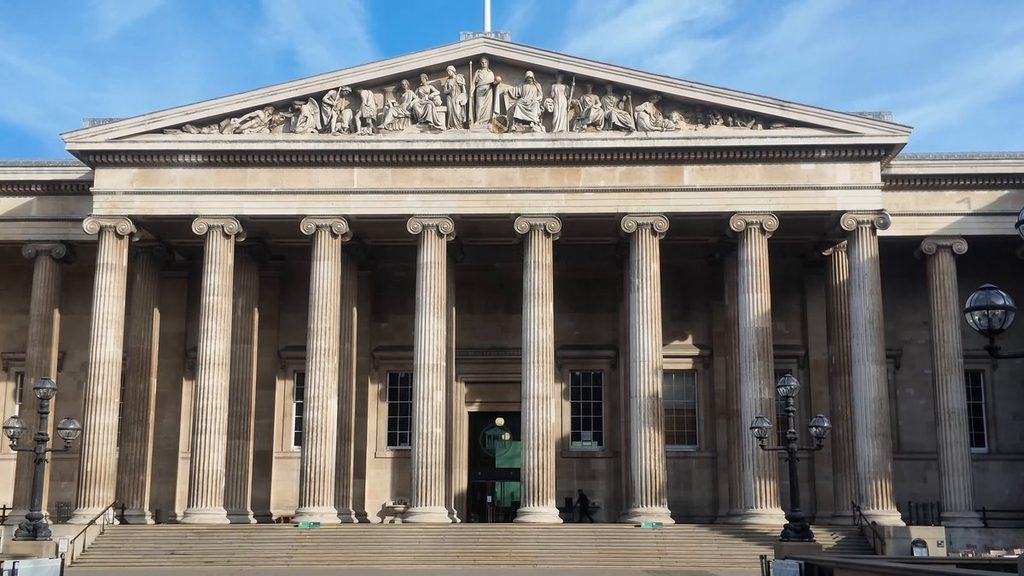
The British Museum is free and holds two million years of human history, from the Rosetta Stone to the Sutton Hoo treasures. It opens daily at 10am, with later opening on Fridays. You can just turn up, but the museum recommends booking a free timed ticket for priority entry at busy times.
Arrive before opening if you can. Early on, the forecourt was so empty my footsteps echoed off the columns, and I sat on the steps with a coffee before the gates opened. Inside, pick two or three galleries, such as Egypt or the Assyrian sculptures, and leave time for the glass-roofed Great Court.
Bloomsbury’s Garden Squares
Afterwards, walk the garden squares that give Bloomsbury its character. Russell Square has a café and a fountain, while Gordon Square and Tavistock Square are quieter places to rest your legs.
Wellcome Collection
A short walk north on Euston Road, the Wellcome Collection is one of London’s most unusual free museums. It explores health, medicine and what it means to be human through historic objects and contemporary art, and all its exhibitions are free. The galleries are closed on Mondays. Upstairs, the Reading Room is a relaxed space to browse books and objects.
South Kensington and Hyde Park
If you only have one rainy day, spend it here: three great free museums stand around Exhibition Road, with two royal parks next door.
The Natural History Museum
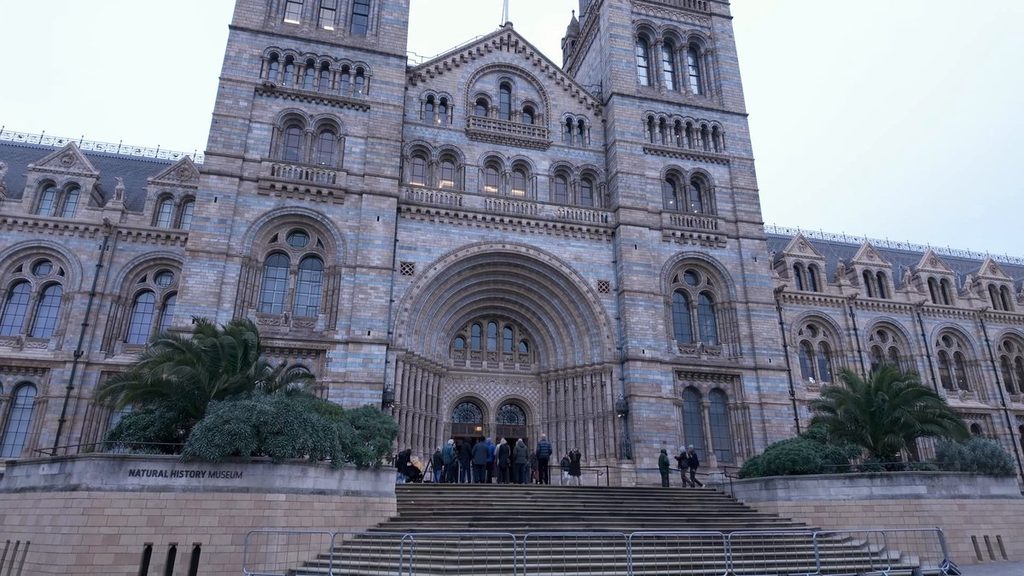
The Natural History Museum is worth seeing for the building alone. Honestly, the blue-and-buff stripes on the stone surprised me; I’d expected plain brown. Inside, Hintze Hall with its blue whale skeleton is one of the great free sights in London.
Entry to the galleries is free and the museum opens daily from 10am. Queue early, because the line at the door built up fast even on a grey day. Weekends and school holidays are the busiest times, and booking a free entry ticket guarantees you a place.
The Science Museum and the V&A
Next door, the Science Museum is free, though it asks visitors to book a free ticket. Across the road, the V&A covers art and design. Look for the Cast Courts, full of plaster copies of famous monuments, and the peaceful courtyard garden.
Kensington Gardens and the Italian Gardens
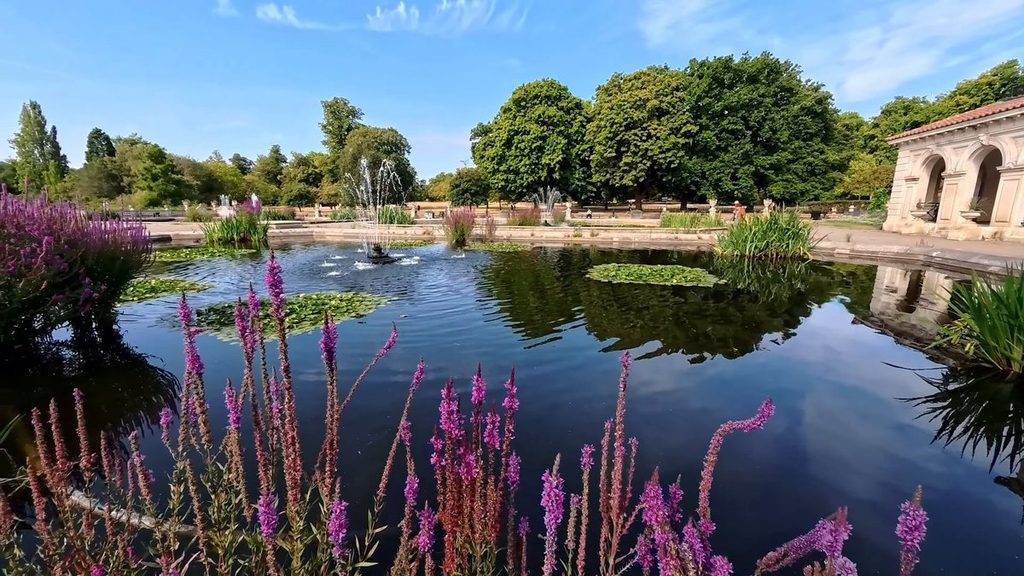
From South Kensington, walk north past the Royal Albert Hall to the gilded Albert Memorial and into Kensington Gardens. Keep heading north to the Italian Gardens near Lancaster Gate, an ornamental water garden from the 1860s that is believed to have been a gift from Prince Albert to Queen Victoria.
My favourite moment was the hush, just fountains splashing and a coot fussing in the lilies. I lost track of time on a bench by the loggia. From here you can follow the Long Water into Hyde Park, passing the free Serpentine Galleries. Kensington Gardens closes at dusk, as early as 4:30pm in winter, so leave the park until last only in summer.
The City and the River
The City of London, the old Square Mile, mixes glass towers with tiny medieval lanes, and at weekends it can feel almost deserted.
St Paul’s and One New Change
You can admire St Paul’s Cathedral from the churchyard gardens for free. For a higher view, take the lift to the roof terrace of the One New Change shopping centre next door. It is free and looks straight across at the dome.
Postman’s Park
A few minutes north of St Paul’s, Postman’s Park is one of the most moving hidden spots in London. It holds the Watts Memorial to Heroic Self-Sacrifice, a wall of glazed ceramic tablets, each remembering an ordinary person who died while trying to save someone else. It is free and open from 8am until 7pm or dusk, whichever is earlier.
St Dunstan in the East
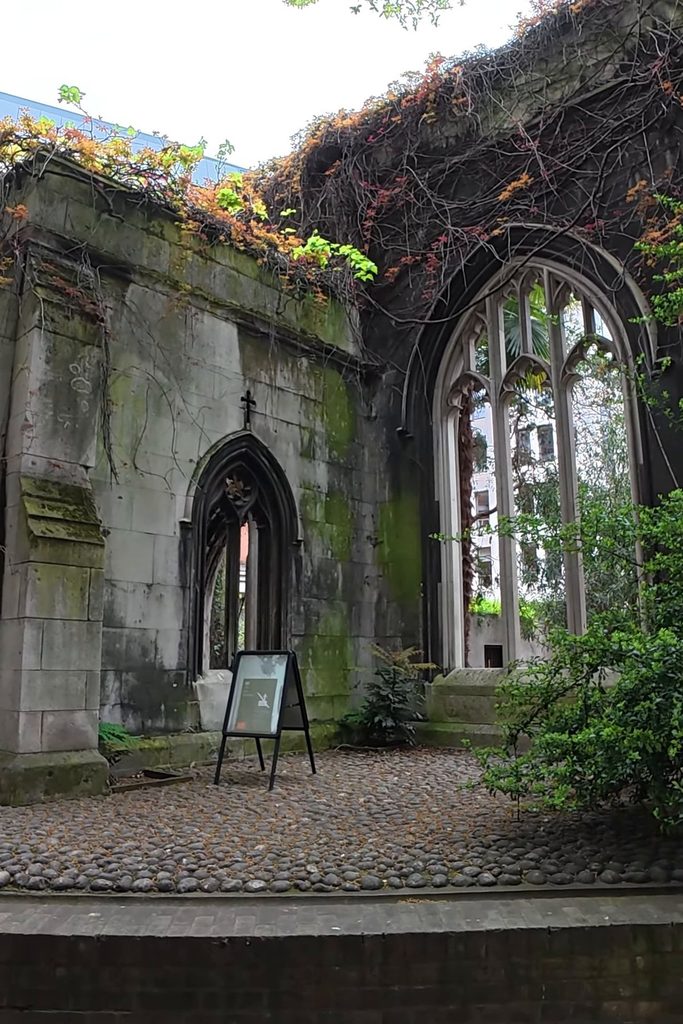
St Dunstan in the East is a church badly damaged in the Blitz and later turned into a public garden, with climbing plants trailing through its Gothic window frames. The garden is free and open daily from 8am until 7pm or dusk if earlier.
Tip: I’d go on a grey morning. The damp made the moss on the stones glow, and the office workers hadn’t arrived with their lunches yet.
Leadenhall Market
On the way, walk through Leadenhall Market, a Victorian covered market with an ornate painted roof and cobbled lanes. It is free to wander, busiest at weekday lunchtimes, and much quieter at weekends, when many of its shops and restaurants close.
Sky Garden
Nearby, Sky Garden at the top of 20 Fenchurch Street offers one of the best free views in London. Entry is free with a timed ticket, bookable up to three weeks ahead, for a one-hour slot. Walk-ins are only possible when there is space.
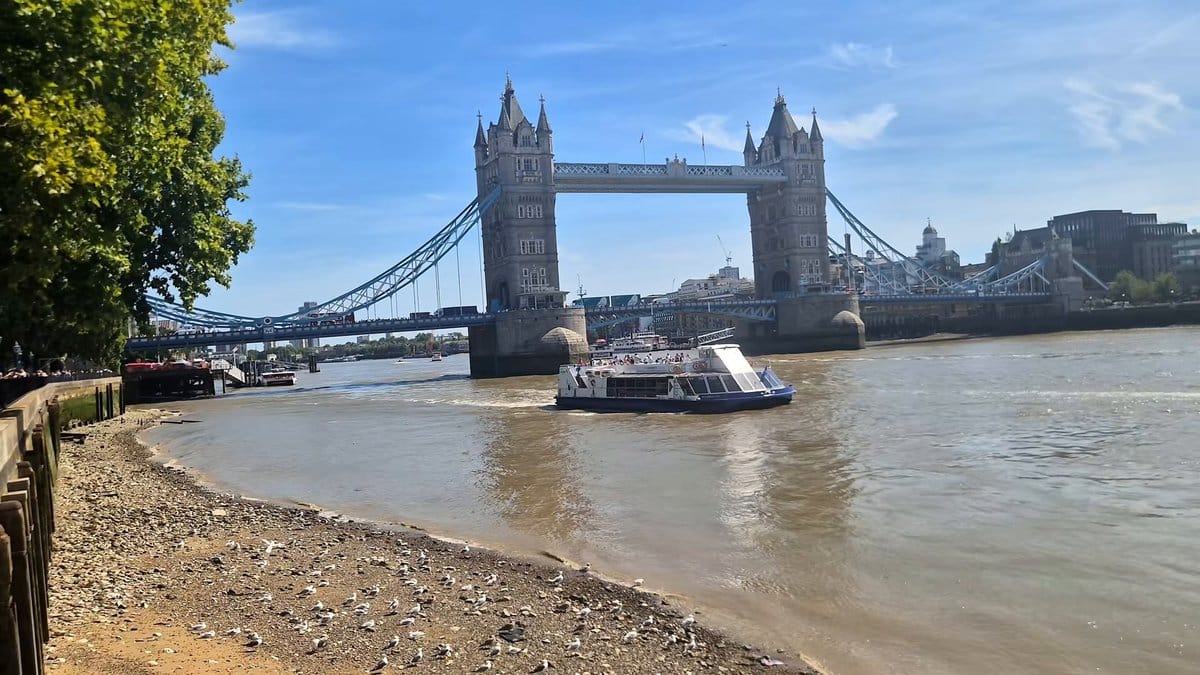
Tower Bridge from the River
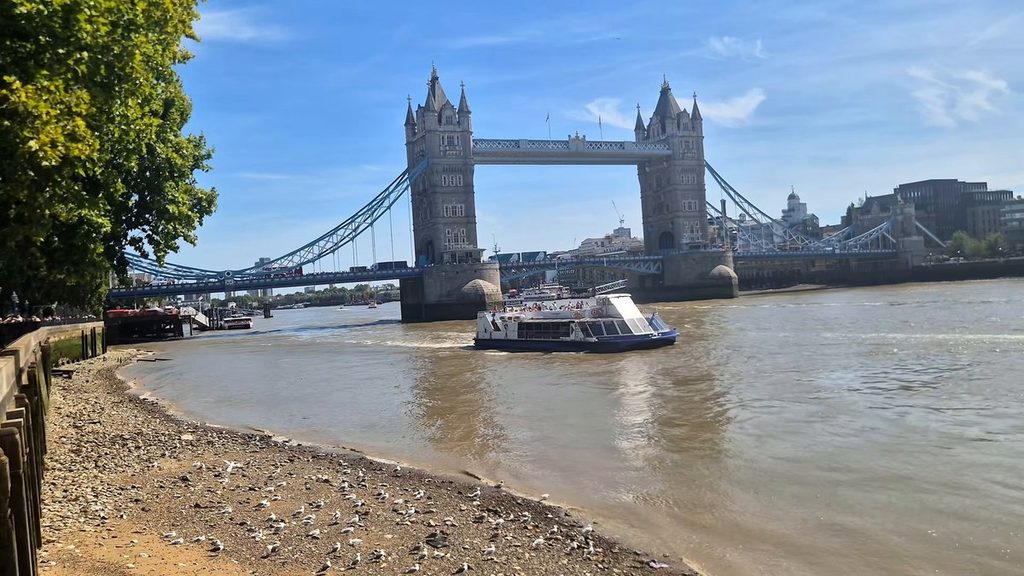
Finish at the Tower of London. The fortress charges for entry, but admiring Tower Bridge from the riverside is free.
At low tide, parts of the Thames foreshore are exposed. My trainers sank into the wet pebbles while I waited for a boat to slide under the bridge, and gulls kept landing right where I wanted to stand. If you go down to the foreshore, check the tide times, stay close to the steps, wear sturdy shoes and never enter the water. Searching, digging or beachcombing needs a permit from the Port of London Authority, and the stretch directly in front of the Tower is normally closed to the public.
Greenwich
Greenwich, in southeast London, deserves a whole day. It is easy to reach by DLR to Cutty Sark or by train to Greenwich or Maze Hill, and most of the area is free.
Greenwich Park and the Hilltop View
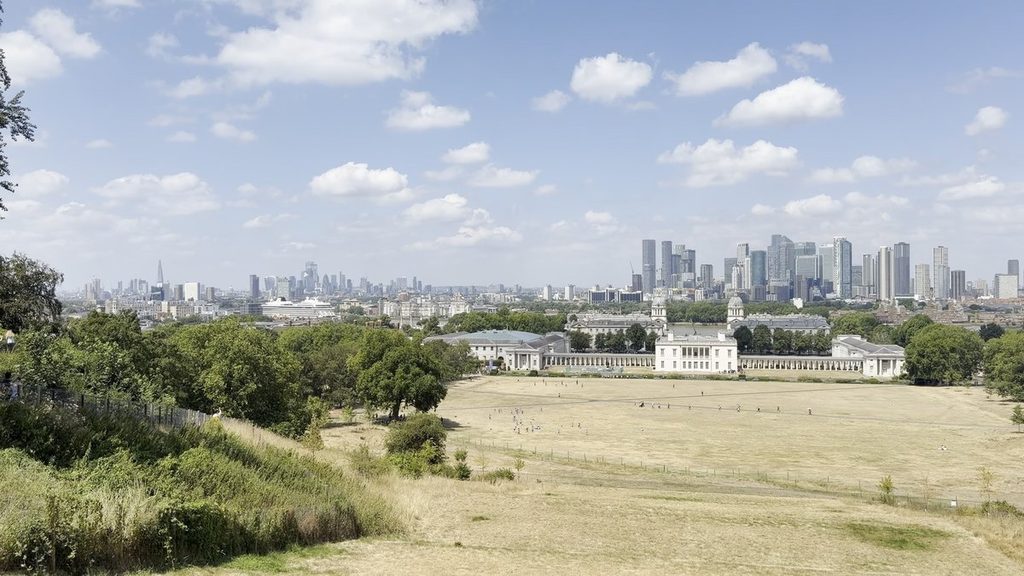
The climb up the hill in Greenwich Park rewards you with a sweeping view over the Queen’s House and the Old Royal Naval College to Canary Wharf and the City. Halfway up the slope I was out of breath, and at the top I just sat on the hot grass. Below me, people on the lawn looked like tiny dots.
Note that the Royal Observatory at the top of the hill closed in November 2026 for a major refurbishment, so the Prime Meridian line is out of reach for now. The park and the viewpoint by the General Wolfe statue remain open. For a second, quieter view, Point Hill is a short walk west of the park.
The National Maritime Museum and the Queen’s House
At the foot of the hill, the National Maritime Museum and the Queen’s House are both free and open daily from 10am to 5pm. The Queen’s House holds the famous Armada Portrait of Elizabeth I.
The Old Royal Naval College and the Cutty Sark
The grounds of the Old Royal Naval College, designed by Sir Christopher Wren, are free and open daily from 8am. The Painted Hall inside charges an entry fee, but the twin domes and riverside colonnades are free to explore. Finish by the Cutty Sark, the historic tea clipper, which you can admire from outside for free. Then walk under the Thames through the Greenwich Foot Tunnel for a view back across the river from Island Gardens.
Practical Tips for a Free Day in London
What Is Free, and What Is Not
Permanent collections at the big museums are free, but temporary exhibitions usually charge. Westminster Abbey, St Paul’s Cathedral, the Tower of London and the Cutty Sark all charge for entry. Donations are welcome at free museums but never required.
Which Free Tickets to Book
Book a free timed slot for Sky Garden as early as possible. The British Museum, the Natural History Museum and the Science Museum also offer free tickets, which help you get in faster at busy times.
Getting Around
Tap in and out with a contactless card or phone. Pay as you go fares are capped daily, and buses are cheaper than the Tube. Within a cluster, walking is often quicker than the Tube for short hops, and the Thames Path links several of the areas above.
When to Go
Weekday mornings are quietest at the big museums. Many sights close from 24 to 26 December, and park gates close early in winter. Give each cluster a morning or an afternoon: Westminster flows into the City over the Millennium Bridge, while South Kensington, Bloomsbury and Greenwich each fill a half day or more.
Final Thoughts
London rewards visitors who slow down. You can spend a whole week among world-class museums, royal parks and hidden gardens without paying a penny in entry fees. Group your days by area, set off early, and leave room for small surprises, such as a ruined church full of ivy or a quiet bench by a fountain.
Author’s Bio
Mike Hansky is a travel writer and the co-founder of londontouristmap.com, a free interactive map of London’s sights. He writes practical, walkable guides for first-time visitors to London.