There are some places I have travelled to over the years that have stayed with me for reasons that go far beyond the usual holiday memories, and Sarajevo is undoubtedly one of them.
I first visited Bosnia and Herzegovina around the turn of the millennium, not many years after the end of the Bosnian War. On one occasion I travelled to Sarajevo for work, while another visit took me into the mountains above the city for a New Year skiing holiday in Jahorina.
At the time, Bosnia wasn’t somewhere many people I knew considered visiting. I remember receiving the same slightly puzzled reactions I’d encountered when I first started travelling to Croatia. For many people, the television images of the conflicts of the 1990s remained so powerful that it was difficult to imagine these countries as places you might visit simply because you wanted to experience them.
Sarajevo changed that perception for me completely. I discovered a beautiful, fascinating and enormously thought-provoking city where everyday life had returned, yet reminders of what had happened only a few years earlier were still impossible to ignore. Many years later, watching the remarkable documentary Scream For Me Sarajevo brought those memories flooding back and reminded me why the city had made such a lasting impression.
My Memories of Sarajevo
When I travelled to Sarajevo for work, I deliberately chose to stay at the Holiday Inn, the unmistakable yellow hotel that became internationally known during the siege. The hotel stood alongside the broad route through the city that became known as Sniper Alley, where civilians risked their lives simply trying to move from one part of Sarajevo to another. During the siege, the Holiday Inn became a base for international journalists reporting on the conflict.
I remember sitting beside the window of my hotel room and looking across the city, trying to comprehend what life must have been like only a few years earlier. People had crossed those streets to find food, water and medicine, to visit relatives or simply to continue with some semblance of everyday life while exposed to sniper fire from positions overlooking the city.
Travelling can occasionally confront you with history in a way that books and television never quite manage. Standing in the place where events actually happened removes some of the comfortable distance between you and the story, and during that first visit to Sarajevo I found myself thinking about the recent past almost everywhere I went.
A City Shaped by Centuries of History
Of course, Sarajevo’s story stretches much further back than the conflict of the 1990s. Ottoman, Austro-Hungarian and Yugoslav influences have all left their mark on the city, while the assassination of Archduke Franz Ferdinand here in June 1914 became the event that helped trigger the First World War.
Walking around Sarajevo reveals those different layers surprisingly quickly. Mosques, churches and synagogues reflect the city’s multicultural history, while the architecture and atmosphere can change noticeably as you move from one neighbourhood to another. The historic centre feels very different from the grander Austro-Hungarian buildings elsewhere in the city, yet somehow the different influences sit comfortably alongside one another.
During my visit, however, it was inevitably Sarajevo’s more recent history that occupied much of my attention. The Siege of Sarajevo lasted from 1992 until 1996, leaving thousands of civilians dead and causing enormous physical and psychological damage across the city.
By the time I arrived, buildings had been repaired and people were rebuilding their lives, but reminders of the conflict remained. Bullet and shell damage could still be seen in places, while conversations and individual buildings revealed stories that made it difficult to forget what Sarajevo’s residents had endured.
The National Library and Sarajevo’s Lost History
One of the places that particularly affected me was Sarajevo’s magnificent Vijećnica, the former City Hall and National Library.
During the siege, the building was shelled and set ablaze in August 1992. Huge numbers of books, manuscripts and archival materials were destroyed in the fire, representing not only the physical destruction of a beautiful building but also the loss of an enormous amount of Bosnia and Herzegovina’s cultural heritage.
When we think about war, our attention quite rightly concentrates on the terrible loss of human life, but places such as Vijećnica demonstrate how culture, history and collective memory can also become casualties. The destruction of a library removes pieces of a society’s story that can never simply be replaced once the fighting has stopped.
The building has since been beautifully restored and once again stands beside the Miljacka River as one of Sarajevo’s great landmarks. Restoration can never recover everything that was lost in the fire, but seeing Vijećnica standing proudly again seems somehow representative of Sarajevo itself: a city that remembers what happened while continuing to move forward.
New Year in Jahorina
My other visit to Bosnia took me away from Sarajevo and into the mountains at Jahorina, one of the country’s major ski areas.
Jahorina had hosted events during the 1984 Winter Olympics, when Sarajevo welcomed athletes and visitors from around the world. Less than a decade later, those same mountains formed part of the landscape surrounding a city under siege, which inevitably gave my skiing holiday a rather different context.
I was there to enjoy myself, skiing during the day and celebrating New Year in the mountains, yet it was difficult to completely separate the beauty of the surroundings from everything that had happened there only a few years before.
My memories of those two visits are very different, but together they gave me a much broader impression of Bosnia and Herzegovina. Sarajevo introduced me to the country’s history, culture and people, while Jahorina showed me another side altogether, with beautiful mountain scenery that deserves to be appreciated in its own right.
Years later, those memories would come back to me through a story I hadn’t known anything about when I was actually there.
Discovering Scream For Me Sarajevo
Many years after my visits, I came across a documentary called Scream For Me Sarajevo. I knew very little about the story beforehand, but it wasn’t long before I was completely absorbed.
The documentary tells the extraordinary story of a concert performed in Sarajevo in 1994, while the city was still under siege. The musicians were led by Bruce Dickinson of Iron Maiden, who at the time was pursuing his solo career, and simply getting the band into Sarajevo involved travelling through a war zone to reach a city whose inhabitants had spent years living with shelling, sniper fire, shortages and fear.
On the surface, staging a rock concert under those circumstances might seem almost impossible to justify. When people were struggling for food, electricity and basic security, entertainment might appear to belong somewhere near the bottom of the list of priorities. Watching the documentary, however, makes it clear why the concert mattered so much to many of those who attended.
For a few hours, music gave people an opportunity to experience something resembling the lives they had known before the war. They could gather together, listen to a band, shout, sing and temporarily escape the relentless reality outside. Music couldn’t stop the siege or protect anyone from what might happen the following morning, but it could provide a reminder that life was about more than simply surviving from one day to the next.
The Power of Music During the Siege
What makes Scream For Me Sarajevo particularly moving is hearing from the people who were actually there. The documentary follows the musicians returning to Sarajevo years later and meeting some of those who attended the concert, allowing them to explain what the night meant at a time when almost every aspect of ordinary life had been disrupted.
You certainly don’t need to be a heavy-metal fan to appreciate the story. I enjoy rock music, but it wasn’t the music itself that affected me most. It was understanding why an event that might ordinarily have been little more than a good night out became so important to people living through circumstances most of us can barely imagine.
Music, friendship and the opportunity to spend an evening with other people still mattered because they represented parts of everyday life that the siege had attempted to take away. The concert gave those who attended a few hours in which they could feel like an audience rather than people trapped inside a city at war, and that is what makes the story so much more powerful than simply describing it as an unusual moment in rock history.
Looking Back at My Own Sarajevo Memories
Watching Scream For Me Sarajevo immediately took me back to sitting in that hotel room overlooking the city. It made me think again about the National Library, the streets I’d walked, the people I’d met and the mountains around Jahorina.
When I travelled there, Sarajevo was still emerging from the physical scars of the war, yet what I remember most strongly isn’t a city defined entirely by tragedy. I remember warmth, energy and people getting on with their lives despite everything that had happened only a relatively short time before.
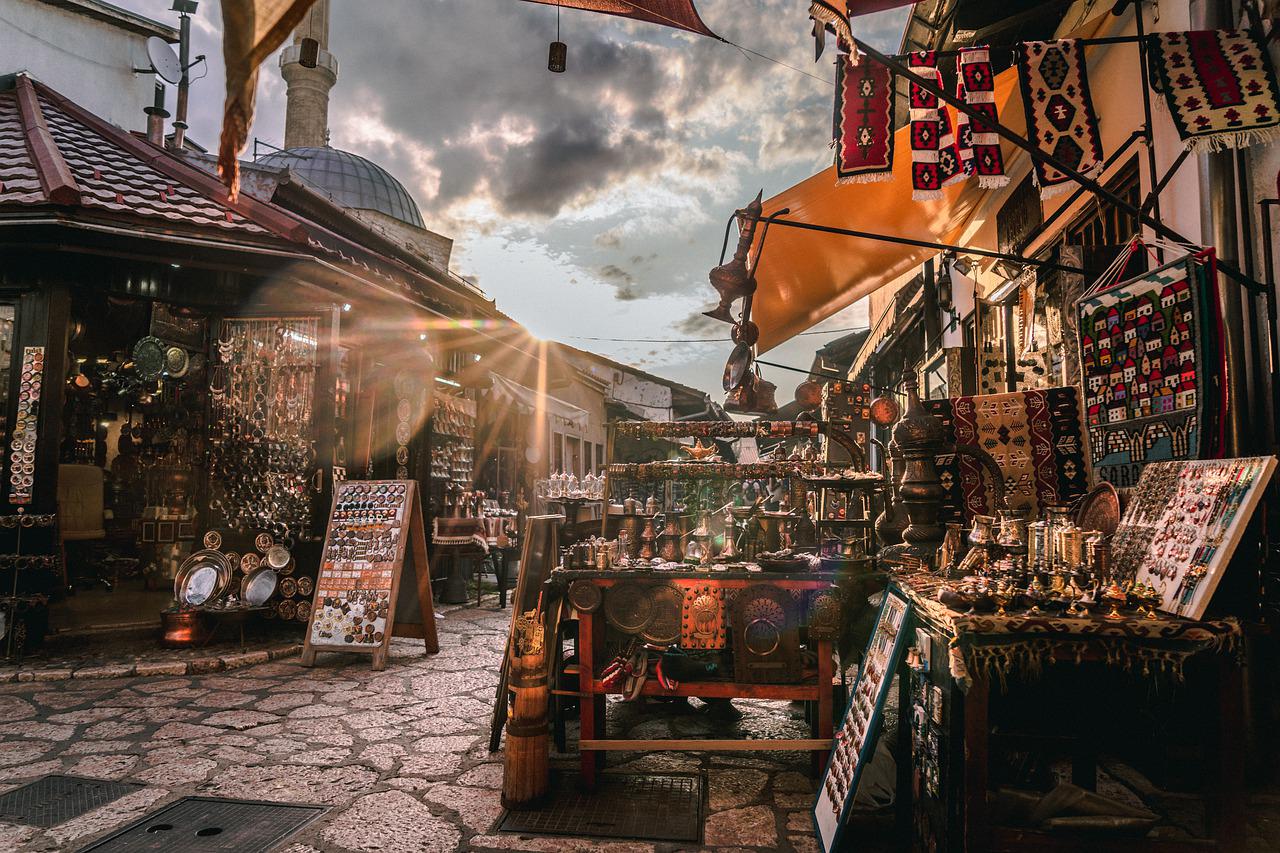
Understanding Sarajevo’s recent history is important for anyone visiting the city, but I don’t think it should be the only way we view it. Modern Sarajevo is a place of cafés, markets, restaurants, music and conversation, surrounded by beautiful mountains and shaped by centuries of different cultures meeting one another. The war is an important part of its story, but it isn’t the whole story.
That distinction is one of the things that stayed with me after my visits. Sarajevo deserves to be understood in the context of what happened there, while also being appreciated for the vibrant and fascinating city it is today.
Why Sarajevo Has Stayed With Me
I’ve travelled to many places that I’ve enjoyed enormously only to find that, as the years pass, some of the details gradually begin to fade. Sarajevo has never really done that.
Perhaps that is because I visited at a particular moment in the city’s recovery, when the events I had watched unfold on television were still so recent. Staying somewhere so closely associated with the siege and seeing places I previously knew only from news reports inevitably made the experience more personal.
More than anything, however, I remember the contrast between what Sarajevo had endured and the city I actually found when I arrived. Scream For Me Sarajevo captures something similar because, although the story was born from an appalling period in the city’s history, it ultimately shows people refusing to allow the circumstances around them to take away everything that made everyday life meaningful.
When I think back to Sarajevo now, I remember the history and the visible scars of conflict, but I also remember the people, the culture, the mountains and a city that was rebuilding itself. Discovering the documentary years later simply added another layer to those memories and gave me a greater understanding of what life had been like during the siege.
If you have never watched Scream For Me Sarajevo, it is well worth seeking out, regardless of whether heavy metal happens to be your kind of music. And if you’ve never considered travelling to Bosnia and Herzegovina, perhaps it’s time to look beyond the images that many of us still carry from the 1990s.
Sarajevo’s past should never be forgotten, but there is also a fascinating, welcoming and beautiful city there to be discovered today.