
Iceland is one of those countries that seems almost purpose-built for adventure. Volcanoes, glaciers, enormous waterfalls, black-sand beaches and wild stretches of coastline combine to create a landscape that can sometimes feel more like another planet than a relatively short flight from the UK.
Most first-time visitors understandably concentrate on Reykjavik, the Golden Circle and perhaps the Blue Lagoon, but there is so much more to Iceland once you begin looking beyond the familiar names.
Some of my favourite memories from travelling over the years have come from leaving the obvious tourist trail behind, so when Icelandic travel expert Rannveig Snorradóttir offered to share some of her favourite adventures from her homeland, I was intrigued.
What I particularly liked was that these weren’t simply the places everybody visits on their first weekend in Iceland. Rannveig wanted to show us another side of the country, from glaciers and remote fjords to the wild landscapes of the Westfjords.
And who better to introduce Secret Iceland than an Icelander?
🇮🇸 Planning an Iceland adventure? For more ideas on where to go, what to see and how to plan your trip, take a look at my Iceland Travel Guide.
Escape the Bright Lights
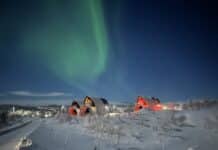
The Northern Lights are understandably high on many Iceland wish lists, and escaping the artificial light of Reykjavik can improve the experience enormously when conditions are favourable.
You don’t necessarily need to stay in the middle of nowhere. Reykjavik can still provide a convenient base, with excursions heading away from the city lights by coach, smaller vehicles and even boat.
The important thing to remember is that the Aurora Borealis is a natural phenomenon, so sightings can never be guaranteed. Cloud cover and solar activity don’t always cooperate with holiday plans, which is why allowing several nights rather than relying on one particular evening makes sense if seeing the Northern Lights is especially important to you.
Even without the aurora, Iceland’s winter landscapes can be extraordinary. Snow, low light and rapidly changing weather give familiar places a completely different character from the long days of summer.
Iceland’s Spectacular South Coast
Leaving Reykjavik and heading east along Iceland’s South Coast is one of the great journeys in the country, with the scenery constantly changing as mountains, glaciers, waterfalls and black volcanic landscapes appear along the route.
Two of the best-known stops are Seljalandsfoss and Skógafoss, magnificent waterfalls that are quite different from one another.
Seljalandsfoss drops from the cliffs above and, when conditions and access permit, a path allows you to walk behind the falling water. Skógafoss is broader and more powerful, creating an enormous curtain of water that frequently produces rainbows when sunlight catches the spray.
Continue east and you eventually reach Vík, surrounded by some of the dramatic landscapes for which southern Iceland has become famous. Black-sand beaches, towering cliffs, sea stacks and glaciers all compete for attention, while the weather can change the appearance of the landscape within minutes.
This is also the region where guided adventures explore the glacial landscapes around Katla, one of Iceland’s most famous volcanoes. Specially equipped vehicles are used to reach areas that ordinary cars simply couldn’t tackle, after which experienced guides can take visitors onto the ice and, when conditions allow, into some of the extraordinary ice formations and caves.
These environments are constantly changing, which is part of their attraction but also why they should be explored with suitably qualified guides. What was accessible last season, or even last week, isn’t necessarily accessible today.
🌋 Iceland Adventure Tip: Weather and conditions can change remarkably quickly in Iceland. Leave some flexibility in your plans and take local advice seriously, particularly when heading onto glaciers or into more remote areas.
Adventures With a Difference
One of Rannveig’s favourite experiences is perhaps not an activity most people immediately associate with Iceland – stand-up paddleboarding.
She admits that when she first tried SUP she was worried that her balance wouldn’t be good enough, only to discover that there was absolutely no requirement to spend the entire time confidently standing upright. Sitting or kneeling on the board allowed her to relax and enjoy being surrounded by Iceland’s spectacular scenery without worrying quite so much about falling into the distinctly chilly water.
For something rather faster, Iceland also offers the opportunity to experience its frozen landscapes by snowmobile.
Langjökull, Iceland’s second-largest ice cap, is one of the locations where guided snowmobile excursions operate. Reaching the glacier is often part of the adventure, with specialist vehicles transporting visitors across terrain that would be impossible for an ordinary car.
Once on the glacier, appropriate clothing and safety equipment are provided before heading out with experienced guides. Standing on such an enormous expanse of ice surrounded by Iceland’s mountains is impressive enough, but travelling across it by snowmobile adds a completely different dimension.
Activities and accessibility on Iceland’s glaciers depend on weather and conditions, so I would always check the latest information with a reputable operator rather than assuming an experience will operate exactly as it did on a previous visit.
Discovering North Iceland
Many visitors spend their first Iceland holiday around Reykjavik, the Golden Circle and South Coast, but heading north opens up another collection of landscapes and experiences.
The area around Lake Mývatn is particularly fascinating, with volcanic formations, geothermal activity and wonderfully stark scenery. Waterfalls and natural bathing experiences add to the appeal, while considerably fewer visitors in some areas can create a very different atmosphere from the busiest parts of southern Iceland.
Then there are the beer baths.
Yes, you read that correctly.
In North Iceland it is possible to soak in a warm bath containing water, young beer, hops and yeast. Rannveig assures us that the idea is rather more relaxing than it might initially sound, although fortunately nobody expects you to drink the bathwater!
It is certainly one of the more unusual wellness experiences you are likely to encounter on an Icelandic road trip and a reminder that Icelanders have found some imaginative ways of making the most of their environment.
The Wild Westfjords
If there is one part of the country that particularly deserves the description Secret Iceland, it is probably the Westfjords.
This remote region in the northwest feels noticeably different from Iceland’s more frequently travelled routes. Roads follow enormous fjords beneath steep mountains, settlements become smaller and the landscape increasingly dominates everything around you.
One of the great natural sights of the region is Dynjandi, an extraordinary series of waterfalls cascading down a mountainside. The main waterfall spreads out as it descends, creating a distinctive shape that makes it one of the most beautiful waterfalls in Iceland.
The Westfjords are also home to Látrabjarg, enormous sea cliffs that support impressive numbers of seabirds during the nesting season, including puffins. The birds may sometimes appear surprisingly relaxed around people, but they should still be treated as wild animals and given appropriate space. The cliff edges themselves also demand considerable care, so this isn’t somewhere to become so distracted by photography that you forget where you’re standing.
For an even greater sense of wilderness, there is Hornstrandir Nature Reserve in the far north of the Westfjords. With no permanent settlements and access largely by boat, this is serious hiking country where preparation, suitable equipment and an understanding of Iceland’s unpredictable weather are essential.
The reward is an increasingly rare experience in Europe: the feeling of being genuinely remote.
🥾 Westfjords Tip: Don’t try to rush this part of Iceland. Distances on a map can be deceptive when roads are winding around enormous fjords, and the pleasure of the Westfjords comes from having time to stop, explore and enjoy the landscape.
Iceland Beyond the Golden Circle
There is absolutely nothing wrong with exploring the Golden Circle, spending time in Reykjavik or visiting Iceland’s most famous attractions. They are popular for very good reasons and, for a first visit, many deserve their place on the itinerary.
What Rannveig’s experiences demonstrate, however, is just how much more there is to discover once you start travelling further.
The South Coast can lead you towards glaciers and ice caves, North Iceland offers volcanic landscapes and some wonderfully unusual experiences, while the Westfjords provide the sort of wild scenery and isolation that many travellers increasingly struggle to find elsewhere.
You don’t necessarily have to abandon the famous sights either. A good Iceland itinerary can combine the landmarks you’ve always wanted to see with one or two places you perhaps hadn’t heard of before you started planning.
That, for me, is where travel often becomes most interesting.
Rannveig says that even as an Icelander her own country continues to surprise her, which is quite an endorsement when you consider how much time she has had to explore it.
I suspect Iceland is one of those destinations where you could return repeatedly and experience a completely different journey each time.
About This Secret Iceland Experience
This article was originally contributed by Icelandic travel specialist Rannveig Snorradóttir, who shared some of her favourite adventures and lesser-known places from her home country with Just One For The Road.
Her original contribution has been updated while retaining her experiences and enthusiasm for discovering the Iceland that exists beyond the country’s most famous attractions.