There are few places on Earth that capture the imagination quite like Antarctica. It is remote, beautiful and uncompromisingly wild, a continent of towering ice, enormous skies, penguin colonies and seas where whales and seals can appear when you least expect them.
As a teenager, I was fascinated by the stories of the great polar explorers and the extraordinary journeys they undertook into this frozen wilderness. Antarctica always seemed impossibly distant, the sort of place explored by people such as Scott and Amundsen rather than somewhere an ordinary traveller might one day experience.
Then my former travel industry colleague Danny Giles was given an opportunity that most of us would find rather difficult to turn down.
In 2012, while working with Hurtigruten, Danny joined an expedition voyage aboard MS Fram, travelling from South America across the Drake Passage and down the Antarctic Peninsula. His journey included penguin colonies, research stations, spectacular ice-filled channels and some extraordinary wildlife encounters. He even went for a swim.
This is Danny’s story of exploring Antarctica, although thankfully in considerably more comfort than the polar explorers who first inspired my interest in this remarkable part of the world.
The Journey to the End of the World
Danny’s Antarctic adventure began with a flight from Glasgow via Amsterdam to Buenos Aires, where the expedition group spent their first night before continuing south.
The following morning brought another flight, this time to Ushuaia at the southern tip of Argentina. Surrounded by mountains and overlooking the Beagle Channel, Ushuaia has become one of the principal gateways for expedition voyages heading towards Antarctica.
Before boarding MS Fram, Danny had an opportunity to explore Tierra del Fuego National Park, where mountains, forests, lakes and the landscapes surrounding the Beagle Channel provided an impressive introduction to Patagonia.
By early evening he was finally aboard the ship and heading away from Ushuaia towards one of the most famous stretches of ocean in the world.
The Drake Passage separates South America from Antarctica and has a formidable reputation for rough seas. Danny was fortunate. Conditions were sufficiently calm for the crossing to earn its rather more reassuring nickname, the Drake Lake, allowing him to attend lectures and begin learning about the wildlife and landscapes they were about to encounter.
Even before reaching Antarctica there was wildlife to watch, with whales spotted in the distance as the ship continued south.
First Penguins at Yankee Harbour
Before passengers could go ashore in Antarctica, there was an important briefing covering the environmental and wildlife rules that govern expedition landings.
Antarctica is one of the world’s most fragile environments and visiting it brings responsibilities. Expedition operators follow strict procedures designed to minimise disturbance, prevent the introduction of non-native material and ensure wildlife is given appropriate space.
Once the briefing was complete, the moment everybody had been waiting for finally arrived.
MS Fram reached Yankee Harbour in the South Shetland Islands, where Danny caught his first sight of Antarctic penguins.
Snow was falling as the expedition team went ashore to assess conditions and prepare the landing area. Once permission was given, Danny’s group headed ashore and found themselves amongst a large colony of gentoo penguins.
After days of flights, transfers and crossing the Drake Passage, this was the moment when the journey finally became real. Danny wasn’t simply travelling towards Antarctica anymore; he was standing amongst its wildlife.
Wildlife Tip: Penguins may appear remarkably unconcerned by human visitors, but that doesn’t mean we should approach them. Always follow your expedition team’s instructions and allow the animals to determine the distance.
Icebergs and Cuverville Island
The following morning Danny woke to the sound of ice against the ship’s hull as MS Fram approached Cuverville Island.
Small icebergs surrounded the vessel and Danny was amongst the first group heading ashore. He climbed towards a viewpoint overlooking the bay, with gentoo penguins providing a noisy accompaniment from the surrounding ridge.
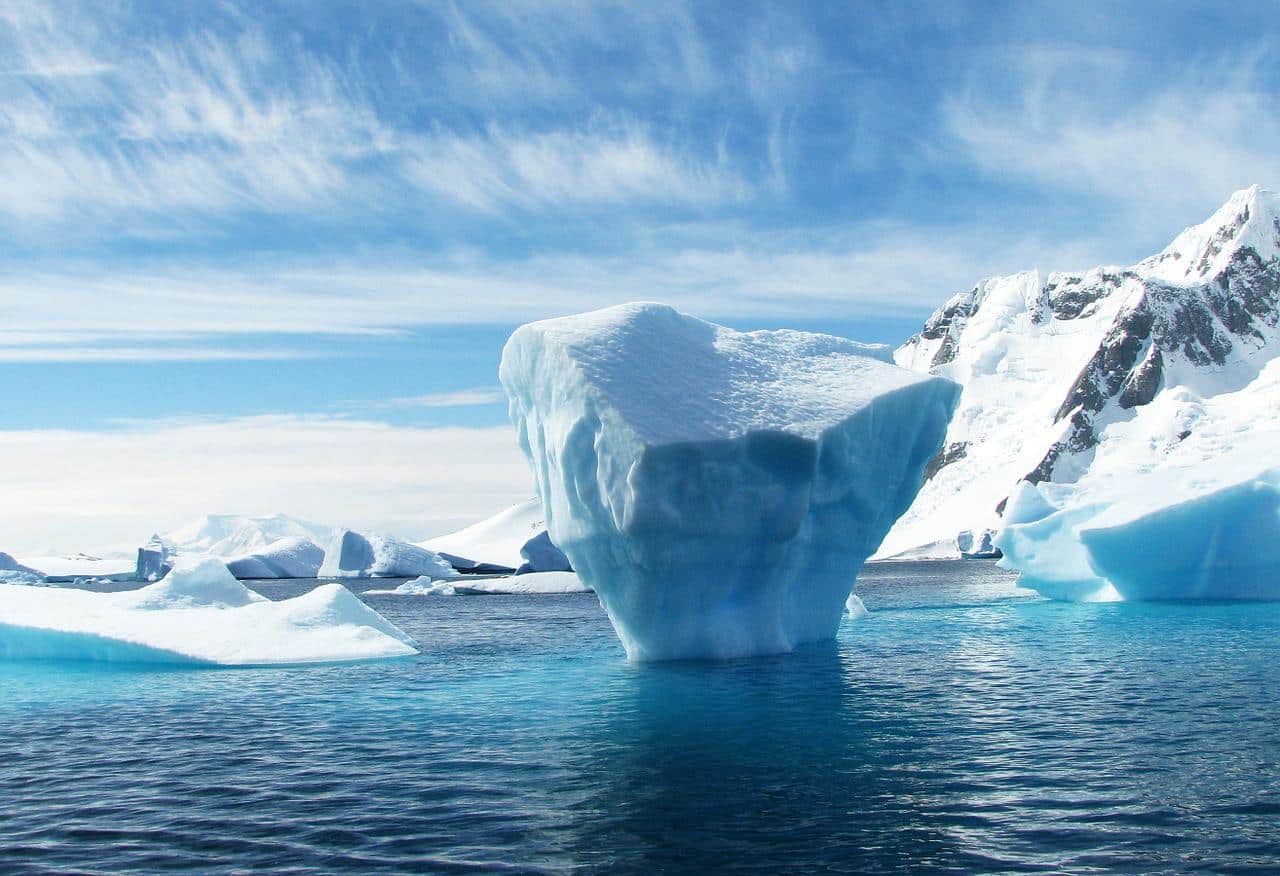
It was the sort of Antarctic landscape most of us imagine before travelling: mountains rising above the sea, brilliant white snow and ice scattered across intensely blue water.
Later, the ship continued through beautiful Andvord Bay towards Brown Station, an Argentine Antarctic research station. A small number of passengers had the opportunity to spend the night camping on the ice nearby.
Danny wasn’t selected for the overnight camp, something that disappointed him at the time, although considering what was still to come, there was no shortage of adventure.
Port Lockroy and the Lemaire Channel
After landing at Brown Station the following morning, Danny encountered more gentoo penguins along with Weddell seals relaxing in the sunshine.
The expedition then continued to Port Lockroy, the historic British base on Goudier Island. The site has become one of the best-known stops on the Antarctic Peninsula, combining polar history with another sizeable penguin population.
For Danny there was also the wonderfully surreal opportunity to send a postcard home from Antarctica.
The day’s planned finale was a journey through the spectacular Lemaire Channel, a narrow passage between steep mountains that is sometimes nicknamed the Kodak Gap because of its extraordinary scenery.
Antarctica, however, has little interest in carefully prepared itineraries.
An iceberg was blocking the route and MS Fram couldn’t pass safely through, so the ship had to turn away and take a considerable detour.
Rather than being a disappointment, it became another reminder that expedition travel works around the conditions rather than the other way around.
Petermann Island and an Antarctic Swim
After sailing through the night, MS Fram reached Petermann Island, the furthest south Danny would land during the voyage.
Here he encountered another species for the first time, the Adélie penguin. Smaller than the gentoos he had already seen, they brought a different character to the increasingly impressive collection of Antarctic wildlife.
Then Danny decided to do something I suspect I’d think very carefully about before volunteering for myself. He went swimming.
A quick plunge into Antarctic water was, unsurprisingly, extremely cold, although the prospect of warming up afterwards in the ship’s hot tub made the experience marginally more sensible.
Conditions that afternoon were spectacular, allowing the expedition team to take passengers out amongst the ice by small boat. The iceberg that had prevented MS Fram from passing through the Lemaire Channel the previous evening had shifted and broken sufficiently for the ship eventually to make its way through.
The combination of calm water, mountains, ice and an unexpected sighting of orcas made this one of Danny’s favourite moments of the entire expedition.
Deception Island and the Chinstrap Penguins
The weather deteriorated as the voyage continued towards Deception Island, one of the most fascinating locations in the South Shetlands.
Deception Island is the flooded caldera of an active volcano, creating a natural harbour surrounded by a dramatic volcanic landscape. Its history includes whaling operations, scientific bases and eruptions that have repeatedly reshaped the island.
Danny landed at Whalers Bay before choosing a hike over the ridge towards a colony of chinstrap penguins.
Strong winds and snow made the climb difficult, but the reward was seeing the penguins Danny had particularly hoped to encounter. Their distinctive black line beneath the chin makes them immediately recognisable and, for Danny, they became his favourite penguins of the expedition.
Later that day the group made its final landing at Half Moon Island, where more chinstraps and seals provided a fitting conclusion to their time ashore.
By now the expedition had included several species of penguin, seals, whales and orcas, but perhaps more importantly Danny had experienced just how varied Antarctica can be. Each landing had offered a slightly different combination of wildlife, ice, mountains and weather.
Back Across the Drake Passage
Eventually there comes a point on every Antarctic expedition when the ship has to turn north.
MS Fram headed back across the Drake Passage and Danny was once again fortunate with relatively calm conditions. Lectures and entertainment aboard the ship filled the journey while Antarctica gradually disappeared behind them.
Before returning to Ushuaia, the voyage passed close to Cape Horn, the legendary headland at the southern end of the Tierra del Fuego archipelago. For generations of sailors this was one of the world’s most feared maritime passages, so seeing it from the deck provided an appropriate final chapter to the expedition.
Back in Ushuaia, Danny had time to explore before flying to Buenos Aires, where the journey ended with Argentine steak and tango before the long flight home.
It had taken flights, a journey to the end of South America and two crossings of the Drake Passage, but Danny had finally experienced the continent that had fascinated so many explorers before him.
What Is an Antarctic Expedition Really Like?
One of the things I particularly like about Danny’s account is that it demonstrates how different an Antarctic expedition is from a conventional cruise.
The ship is important, of course, but much of the excitement comes from what happens beyond it. Days are shaped by weather, ice and wildlife rather than a rigid sightseeing schedule. A planned landing may move, a channel may become blocked or unexpectedly good conditions may allow the expedition team to add an experience that wasn’t originally anticipated.
There is also a strong educational element. Lectures and briefings help passengers understand the wildlife, geology, exploration history and environmental importance of Antarctica rather than simply photographing it.
That unpredictability is part of the appeal.
You might spend a morning amongst penguins, cruise between icebergs during the afternoon and discover that evening that tomorrow’s planned landing has changed completely because the ice has moved.
For anyone accustomed to knowing precisely what they will be doing at ten o’clock next Tuesday morning, Antarctica requires a slightly different mindset.
Wildlife in Antarctica
For Danny, the penguins were inevitably amongst the stars.
During his expedition he encountered gentoo, Adélie and chinstrap penguins, alongside Weddell seals, whales and orcas. The wildlife was impressive not simply because of the individual species, but because of the environment in which he encountered them.
Watching a penguin in a zoo is one thing. Watching hundreds of them moving around a colony with glaciers and mountains rising behind them is something entirely different.
Responsible wildlife viewing is essential. Antarctica isn’t a theme park and the animals aren’t there for our entertainment. Visitors need to follow the instructions of expedition guides, maintain appropriate distances and avoid blocking the routes animals use between colonies and the sea.
The best encounters are those where the wildlife continues behaving exactly as it would if you weren’t there.
What to Pack for Antarctica
Packing for Antarctica is largely about layers and protection from wind and water rather than simply taking the thickest coat you can find.
Thermal base layers, warm mid-layers, waterproof outer trousers, gloves, a warm hat and suitable socks all deserve space in the suitcase. Sunglasses are important because of the glare from snow and ice, while spare camera batteries are useful as cold temperatures can reduce battery life.
Footwear requirements vary depending on the expedition operator, with some providing specialist boots for landings, so I would check exactly what is included before buying anything specifically for the trip.
A waterproof daypack or dry bag can also be useful when travelling ashore in small expedition boats.
And if your voyage offers a polar plunge and you are feeling as brave as Danny was, don’t forget your swimwear.
Packing Tip: Check your expedition operator’s current equipment list before travelling. Clothing and equipment supplied aboard ships varies, so there’s little point buying expensive specialist gear only to discover it is already provided.
When to Visit Antarctica
Antarctic tourism takes place during the Southern Hemisphere’s warmer months, when expedition vessels can operate in the region and daylight hours are considerably longer.
The experience changes as the season progresses. Early-season voyages can encounter extensive snow and dramatic ice conditions, while later periods bring different stages of penguin breeding and changing opportunities for wildlife sightings.
There isn’t one perfect week when everything appears at once. Wildlife is seasonal, weather remains unpredictable and every expedition will be different.
That is part of what makes Antarctica so special.
An Adventure Worth Crossing the Drake For
Danny’s expedition took place in 2012, so I wouldn’t present his exact day-by-day route as an itinerary that somebody should expect to reproduce today. Antarctic voyages are shaped by weather, sea ice, wildlife and environmental regulations, and even two departures on the same ship can produce very different experiences.
What hasn’t dated is the sense of excitement in his story.
He crossed the Drake Passage, stood amongst penguin colonies, watched seals resting on Antarctic ice, sailed between extraordinary icebergs, saw orcas in the Lemaire Channel and jumped into water cold enough to make most of us reconsider our life choices.
More importantly, he experienced one of the last genuinely wild places on Earth.
For somebody who grew up fascinated by the stories of the great polar explorers, I can completely understand the attraction.
Scott and Amundsen might not have had a hot tub waiting for them afterwards, but I think I’ll forgive Danny that particular luxury.
About This Antarctica Experience
This article is based on the 2012 Antarctic expedition of Danny Giles, a former travel industry colleague who originally shared his voyage aboard MS Fram with Just One For The Road.
His original journal has been updated and restructured while retaining the route, wildlife encounters and personal experiences that made his journey to Antarctica so memorable.