
✈ Start Here – Macau Guide
- Introduction to Macau
- Key Information for Macau
- Best Time to Visit Macau
- How to Get to Macau
- Getting Around Macau
- Where to Stay in Macau
- Best Things to Do in Macau
- Macau by Night
- Pre Bookable Tours & Excursions
- Macau Through My Lens
- Frequently Asked Questions about Macau
- Final Thoughts
- Tourist Information
📍 Map Of Macau
🧭 Introduction To Macau
Macau was never part of my original travel plans. A cancelled sporting event in Japan left me with a couple of spare days in Hong Kong, so I jumped on a ferry and headed across the water to somewhere completely new.
What I discovered was a fascinating mix of Portuguese heritage, Chinese culture, extravagant casino resorts, historic streets and some superb photography opportunities. And considering I don’t even like casinos, Macau surprised me enormously.
In this Macau travel guide, I share my first-hand experience of visiting the city, including where to stay, how to get around, the best things to see and do, and a few tips I wish I’d known before arriving.
🔑 Key Information for Macau
| Continent | Asia |
| Destination | Macau |
| Currency | Macau Pataca |
| Language | Chinese & Portuguese |
| Visa | FCO Advice |
| Vaccinations | Vaccination Advice |
| Tourist Office | Macao Government Tourist Office |
🌞 Best Time To Visit Macau
Macau is a year-round destination, but October and November are generally the best months to visit, with milder temperatures, lower rainfall and more comfortable conditions for exploring on foot.
Spring, from March to May, sees temperatures beginning to rise, although it can become increasingly humid as summer approaches. From May to September, Macau is at its hottest and wettest, with high humidity and more frequent rainfall. If you’re planning long days exploring the historic streets, temples and Portuguese architecture, the cooler months are certainly more comfortable.
December to March can also be a good time to visit. The winter months are generally sunnier and drier, although evenings can feel surprisingly cool, so it’s worth packing an extra layer.
One thing to bear in mind is typhoon season, which runs from May to November, with July, August and September typically the most affected months. Severe weather can disrupt transport and attractions, so check the local forecast if travelling during this period.
My pick: If I were planning another trip to Macau, I’d aim for October or November – warm enough to enjoy being outside, but without the more intense heat and humidity of summer.
✈ How To Get To Macau
There are currently no direct flights between the UK and Macau, so your journey will involve either a connecting flight into Macau International Airport or, more commonly, flying to Hong Kong and continuing to Macau.
For most UK travellers, Hong Kong is the most straightforward gateway. After arriving at Hong Kong International Airport, you can travel directly to Macau without first heading into central Hong Kong. Cross-border coach services operate from the airport via the impressive Hong Kong–Zhuhai–Macao Bridge, with the road journey across the bridge taking around 40 minutes between the Hong Kong and Macau port areas.
Another option is the ferry. Services connect Hong Kong with both Macau’s Outer Harbour and Taipa ferry terminals, with the crossing taking approximately an hour. Direct airport-to-Macau ferry connections are also available for eligible transfer passengers via Hong Kong International Airport’s SkyPier.
Alternatively, you can book a connecting flight all the way to Macau International Airport (MFM). Macau has air links with numerous Asian cities, so one-stop itineraries from London are possible via hubs including Beijing, Bangkok, Shanghai, Seoul and Singapore.
My tip: If you have the time, consider combining Macau with a few days in Hong Kong. The two destinations are close enough to work extremely well together, yet offer very different experiences.
🚗 Getting Around Macau
Macau is relatively compact, and many of the main sights around the historic centre are easy to explore on foot. In fact, walking is one of the best ways to experience the city, particularly around the older streets and squares where Macau’s Portuguese and Chinese influences sit side by side.
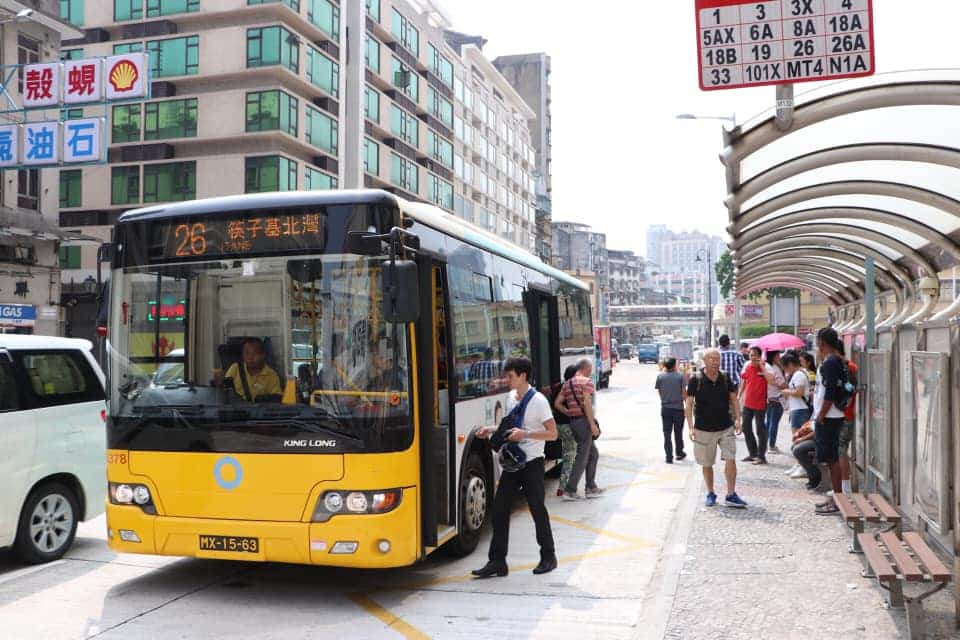
We didn’t use the local bus network during our stay, although there were plenty of stops around the city and the buses appeared to be well used by locals. Macau now also has its Light Rapid Transit (LRT) system, which is particularly useful for travelling around Taipa and Cotai and connecting with other parts of the city.
Rickshaws are another way to get around and certainly add a little old-fashioned charm to the experience. If you decide to take one, I would always agree the price before setting off.
Our experience with taxis was mixed. When we first arrived at the ferry terminal during the day, taxis were readily available and we were whisked off to our hotel in central Macau at a reasonable cost, with the journey taking around 20 minutes.
For shorter distances, though, I would recommend simply getting out and walking. Macau isn’t a huge place, and wandering through its streets was one of the best ways for us to discover the temples, Portuguese architecture, little squares and unexpected corners that give the city its character.

🏨 Where to Stay in Macau
Where you choose to stay in Macau will depend largely on the type of trip you’re looking for. The Macau Peninsula is a great choice if you want to be close to the historic heart of the city, with many of Macau’s heritage attractions, traditional streets and famous landmarks within easy reach.
For nightlife, entertainment and the spectacular casino resorts, Cotai is the place to consider. Built on reclaimed land between Taipa and Coloane, the Cotai Strip is home to many of Macau’s enormous hotels and entertainment complexes.
Taipa offers a slightly different atmosphere, combining residential neighbourhoods with traditional streets, restaurants and easy access to Cotai. Further south, Coloane provides a quieter side of Macau, with greener landscapes, beaches and a much more relaxed feel than the bright lights of Cotai.
Where I Stayed – Sofitel Macau at Ponte 16
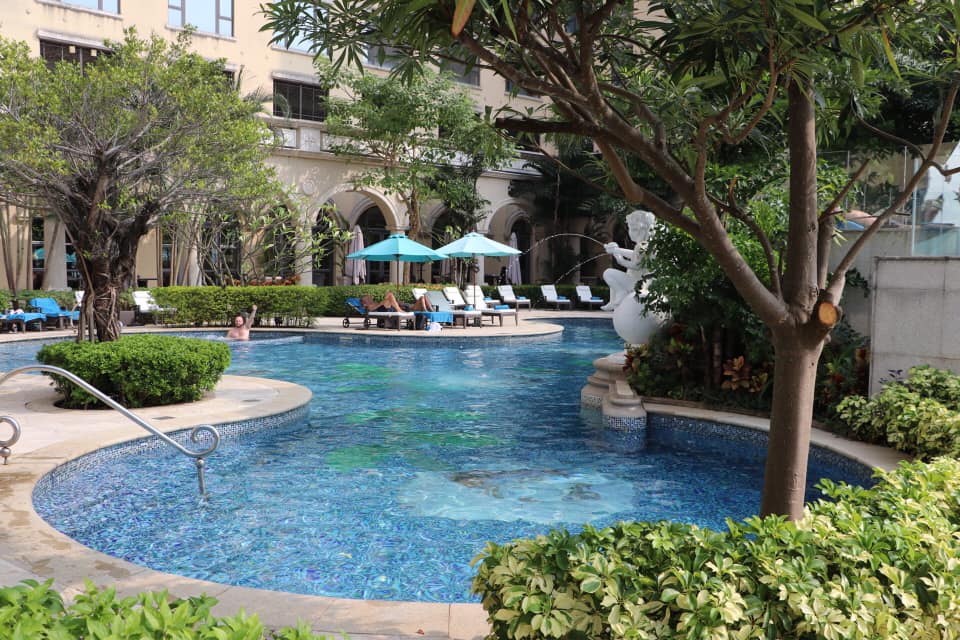
As our visit to Macau was completely unplanned, I was looking for somewhere to stay at very short notice. I managed to secure a room at the Sofitel Macau at Ponte 16 in Old Macau, which turned out to be an excellent base for exploring the city’s heritage attractions and historic streets.
Our introduction to Macau was memorable. After arriving at the ferry terminal, we crossed the walkway to the shuttle bus area where we were greeted by a team of ladies dressed in what I can only describe as Thunderbirds-style hostess outfits. Simply marvellous – and they couldn’t have been friendlier.
The staff at the Sofitel were excellent throughout our stay and always keen to help. It certainly wasn’t the cheapest option, but with great food, excellent service and such a convenient location, I felt it was worth the extra expense – particularly considering we’d arrived in Macau with virtually no plan and very little idea of what to expect.

✔ Best Things To Do In Macau
Macau may be famous for its casinos, but there is far more to the city than gaming tables and enormous resorts. What interested me most was the contrast between its Chinese heritage and Portuguese past – one minute you’re surrounded by temples and traditional streets, the next you’re standing in a European-style square wondering quite where in the world you are.
Here are some of the best things to see and do during a visit to Macau.
Visit the Ruins of St Paul’s
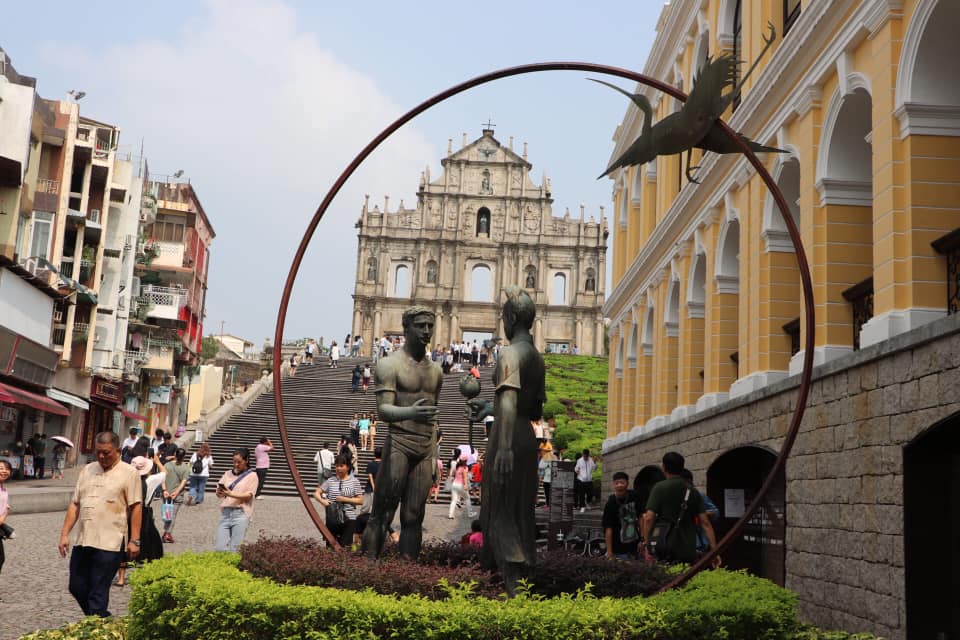
In Macau’s Historic Centre you’ll find one of the city’s most recognisable landmarks, the Ruins of St Paul’s. Originally built in the 17th century, fire eventually destroyed much of the church, leaving its magnificent stone façade and the 66 steps that climb towards it.
The streets surrounding St Paul’s were just as interesting to me as the famous ruins themselves. They’re packed with character and everyday life, providing endless opportunities for photography and a glimpse of Macau away from the casinos and luxury hotels.
One of my favourite moments was hearing a gentleman sitting alone in his front room singing karaoke to his heart’s content. It’s those completely unexpected little encounters that I often remember most from my travels.
Explore Senado Square
Nearby Senado Square is at the heart of historic Macau and feels remarkably European, with colourful façades, traditional Portuguese-style paving and elegant colonial architecture.
When I visited, the square was buzzing with people – shopping, picking up street food and, inevitably, taking plenty of selfies. It’s lively and touristy, but also a great place to simply stop for a while and watch Macau go about its business.
From here, don’t just stick to the obvious sights. Head into the surrounding back streets. This was where I found some of the most interesting scenes to photograph and where Macau began to reveal much more of its personality.
Discover A-Ma Temple
One of Macau’s oldest temples, A-Ma provides a fascinating glimpse into the city’s Chinese heritage. Its traditional pavilions, incense-filled courtyards and hillside setting provide a striking contrast to Macau’s Portuguese influences.
Climb up to Monte Fort
Originally built by the Jesuits in the 17th century, Monte Fort offers some excellent views across Macau. You’ll also find the Macau Museum here, making it easy to combine the two during your exploration of the historic centre.
Wander Through Taipa Village
Away from the enormous resorts of neighbouring Cotai, Taipa Village retains a much more traditional character. Wander through its narrow streets, browse the shops and stop to sample some of Macau’s famous food.
Experience the Cotai Strip
Even if, like me, you’re not particularly interested in gambling, Cotai is still worth seeing simply for the extraordinary scale of the place. Huge resorts, casinos, shopping malls and entertainment complexes have transformed this reclaimed strip of land into Macau’s answer to Las Vegas.
Head up Macau Tower
Standing high above the city, Macau Tower provides panoramic views across Macau and towards mainland China. Those looking for rather more excitement can also tackle some of the tower’s adventure activities – although personally I’d be quite happy sticking to the view!
Explore Coloane Village
For a quieter side of Macau, head south to Coloane. Its colourful buildings, waterfront setting and slower pace provide a welcome contrast to the bright lights and huge developments elsewhere in the city.
Try Macau’s Portuguese and Macanese Food
Food is an important part of experiencing Macau. Portuguese influences remain strong, while Macanese cuisine developed through the meeting of Portuguese and Chinese cultures. And, of course, it would be rude to leave without trying one of Macau’s famous Portuguese-style egg tarts.
Simply Walk Through Old Macau
This would actually be one of my biggest recommendations. Some of my favourite moments came simply from walking around and seeing what was around the next corner. Temples, tiled squares, colonial buildings and everyday local life make Old Macau far more interesting than I had expected before arriving.


🌙 Macau By Night
As darkness fell, Macau took on a completely different personality. The streets around the historic centre came alive with market stalls selling souvenirs, alongside children’s fête-style games – I even remember seeing apple bobbing. In the main square, we stumbled across a display of traditional sword dancing, which was certainly not something I’d expected when we’d arrived in Macau.
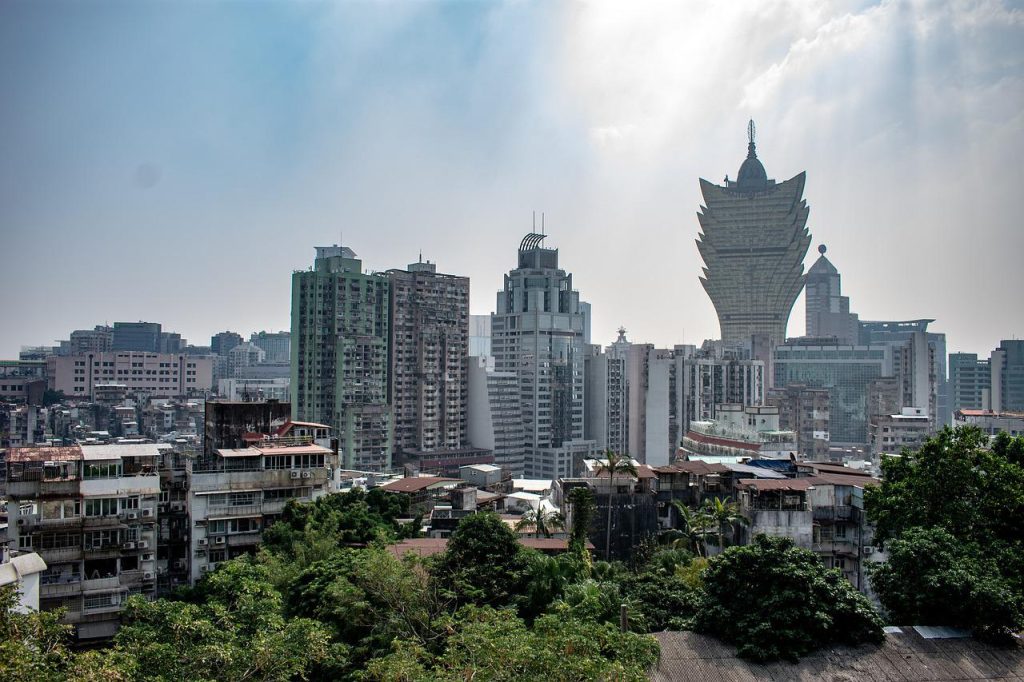
Then there were the bright lights of Macau’s casino strip. Whether you consider it ugly or beautiful probably depends on your point of view. The enormous, glitzy hotels and vast casino floors were packed with people gambling around the clock. The bars and restaurants were modern and impressive, although for me they lacked some of the character and soul I’d enjoyed elsewhere in the city.
Gambling isn’t really my thing, but watching it all unfold was fascinating. For many visitors this is clearly the Macau they have come to experience, waiting and hoping for that lucky turn of a card.
We also visited the Macau Tower, which was well worth the trip for the incredible views alone. There are restaurants, shops and plenty of other attractions inside – including, naturally, stalls selling everything from bling to Macau’s famous custard tarts!
Macau is extravagant, historic, colourful and sometimes a little bonkers.
It’s different – but that’s exactly why I liked it.

🎒 Pre Bookable Tours & Excursions In Macau
📸 Macau Through My Lens
❓ Frequently Asked Questions about Macau
Is Macau worth visiting?
Yes. I found Macau far more interesting than I expected. The casinos may grab the headlines, but the mix of Portuguese architecture, Chinese heritage, temples, historic streets, food and modern entertainment gives Macau a character quite unlike anywhere else I’ve visited in Asia.
How many days do you need in Macau?
I would recommend two or three days. That gives you enough time to explore the historic centre, visit the main sights, experience Macau after dark and spend some time around Taipa and Cotai without rushing.
Can you visit Macau as a day trip from Hong Kong?
Yes, and many travellers do. Macau is easily reached from Hong Kong by ferry or via the Hong Kong–Zhuhai–Macao Bridge. However, I think staying at least one night is worthwhile because Macau feels very different after dark.
Do UK citizens need a visa for Macau?
British citizens can normally visit Macau for tourism without arranging a visa in advance for stays of up to six months. Entry requirements can change, however, so always check the latest UK government travel advice before travelling.
What currency is used in Macau?
The official currency is the Macanese Pataca (MOP). Hong Kong dollars are also widely accepted, although change may be given in patacas.
What language is spoken in Macau?
The official languages are Chinese and Portuguese. Cantonese is widely spoken, while English is commonly understood in major hotels, resorts and tourist areas.
What is the best time to visit Macau?
October and November are particularly good months, with generally more comfortable temperatures and lower humidity. The summer months can be hot, humid and wet, while tropical storms and typhoons are also possible during the warmer part of the year.
Is Macau just about casinos?
Definitely not. I don’t have much interest in gambling and still thoroughly enjoyed my visit. Senado Square, the Ruins of St Paul’s, A-Ma Temple, Taipa, Macau Tower and the historic streets of Old Macau provide plenty to see away from the casino floors.
Is Macau easy to get around?
Yes. The historic centre is particularly enjoyable on foot, while buses, taxis and Macau’s LRT are useful for longer journeys between the Macau Peninsula, Taipa and Cotai.
Is Macau expensive?
It can be, particularly if you stay in one of the luxury hotels or spend your time around the major casino resorts. However, local restaurants, street food and public transport can make exploring Macau considerably more affordable.
Is Macau safe for tourists?
Macau is generally considered a safe destination for visitors. As anywhere, take normal precautions with valuables and remain aware of your surroundings, particularly in busy tourist and entertainment areas. Always check current official travel advice before your trip.
🎯 Final Thoughts
Macau was never part of the original plan for this trip, and perhaps that’s one of the reasons I enjoyed it so much. What started as an unexpected detour turned into a fascinating couple of days discovering somewhere quite unlike anywhere else I’d visited in Asia.
Before arriving, I associated Macau almost entirely with casinos. While the bright lights and extravagant resorts are certainly impossible to ignore, I found the historic side of Macau far more interesting. Portuguese architecture, Chinese temples, colourful squares and atmospheric old streets provided a constant contrast to the modern developments just a short distance away.
Would I return? Absolutely. Next time I’d spend longer exploring some of the quieter corners of Macau, particularly Taipa and Coloane, and perhaps even find time for another custard tart or two!
Macau is different – and I like different.
📌 Macau Tourist Information
For up-to-date information when planning your trip, the Macao Government Tourism Office is an excellent resource. The official website provides information on attractions, events, transport, accommodation, practical travel advice and the latest weather information.